Packing for a Florida Summer Move: Humidity, Heat, Storms
Pack for a June-Sept NE Florida move: humidity-resistant materials, heat-safe scheduling, hurricane timing, and what never to leave in a hot truck.
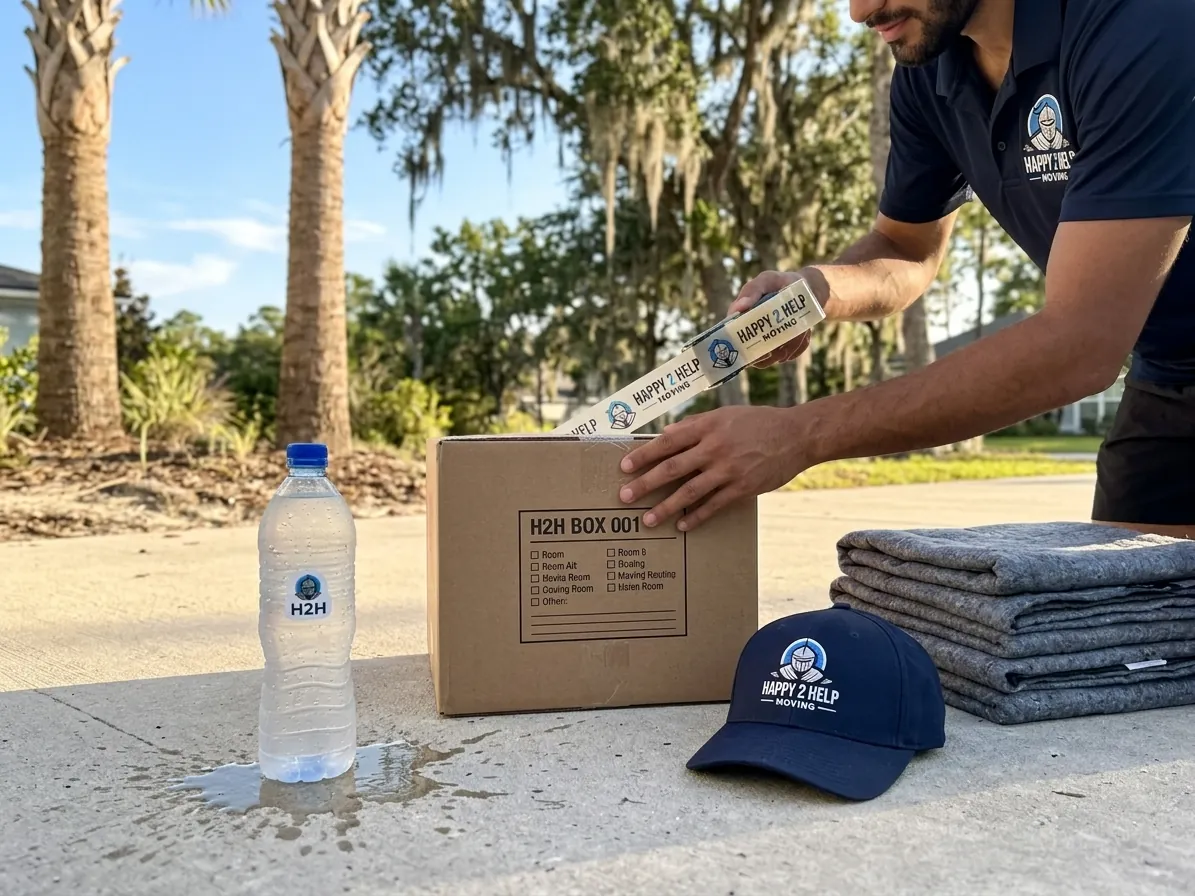
The Northeast Florida summer-move reality
Summer in Northeast Florida is genuinely hot. June through September averages high temperatures from 87 to 92 degrees, humidity routinely above 80 percent, daily afternoon thunderstorms, and the peak Atlantic hurricane window from mid-August through late September.
If you’re moving between June 1 and September 30, the packing and scheduling decisions you make have outsized impact on whether move day goes smoothly or whether you arrive at the new house with warped wood, mildewed leather, ruined electronics, and a stressed-out crew.
This guide covers the practical operational realities of packing for a Florida summer move — what materials work, when to load, what to never leave in a hot truck, and how to schedule against hurricane forecast windows. Aimed at anyone planning a Northeast Florida move between Memorial Day and the end of September.
Humidity and your packing materials
Cardboard is the workhorse of every move, and cardboard absorbs moisture. A box that’s structurally sound in a 60 percent humidity air-conditioned home can lose meaningful integrity sitting in a Northeast Florida garage at 85 percent ambient humidity for two weeks.
Practical implications:
- Pack close to move day. 24 to 72 hours, not weeks. The longer boxes sit packed in non-conditioned space, the weaker they get.
- Buy fresh boxes. Reused boxes from a relative’s garage that have already absorbed humidity are starting at 70 percent of their original strength.
- Stack vertically, not horizontally. Weakened cardboard fails at the bottom layer of a stack first. Six boxes high is too many in summer humidity.
- Avoid box-bottom failure. Tape the bottom seam with three strips minimum. Reinforce heavy boxes (books, dishes) with bottom cross-strips.
Tape: use real moving tape, not standard packing tape. The adhesive in commodity packing tape softens above 90 degrees Fahrenheit, which is every Northeast Florida summer truck interior. Moving tape (typically polypropylene or gummed paper with stronger adhesive) holds up. The cost delta is small. The failure mode (seam pop in the truck, contents shifting in transit) is expensive.
Packing paper: white packing paper, not newspaper. Newspaper ink transfers onto packed items more readily in humid conditions — your white dishes arrive smudged.
When to load — the heat-of-day problem
Northeast Florida summer heat builds predictably:
- 6-8 AM: Coolest window. 75-80 degrees, humidity high but tolerable, no direct overhead sun.
- 8-11 AM: Heating up. 80-87 degrees. Still loadable but pace matters.
- 11 AM - 3 PM: Peak heat. 87-92 degrees ambient, 110+ degrees on direct-sun pavement, truck interior 120-140F.
- 3-7 PM: Daily thunderstorm window June through September. Sudden rain, lightning, brief delays.
- 7 PM onward: Cooling. Reasonable for unload work if origin loading completed earlier.
The professional standard in Northeast Florida is crew arrival between 7 and 8 AM for summer moves. Load by noon, transit during early afternoon (with thunderstorm awareness), unload completed before the worst late-afternoon storm window.
Mid-afternoon load starts (1-2 PM) are the highest-risk scenario for both crew safety and contents. Movers worth their salt will steer you toward early-morning starts in June-September. If a mover insists on a 2 PM start in July, that’s a flag.
Items to never leave in a hot truck
Truck interiors in a Northeast Florida summer reach 130-140 degrees within 90 minutes of being parked in direct sun. Items at risk:
- Chocolate, candle wax, soap. Melt, fuse with packaging, ruin everything nearby.
- Vinyl records. Warp at 110F. Total loss in a hot truck.
- Photographs (loose or albums). Emulsion damage at 120F.
- Art on canvas. Stretcher-bar warping. Frame joint failure.
- Vintage electronics. Capacitor damage. Tape decks, turntables, older AV equipment.
- Modern electronics with lithium batteries. Above 130F, battery chemistry degrades. Damage may not be visible until first use.
- Wine and spirits. Wine spoils above 80F sustained. Heat-shocked bottles taste cooked.
- Wood furniture with veneer. Veneer adhesive softens, lifts.
- Leather. Mildew risk in humid hot conditions. Surface cracking on dried-out leather.
- Pets. Never. Pets ride in air-conditioned passenger vehicles, never in the truck.
- Plants. Heat-stressed in hours.
- Aerosols. Pressure expansion. Most movers refuse to transport these regardless of season.
For heat-sensitive items: transport in your air-conditioned vehicle, or use a climate-controlled moving service for the segment. Don’t accept “they’ll be fine, it’s only a few hours” — for the items on this list, it’s not fine.
Hurricane-window scheduling
Atlantic hurricane season runs June 1 through November 30. Peak window: mid-August through late September.
Practical scheduling:
- June through early August: Lower hurricane risk window. Moderate mover demand. Book three to four weeks ahead.
- Mid-August through late September: Peak hurricane risk. Build a 72 to 96 hour reschedule buffer into your contract. Any reputable Northeast Florida mover will have a written hurricane-reschedule policy.
- October through November: Hurricane risk drops sharply mid-October. Demand drops. Lead times shorten. This is the operational sweet spot for any flexible-timing move.
NOAA’s National Hurricane Center (nhc.noaa.gov) forecasts named systems 5-7 days out. When a tropical storm or hurricane watch is issued for the move corridor, a licensed mover should proactively contact you to reschedule.
Climate-controlled storage matters in summer
If your move involves storage (sell-then-buy, downsizing, between-homes, military PCS), climate-controlled storage matters more in summer than winter.
Standard self-storage in Northeast Florida regularly hits 90-100F interior temperature in July and August. For storage periods over two weeks:
- Yes, climate-controlled: Wood furniture, leather, photographs and paper, electronics, wool, wine, art, anything you’d refuse to leave in a hot car overnight.
- No, standard is fine: Plastic outdoor furniture, metal tools, ceramic, glass, sealed plastic-tote contents.
Climate-controlled costs marginally more per month. The savings against damaged contents are usually obvious. See storage options for St. Johns and Jacksonville for more detail.
The pre-move week — Northeast Florida summer prep checklist
- Confirm written estimate type (binding vs non-binding vs not-to-exceed)
- Confirm crew arrival time (target 7-8 AM for summer)
- Confirm hurricane reschedule policy in writing
- Buy quality moving tape, white packing paper, fresh boxes
- Reserve elevator (apartment moves) for cool-morning window
- HOA gate approval submitted (Nocatee, Ponte Vedra, World Golf Village) — see HOA gate approval guide
- Climate-controlled storage reserved if any storage segment
- Heat-sensitive items separated for personal-vehicle transport
- Water and electrolytes purchased — crews appreciate cold water on hot days
- NOAA forecast checked 72 hours before move day
What H2H Moving does for summer moves
Standard practice for any H2H Moving June-through-September move:
- Crew arrival 7-8 AM for summer loads
- Written hurricane reschedule policy — no charge for NOAA-watch-triggered reschedules
- Quality moving materials (tape, paper, fresh boxes) as part of estimate
- Climate-controlled storage referral when storage is needed
- Heat-sensitive item identification during the inventory walk
- Real-time crew safety protocols (water, breaks, shade rotation)
For an estimate on your Northeast Florida summer move, call (904) 209-9277 or request online. We serve St. Johns County, Duval County, and the broader Northeast Florida region.
Related reading: Hurricane season moving guide · Storage options in St. Johns and Jacksonville · Cost to move in Northeast Florida 2026 · Our packing services · HOA gate approval guide
Frequently Asked Questions
How does Florida humidity affect packing materials? add
Significantly. Cardboard absorbs ambient moisture and weakens — boxes that sit packed for weeks in a Northeast Florida garage in July can lose 20 to 30 percent of their structural integrity by move day. Standard packing tape adhesive softens above 90 degrees, causing seams to fail in hot trucks. Newspaper ink transfers more readily onto packed items in humid conditions. The fixes are practical: pack as close to move day as possible (24 to 72 hours, not weeks), use quality moving tape rather than household packing tape, and use white packing paper rather than newspaper for anything that could stain.
What's the heat-safe time of day to load a Florida moving truck? add
Early morning. Northeast Florida summer heat builds from 9 AM through peak around 3 PM. Professional movers in the region default to crew arrival times between 7 and 8 AM to load during the coolest window. Load completed by noon, transit during early afternoon, unload completed before 4 PM keeps crews and contents out of the hottest exposure window. Mid-afternoon load starts (1 to 2 PM) are the highest-heat-risk scenario — exposed driveway concrete temperatures can exceed 130 degrees, crew heat-exhaustion risk climbs, and items in the truck heat-soak through the afternoon.
Should I avoid moving in August or September? add
Not necessarily, but build buffer. August through September is peak Atlantic hurricane season — NOAA's National Hurricane Center forecast windows tighten in this period. Schedule with a 72 to 96 hour reschedule buffer built into your contract. Any licensed Northeast Florida mover should have a written hurricane-reschedule policy. Mid-August is the demand peak for moving services regardless of weather — lead times stretch four to six weeks. Booking three months out maximizes flexibility. October through November is the operational sweet spot: hurricane risk drops, demand drops, weather cools, and crew availability widens.
What items can't go in a Florida moving truck in summer? add
Several categories. Anything with chocolate, candle wax, or temperature-sensitive packaging — pantry items melt and stain. Vinyl records, photographs, and certain art on canvas — warping risk in temperatures over 120F (interior of an unconditioned truck on a summer day). Electronics with lithium batteries — charge cycle damage risk above 130F. Live plants — heat-stressed. Pets — never. Aerosol cans — pressure expansion. Cleaning chemicals — bottle expansion and venting. Most movers will not transport hazardous materials regardless of season. For heat-sensitive items, transport in your air-conditioned vehicle or use climate-controlled moving service.
Does climate-controlled storage matter for short-term Florida summer storage? add
For most household goods, yes — and the gap is wider in summer than winter. Standard self-storage units in Northeast Florida regularly hit 90 to 100F internal temperature in July and August, with humidity tracking outdoor levels. Items at real risk in non-climate storage: wood furniture (joint failure, finish warping), leather (mildew), photographs and paper (warping and yellowing), electronics (capacitor stress), wool clothing (mildew), wine and spirits (heat damage). Items that tolerate non-climate storage in summer: plastic outdoor furniture, metal tools, ceramic, glass. Climate-controlled is the right default for any storage period over two weeks during the June-September window.
Planning a move? Talk to a real person.
Happy 2 Help Moving is locally owned and owner-operated by Devin Vangel in St. Augustine, FL. Free quotes, no pressure.
Get a Free Quote arrow_forwardor call (904) 209-9277