Property, Institutional & Government

Assisted Living Facility Moving on the First Coast

Move your community’s office and shared rooms around residents’ routines, with a separate plan for each resident-room transition and the family involved.

(904) 209-9277
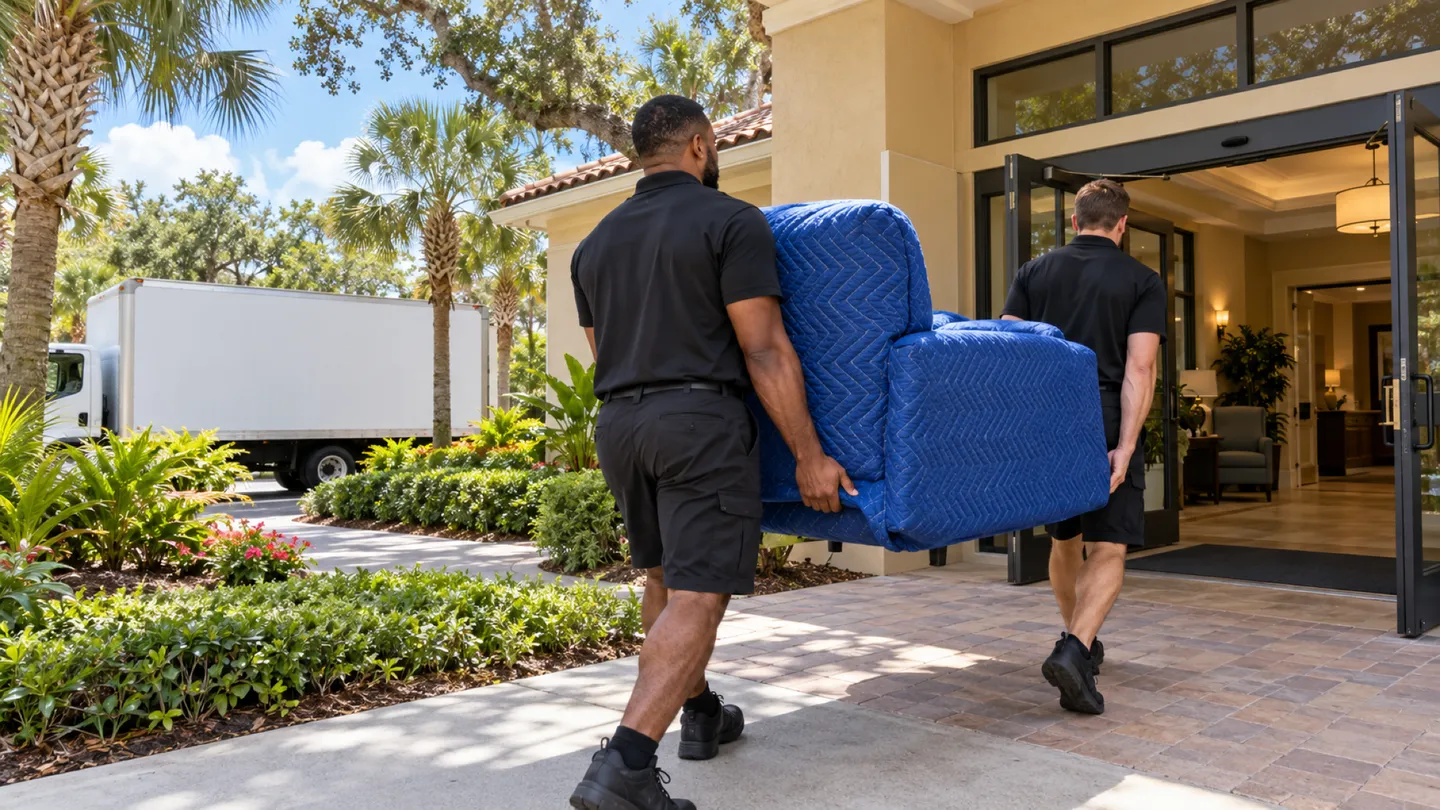
Assisted Living Facility moving in St. Johns County and Jacksonville: moving crew at work
  • Licensed & Insured Fully Covered
  • Owner-Operated By Devin Vangel
  • Northeast Florida St. Johns + Duval + Beyond

Start your free assisted living facility move quote

verified For estimate purposes only credit_card_off No credit card required

Planning a Assisted Living Facility Move

Work at an assisted living community comes in two sizes. The administrator books the big one: a business office moving down the hall, a wellness suite giving up its room to the activities program, or a lobby and dining room refurnished after a renovation. Families book the small one, dozens of times a year: a parent leaving a house in Mandarin or Ponte Vedra Beach for a one-bedroom apartment, or moving from independent living into a memory care room across the campus.

We plan both around the same fixed points, meal service, medication passes, and visiting hours, because those don’t move for anyone. Common-area jobs are done in zones so residents keep a lounge and a dining room open. Resident moves follow the family’s floor sketch for a room that’s often a fraction of the house it replaces. Many First Coast retirees have sons and daughters who live far away, so we set up the room plan by phone and photo with that relative, while the carry itself stays local. For the household side of a move, see our senior moving service.

Who usually signs off
Community administrator or facilities director for shared spaces; the resident and family approve the resident-room plan
Timing that works
Shared-space work around meals, activities, and visiting hours; resident rooms after the family and community confirm a move-in window, with a storm backup during hurricane season

What typically moves

  • Business office and admissions desks Desks, file cabinets, and the admissions director’s office labeled by room; each workstation’s computer is unplugged, wrapped, and plugged back in where it lands.
  • Lobby and lounge seating Sofas, wingback chairs, and side tables moved one zone at a time, so residents keep a place to sit while we work.
  • Dining tables and side chairs Moved between lunch and dinner service or after the evening meal, with chair counts checked table by table.
  • Activity-room tables and craft cabinets Puzzle tables, game shelves, and craft supplies boxed by shelf, so the activities director finds everything where it was.
  • A resident’s recliner, dresser, and bed The pieces the family chose from the house, placed to the room sketch with a clear walking path for a walker or wheelchair.
  • Framed photos, keepsakes, and a familiar lamp Packed in labeled cartons and set out on move-in day, if the family asks, so the room feels lived-in that evening.

Access and scheduling

The community decides where we can go and when. Expect a delivery entrance away from the main lobby, a specific elevator, and quiet periods around meals and afternoon rest. Memory care wings sit behind keypad doors, so a staff member lets the crew in and out each trip. We confirm those rules with the front desk or facilities director in writing before the day.

For a resident move, the family and the community agree on the move-in date first, and we fit the carry around it: the house in the morning, the new room before dinner. If the relative arranging things is far away, we call them from the house and again from the finished room. Common-area projects run in phases the administrator approves, with evening work on request when a dining room can’t close during the day. From June through November we hold a second date in reserve.
Protection and handling

Resident safety comes before speed. Hallways stay clear of carts and cartons while residents are walking to meals, and no dolly or loose blanket is left standing in a corridor. Door frames, handrails, and elevator walls get padding before the first trip, because these buildings are also homes.

Personal belongings are handled as personal. We pack a resident’s things in the order the family sets, label each carton with the resident’s name and room, and keep one carton of daily essentials, glasses, chargers, a favorite blanket, apart from the rest so it’s the first one opened. Medications stay off our truck; community staff or the family handle them. Large furniture from a house gets measured against the new room first, so nothing arrives that blocks the bathroom door or the path to the bed.

Who does what

Some of this job belongs to other trades. The written plan names each one.

Medication, care plans, and resident records
Community staff and the family transfer these under the community’s own procedures; our crew leaves all of it with them.
Hospital beds, lift chairs, and mobility equipment
The medical equipment supplier delivers, sets up, or relocates its own equipment; we move ordinary furniture around it.
Choosing what comes from the house
The resident and family decide what fits the new room, often with a senior move manager if they’ve hired one; we pack and place that list.

Not part of our work

  • Making care, placement, or downsizing decisions for a resident.
  • Handling medications, care records, or anything the community’s nursing staff controls.
  • Setting up or adjusting powered medical beds and lift equipment.

Around St. Johns County and Jacksonville

Senior-living communities in Ponte Vedra Beach, St. Augustine, and along the Southside and Mandarin run their own visitor and delivery rules, and those on A1A see heavier traffic in the spring tourist and tournament season. We time arrival to the community’s delivery hours rather than the calendar on the family’s end.

The crew that shows up

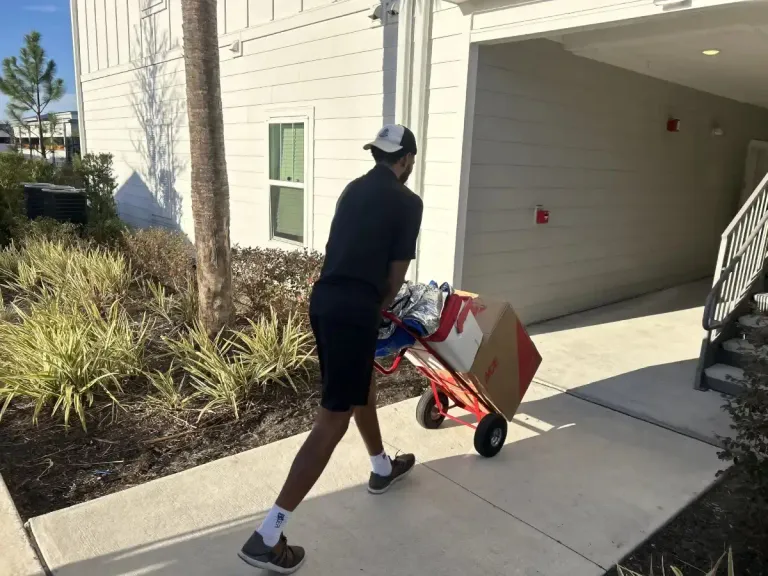
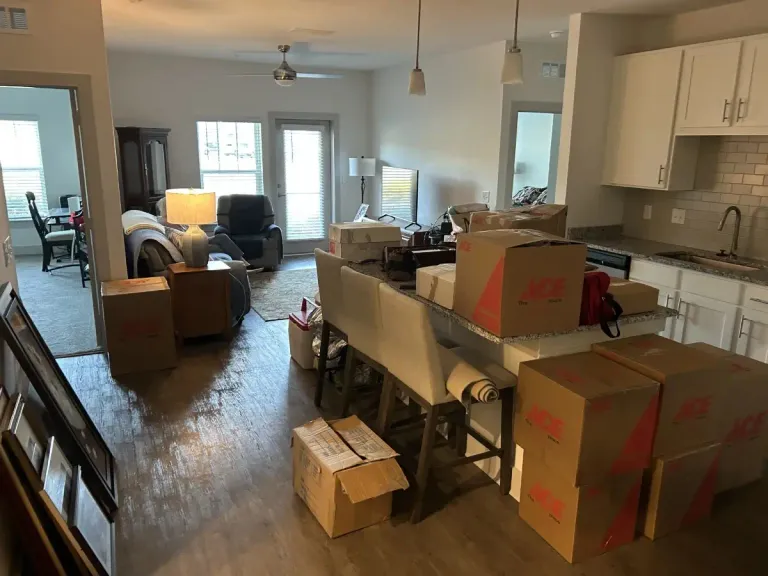
Mover wheeling a hand truck of boxes along a walkwayPacked boxes staged indoors partway through a move

Assisted Living Facility Moving FAQs

Another question? Call (904) 209-9277.

My father is moving into a Jacksonville community and I live far away. How do I direct the room setup?

Send us a floor sketch or photos of the new room and a list of what’s coming from the house. We call you from the house before loading and from the room once the main pieces are placed, and we can send photos. A local friend or the community’s staff can check the room in person if you prefer.

Can our administrator move the business office without disturbing resident routines?

Yes. Office moves are booked as their own job, separate from any resident move, and planned around meal service and quiet hours. We pad the route, keep the halls clear between trips, and set the office up by your room list. Evening work is an option if the office sits beside a busy common area.

The dining room has to stay open. How do you refurnish it?

In sections. We clear and reset one area between lunch and dinner, then the next area after the evening meal, so there’s seating for every resident at every service. Chair and table counts are checked against your plan before we leave each section.

How much furniture from the house will fit in an assisted living apartment?

Less than most families expect. We measure the key pieces, the bed, recliner, and dresser, against the room plan before move day and tell you what won’t work. The family decides what else goes to relatives, donation, or sale; we pack and carry what’s chosen for the room.

Plan your business move

Tell us both addresses, the building rules you know about, and the dates you cannot move. We will send back a written plan and estimate.

Call (904) 209-9277

Mon–Sun 8:00 AM – 7:00 PM

Call Now call 904-209-9277