Commercial Service

Gym Equipment Moving in St. Johns County and Jacksonville

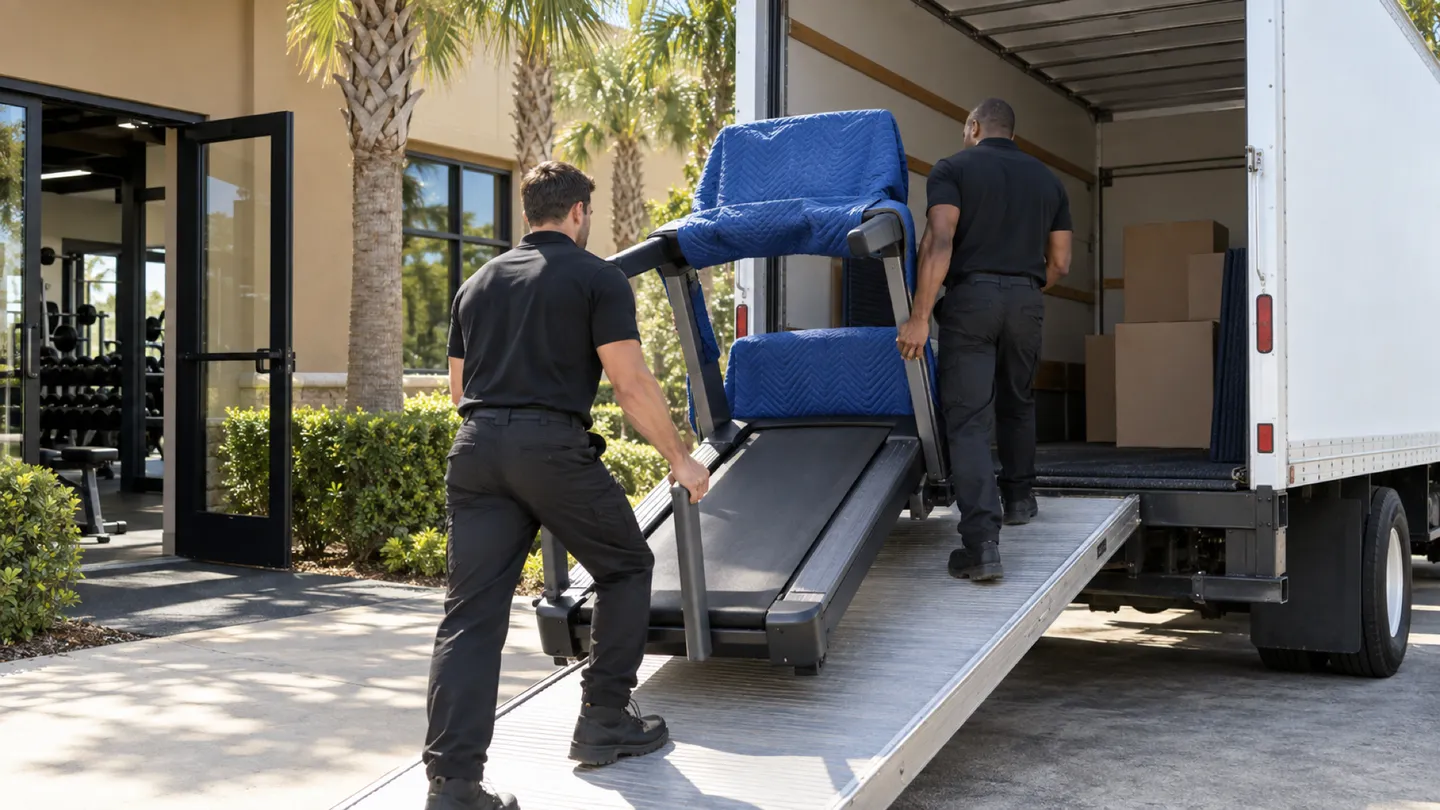
Your fitness equipment technician prepares the powered cardio and weight-stack machines. Our crew moves the iron, the frames, and the flooring they sit on.

(904) 209-9277
Gym Equipment Moving moving in St. Johns County and Jacksonville: moving crew at work
  • Licensed & Insured Fully Covered
  • Owner-Operated By Devin Vangel
  • Northeast Florida St. Johns + Duval + Beyond

Start your free commercial move quote

verified For estimate purposes only credit_card_off No credit card required

How We Plan Gym Equipment Moving

A gym floor is heavy in two different ways. Plates, dumbbells, benches, and freestanding racks are simply dense steel, and our crew can move them with the right carts and enough hands. Powered treadmills, ellipticals, and selectorized machines are heavy and mechanical, with drive motors, consoles, weight stacks, and cables that the manufacturer expects a trained technician to secure before transport and adjust afterward.

So the work splits cleanly. Your fitness equipment dealer or service technician goes first: consoles come off where the model requires it, stacks are pinned or unloaded, cables are released, and anything bolted to the floor is unbolted. We then clear the free weights by rack, pad and carry each released machine to the truck, and move the frames and cardio units to the numbered footprints on your new floor plan. The rubber tiles come up last and go down first at the new room. Once the machines are on their spots, the technician returns to reassemble, tension, level, and test before members use them.

Who usually signs off
Gym owner, facilities manager, or amenity manager who approves the equipment list and access plan
Timing that works
A closure window chosen around member or resident use, equipment technician availability, and the destination floor’s readiness; an evening or weekend on request

What typically moves

  • Iron plates and bumper plates Counted off each tree by weight, boxed or stacked flat on dollies, and set back on the matching tree at the new floor.
  • Dumbbell sets and their racks Dumbbells ride in weight order so the rack can be refilled pair by pair instead of sorted on the floor.
  • Power racks, squat stands, and rigs Freestanding frames broken down along their bolted joints, with uprights, crossmembers, and hardware tagged by rack number.
  • Adjustable and flat benches Wrapped at the upholstery and hinges and grouped with the rack or station they serve.
  • Released treadmills, bikes, and ellipticals Moved only once your technician has prepared them; decks and consoles are padded and kept upright unless the maker says otherwise.
  • Selectorized strength machines Carried as the technician leaves them, frame and stack plates separately if unloaded, each part tagged to its machine.
  • Interlocking rubber floor tiles Lifted in rows, numbered, and stacked flat so the new floor can be laid in the same pattern.

Access and scheduling

A gym move is sequenced around two visits from the technician. We walk the route with you and the technician beforehand, measure the tallest and longest machines against every door and turn, and set the order: technician preparation, our carry, flooring at the new room, our placement, then the technician’s reassembly day. If a treadmill cannot clear a turn intact, the technician decides what comes off, not the crew.

Most owners close for a weekend or run from a Saturday evening into Sunday to keep the closure short, and we plan to that. A leased space in a Southside or Town Center retail center will set the loading door and hours; a clubhouse fitness room in Nocatee or World Golf Village adds HOA rules on vendor hours and resident traffic. Avoid booking the move for the first weeks of January, when member traffic peaks.
Protection and handling

Weight concentrated on a small wheel is what damages floors, so the route gets hardboard or rubber runners wherever a loaded dolly will roll, including lobby tile and elevator floors. Door frames and elevator walls are padded. Machines travel strapped upright to the truck wall, not stacked, and plates are loaded low and forward.

New rubber flooring is its own hazard. Adhered rolls need time before they take a rolling load, so we ask your flooring installer for the release date and do not drag frames across fresh seams. Each machine is set on its marked footprint the first time to avoid shoving it across the new surface. Florida summers are hard on crews moving iron in a closed truck, so heavy days start early. We report any part that looks cracked or bent to your technician before reassembly.

Who does what

Some of this job belongs to other trades. The written plan names each one.

Treadmills, ellipticals, and other powered cardio
Your fitness equipment dealer or manufacturer-trained technician removes consoles where needed, secures decks and drives for transport, then reassembles and tests them.
Weight stacks, cables, and pulleys on selectorized machines
The technician pins or unloads the stack and releases cable tension before the move, then retensions and checks the machine afterward.
Floor anchors and adhered flooring
Your equipment installer removes and resets anchors, and your flooring contractor lays and releases the new floor.

Not part of our work

  • Removing consoles, opening drive housings, unloading weight stacks, or adjusting cables.
  • Setting floor anchors, levelling machines, or clearing any piece for member use.
  • Lifting with forklifts, cranes, or rigging.

Around St. Johns County and Jacksonville

Fitness floors on the First Coast sit in retail centers along US-1, Philips Hwy, and A1A, in Southside office parks, and in amenity centers across Nocatee, Palencia, and World Golf Village. Many are ground-floor spaces with a single rear door, so the tallest rig or treadmill usually decides the route.

The crew that shows up

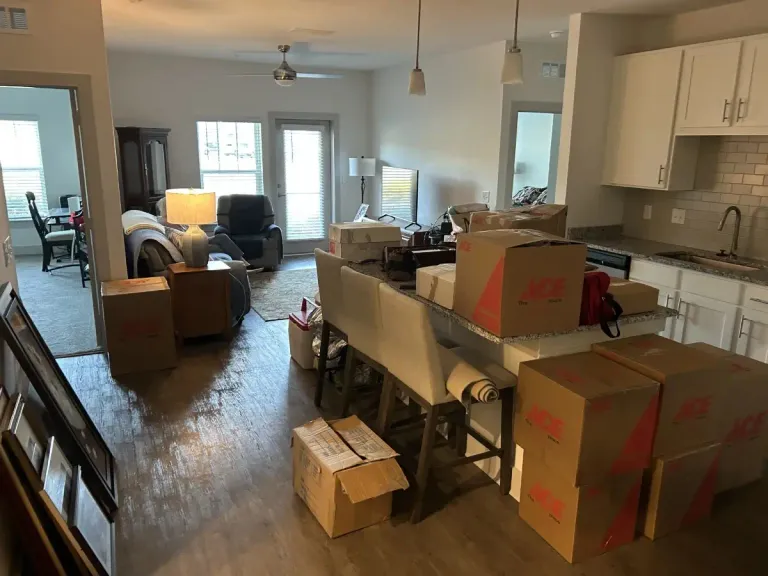
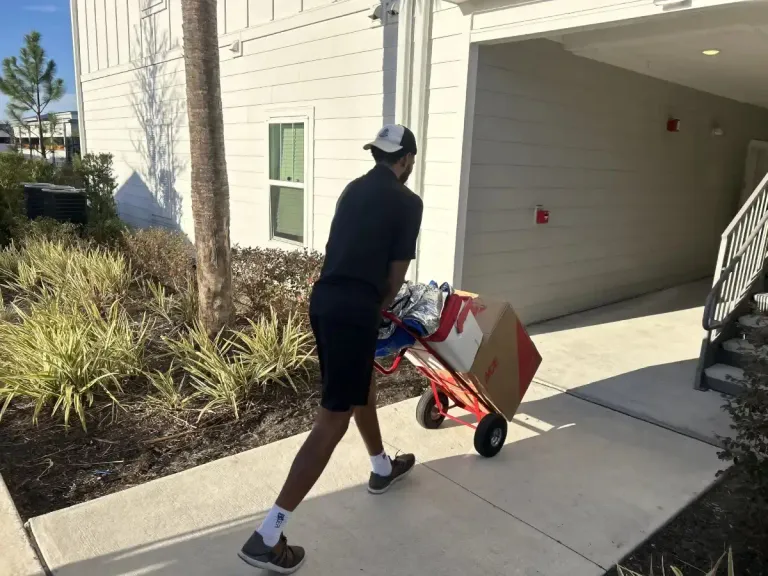
Packed boxes staged indoors partway through a moveMover wheeling a hand truck of boxes along a walkway

Gym Equipment Moving FAQs

Another question? Call (904) 209-9277.

Do we need our fitness technician on move day, or only afterward?

Usually both. The technician prepares powered cardio and selectorized machines before we carry them, and returns to reassemble and test once they are on their footprints. Some owners book the prep for the evening before so our crew can start first thing. We agree the timing with the technician directly once you introduce us.

Can you keep dumbbells and plates in order so we can reopen quickly?

Yes. Dumbbells travel in weight order by rack and plates by denomination, and each rack is labeled to its new position. At the new floor the racks go down first and are refilled pair by pair, so staff are not sorting iron on opening morning.

Our new space has rubber flooring still curing. When can the machines go in?

When your flooring installer says the surface can take rolling loads. We plan free weights and racks, which can be carried and set down, ahead of heavy wheeled machines if that helps. Give us the numbered footprint plan so each machine lands on its spot the first time.

Will a power rack come apart and go back together the same way?

Freestanding racks and rigs break down along their bolted joints. We tag each upright, crossmember, and hardware bag with the rack number and photograph the setup before it comes apart. If the rack was anchored, your installer releases and later resets the anchors.

Plan your business move

Tell us both addresses, the building rules you know about, and the dates you cannot move. We will send back a written plan and estimate.

Call (904) 209-9277

Mon–Sun 8:00 AM – 7:00 PM

Call Now call 904-209-9277