
Commercial Service

Lease-End Office Decommissioning and Donation Coordination

You decide where surplus furniture goes. We tag it by destination, deliver each load to your chosen recipient, and clear the suite for the landlord’s walk.

(904) 209-9277
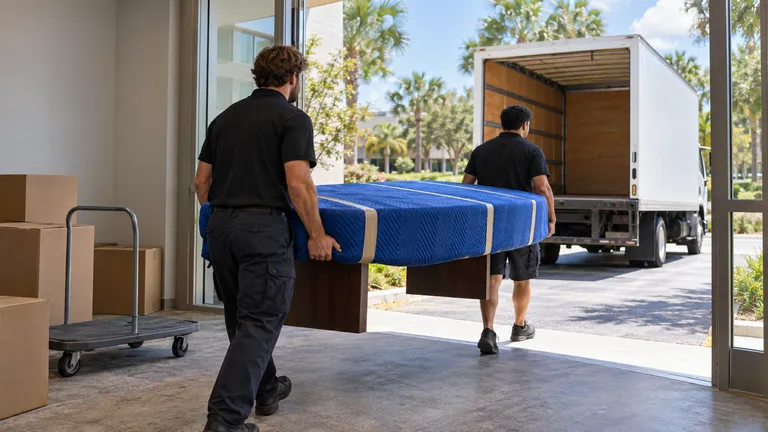
Decommissioning & Donation Coordination moving in St. Johns County and Jacksonville: moving crew at work
  • Licensed & Insured Fully Covered
  • Owner-Operated By Devin Vangel
  • Northeast Florida St. Johns + Duval + Beyond

Start your free commercial move quote

verified For estimate purposes only credit_card_off No credit card required

How We Plan Decommissioning & Donation Coordination

A lease ending usually leaves more furniture than the next office can use: the extra conference table, a floor of older desks, reception chairs nobody wants to take along. Clearing it well means every piece has somewhere to go before the truck arrives, and the empty suite matches what the lease says it should look like when you hand back the keys.

Here is the sequence. To begin, we tour the suite with your office or facilities manager and tag every loose piece with its destination: the new office, a donation recipient you have chosen, a recycler, or disposal. Next, your team checks with every recipient which pieces it wants and which days its dock is open, since schools, nonprofits, and resellers each have their own limits. Then we load by destination, one recipient at a time, so a good conference table does not end up on the same truck as broken chairs. Last, the empty rooms are walked again against the landlord’s restoration checklist, and whatever is left for a contractor or the building goes on a short list before the keys go back.

Who usually signs off
Tenant’s facilities or office manager, with the person responsible for lease surrender approving the final inventory
Timing that works
After staff identify retained property and before the landlord’s restoration inspection and key return; allow a backup date in hurricane season

What typically moves

  • Surplus desks, returns, and pedestals Tagged by recipient; pedestals emptied and keys taped inside so the receiving party can open them.
  • Conference tables and meeting chairs Tables split at their joints with hardware bagged to the top, chairs grouped as the set a recipient agreed to take.
  • Reception and lounge seating Kept together as sets and wrapped, since recipients usually accept matching pieces more readily than singles.
  • File cabinets and bookcases Emptied and cleared of records by your staff first, then tagged for reuse, donation, or recycling.
  • Break-room tables and freestanding appliances Staff clear and defrost any fridge a day ahead; under-counter and built-in units belong to the landlord.
  • Whiteboards and loose shelving Free-standing and hanging-rail pieces only; anything screwed to the wall waits for the landlord’s contractor.

Access and scheduling

The order of loads matters more than the day. Items headed to the new office go first, on their own truck or trip, so they are not mixed with surplus. Donation loads follow, timed to each recipient’s receiving hours, which are often weekdays only. Recycling and disposal go last, once your team has had a final look at what is left.

Your old building still sets the rules: dock slots, freight-elevator bookings, and move hours. Newer St. Johns County buildings off CR 210 frequently have a single elevator for every tenant; Southside buildings near Baymeadows Rd and Deerwood Park usually book the dock by the hour. We confirm those limits, then work the loads backward from the date of the landlord’s walk-through so there is time to deal with anything left over. From June through November we keep a spare day before that walk.
Protection and handling

Surplus is still worth protecting, because a recipient may turn away a scratched table. Pieces going to donation are padded and wrapped like any other move, and tags stay on until the recipient signs for the load. We note visible damage before loading, so recipients know what they are accepting.

The empty suite gets the same attention. We pad door frames and elevator walls on the way out, and lift furniture rather than drag it across carpet the landlord will inspect. Staff clear every drawer and cabinet of paper before we tag it; anything with records inside stays put until your team handles it. When the rooms are clear, we walk them with your manager and the restoration checklist, noting cable runs, wall anchors, and building fixtures still in place so you can assign them before the inspection.

Who does what

Some of this job belongs to other trades. The written plan names each one.

Choosing recipients and confirming acceptance
Your team picks each donation recipient or recycler, confirms what it takes and when, and requests any acknowledgment for your records.
Restoration work the lease requires
The landlord’s contractor or your own trades remove cabling, wall-mounted fixtures, and anchors, and patch and paint as the lease requires.
Records and data
Your staff or shredding vendor clears documents and drives before furniture is released.

Not part of our work

  • Selecting recipients, negotiating acceptance, or issuing donation receipts.
  • Deciding what the lease requires, or signing off the suite for the landlord.
  • Removing fixed installations, cabling, or wall repairs.

Around St. Johns County and Jacksonville

Lease-end clearances on the First Coast run from Southside suites near Southpoint and Deerwood Park to downtown Jacksonville towers and the newer Nocatee buildings. Recipients within St. Johns and Duval counties keep the delivery trips short.

The crew that shows up

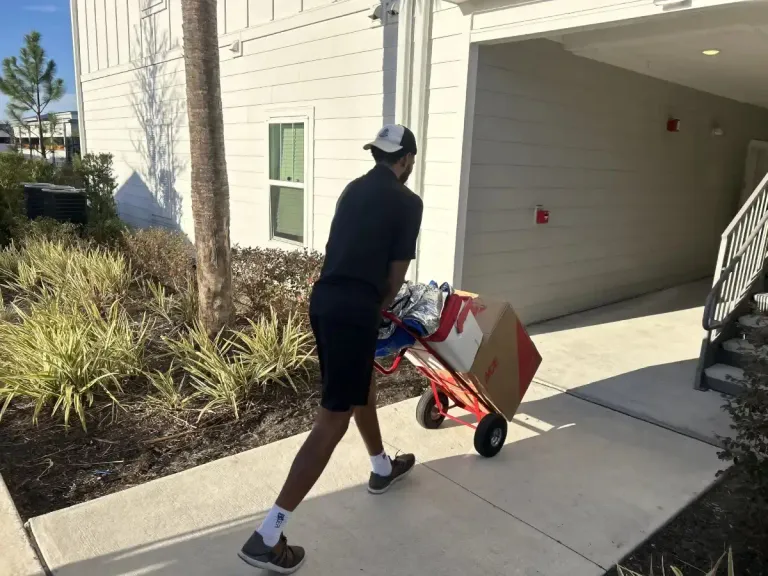
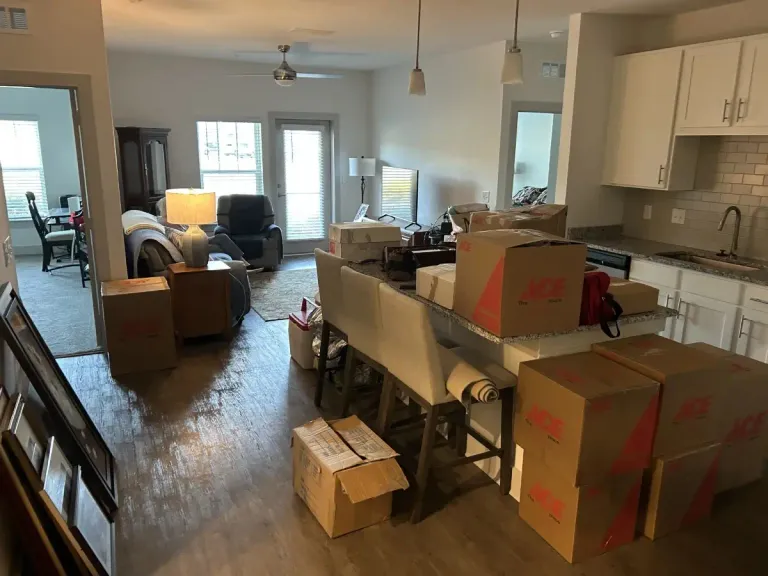
Mover wheeling a hand truck of boxes along a walkwayPacked boxes staged indoors partway through a move

Decommissioning & Donation Coordination FAQs

Another question? Call (904) 209-9277.

A school will take our desks but not the chairs. What happens to the chairs?

They go wherever your team decides next: another recipient, a recycler, or disposal. Because every piece is tagged by destination during the walk, a change like this means retagging the chairs, not re-sorting a mixed truck. Tell us before loading day and we build the loads around it.

Can the surplus leave before the landlord’s inspection date?

That is the point of working backward from the walk-through. We clear the suite in destination order ahead of the inspection, then walk it with your manager against the landlord’s checklist. That leaves days, not hours, to deal with any cable, anchor, or fixture still in the rooms.

Will you give us a donation receipt for our records?

No. The acknowledgment comes from the recipient, since it is their receipt of your donation. We can give you a list of what went in each load, by room and piece, which your team can send to the recipient when requesting the acknowledgment.

Do built-in reception counters have to come out before we leave?

That depends on your lease and what the landlord decides. If the counter was built into the suite, the landlord’s contractor usually removes it; if it is freestanding tenant furniture, we can move it like any other piece. We note it on the checklist either way.

Plan your business move

Tell us both addresses, the building rules you know about, and the dates you cannot move. We will send back a written plan and estimate.

Call (904) 209-9277

Mon–Sun 8:00 AM – 7:00 PM

Call Now call 904-209-9277