Warehouse & Light Industrial

Contractor and Trade Shop Moving in St. Johns County

Tool crib, benches, parts bins, and loose material moved by bay after the trucks roll out, while your drivers keep the fleet and jobsite tools working.

(904) 209-9277
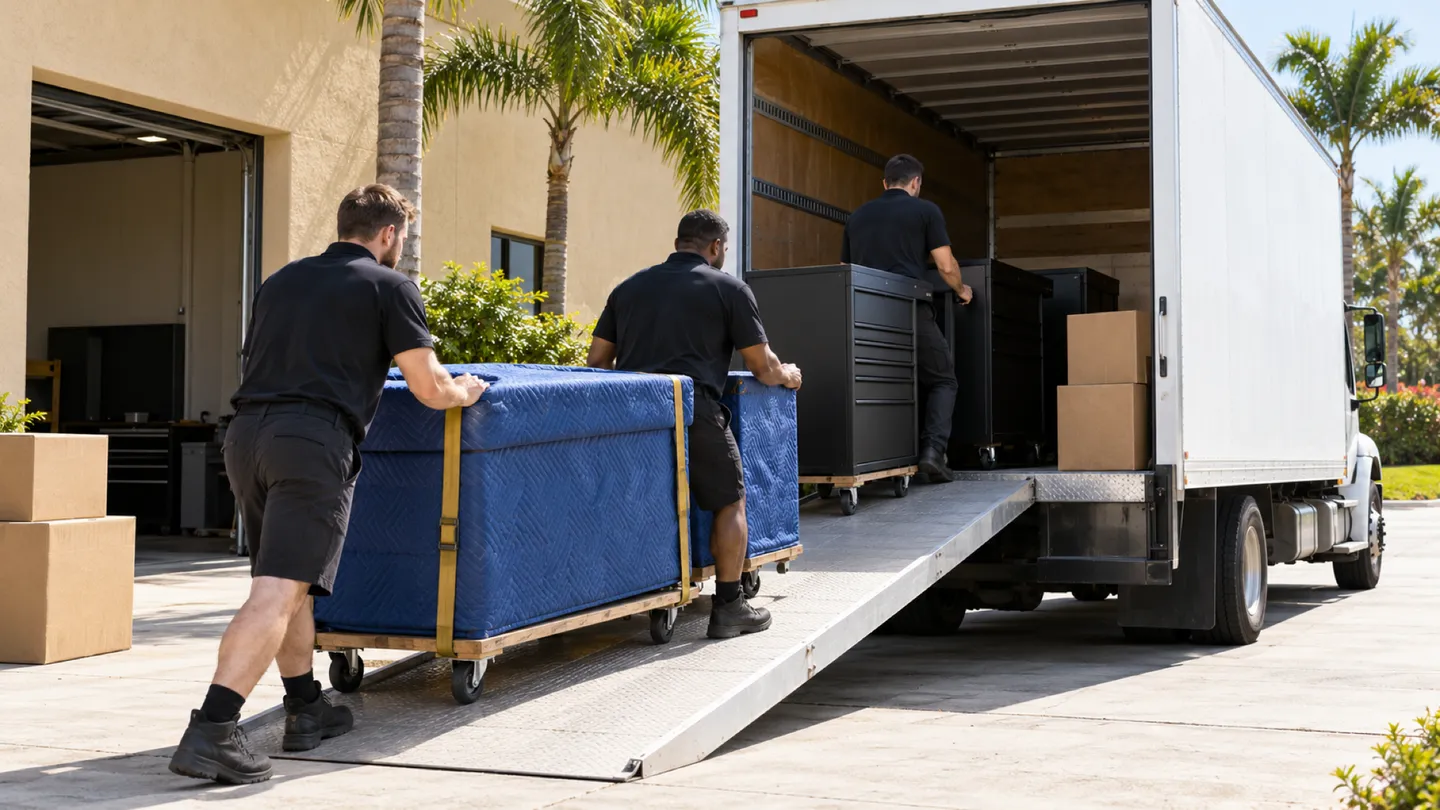
Contractor & Trade Shop moving in St. Johns County and Jacksonville: moving crew at work
  • Licensed & Insured Fully Covered
  • Owner-Operated By Devin Vangel
  • Northeast Florida St. Johns + Duval + Beyond

Start your free contractor & trade shop move quote

verified For estimate purposes only credit_card_off No credit card required

Planning a Contractor & Trade Shop Move

An electrical, plumbing, HVAC, or pool contractor’s shop is empty for only a few hours a day. The vans leave at dawn, crews come back in the afternoon for tomorrow’s material, and anything missing from its usual shelf costs a trip to the supply house. A shop move has to fit into that gap.

Around Jacksonville and St. Johns County these shops sit in flex bays off Philips Hwy and Baymeadows Rd, on the Westside, and along US-1 toward St. Augustine, and the new bay is rarely laid out like the old one. So we start with your shop manager’s map: which bay gets the tool crib, where the fitting bins go, which wall holds the conduit or copper, where the benches stand. We move the crib first so the next morning’s pulls work, then parts bins and material, then benches and the office. Your drivers move the trucks, vans, and trailers and whatever tools ride on them. Anything bolted down, plumbed in, or pressurized stays with the trade that set it up.

Who usually signs off
Shop owner or operations manager who approves the bay map and decides which tools stay with active field crews
Timing that works
Right after the morning dispatch, when the vans are out and the shop is empty, or on a Saturday; early starts in summer and a spare date between June and November

What typically moves

  • Tool crib cabinets Drawers taped or locked, each cabinet tagged with its new bay and position.
  • Rolling toolboxes and gang boxes Your supervisor decides which stay on jobsites; the rest go by crew assignment.
  • Fitting, fastener, and wire-nut bins Lidded or boxed by shelf address and split into loads a person can safely lift.
  • Conduit, pipe, and trim stock Bundled by size and length, ends padded, and checked against the door and turn at the new bay.
  • Wire spools and reels Spools rolled or carted to the wire wall; heavy reels ride low and chocked.
  • Portable workbenches and vises Benches and shelves stay together; bench vises come off only if your lead wants them off.
  • Shop office and parts counter Desk, filing, and the counter where crews sign out material go last and set up first.

Access and scheduling

We time the move around dispatch. Crews load up and leave, we start once the lot is clear, and your manager decides whether the shop closes for a whole day or keeps one supply aisle open for afternoon returns. Saturday work is possible by arrangement if the weekday gap is too short.

Flex bays differ at the door. The old unit may have a dock, the new one only a roll-up door at ground level, and long conduit or pipe needs a straight run in. We check both doors, the turn inside, and where our box truck can park clear of the neighboring bays. Many flex parks require an insurance certificate from any mover on site; tell us who the landlord is and we issue one. Metal-roofed bays run hot by mid-morning in summer, so heavy carrying starts at first light.
Protection and handling

Every label names a place, not just the shop: bay, wall, shelf. Both the old and new locations go on each cabinet and bin, so anyone can trace a missing part. Small fittings stay in closed bins with lids taped, and heavy bins are split so no single box is a strain to carry.

Bench tops and cabinet corners get pads; long material rides on the side walls of the truck with ends protected and nothing stacked on top that could bow it. Compressed-gas cylinders, fuel cans, solvents, refrigerant, and pool chemicals stay off our truck, and your own people handle them. Afternoon storms are a daily summer event, so cardboard and paper wait inside the bay rather than on the apron.

Who does what

Some of this job belongs to other trades. The written plan names each one.

Trucks, vans, trailers, and jobsite tools
Your drivers and field supervisors move the fleet and everything that rides on it.
Bolted machines, anchored cantilever racks, and the air compressor
The installer, equipment dealer, or a rigging company releases and resets them; a licensed trade handles any electrical or air-line connection.
Gas cylinders, fuel, solvents, and chemicals
Your team or your gas supplier moves them under your own safety procedures.

Not part of our work

  • Driving or loading company vehicles and trailers.
  • Unbolting machines or anchored racks, or making electrical or air connections.
  • Hazardous materials such as gas cylinders, fuel, solvents, refrigerant, and pool chemicals.

Around St. Johns County and Jacksonville

Trade shops fill flex parks along Philips Hwy and Baymeadows Rd, on the Westside near I-10, and along US-1 and SR 16 around St. Augustine. Growth in Nocatee and St. Johns keeps pulling contractors south toward the CR 210 area. Late-summer moves carry a storm backup.

The crew that shows up

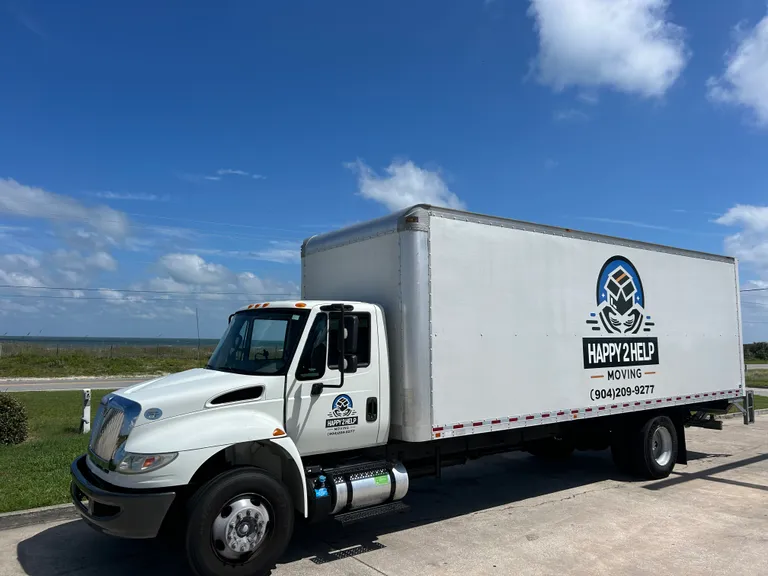
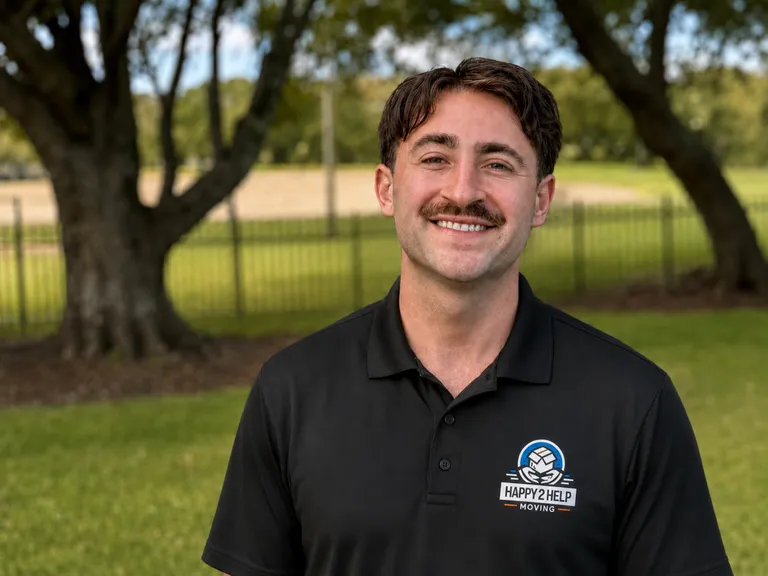
Happy 2 Help Moving box truck with the company logoHappy 2 Help Moving crew lead in a black company polo

Contractor & Trade Shop Moving FAQs

Another question? Call (904) 209-9277.

Can our crews still pick up material the afternoon we move?

Yes, if your manager holds one aisle back. We move the tool crib and the released bays first and leave a marked supply area at the old shop for afternoon pulls. That aisle comes over last, either at the end of the day or first thing the next morning, before the vans roll.

How do we label a tool crib when the bay numbers change?

Give us an old-to-new map. Every cabinet, drawer unit, and bin gets both addresses, so a part can be traced without opening a box. Your shop lead checks that nothing is left without a new address before we load. The crib goes to its new bay first, so tomorrow’s sign-outs work.

Some of our pipe racks are bolted to the floor. Who handles those?

Freestanding rack sections we can move once they are empty. Anchored cantilever racks are the installer’s job: they release the bolts at the old shop and set the racks down firmly in the new bay. Your crews wait to restock those racks until the installer says they are secure.

Do you move the welding carts and the acetylene tanks?

We can move an empty welding cart once the cylinders are off it. The cylinders themselves stay with your team or your gas supplier, who swaps or moves them under their own procedures. The same goes for fuel cans, refrigerant, and pool chemicals: our crew leaves all of it for your team.

Plan your business move

Tell us both addresses, the building rules you know about, and the dates you cannot move. We will send back a written plan and estimate.

Call (904) 209-9277

Mon–Sun 8:00 AM – 7:00 PM

Call Now call 904-209-9277