Warehouse & Light Industrial

Warehouse Moving in Jacksonville and St. Johns County

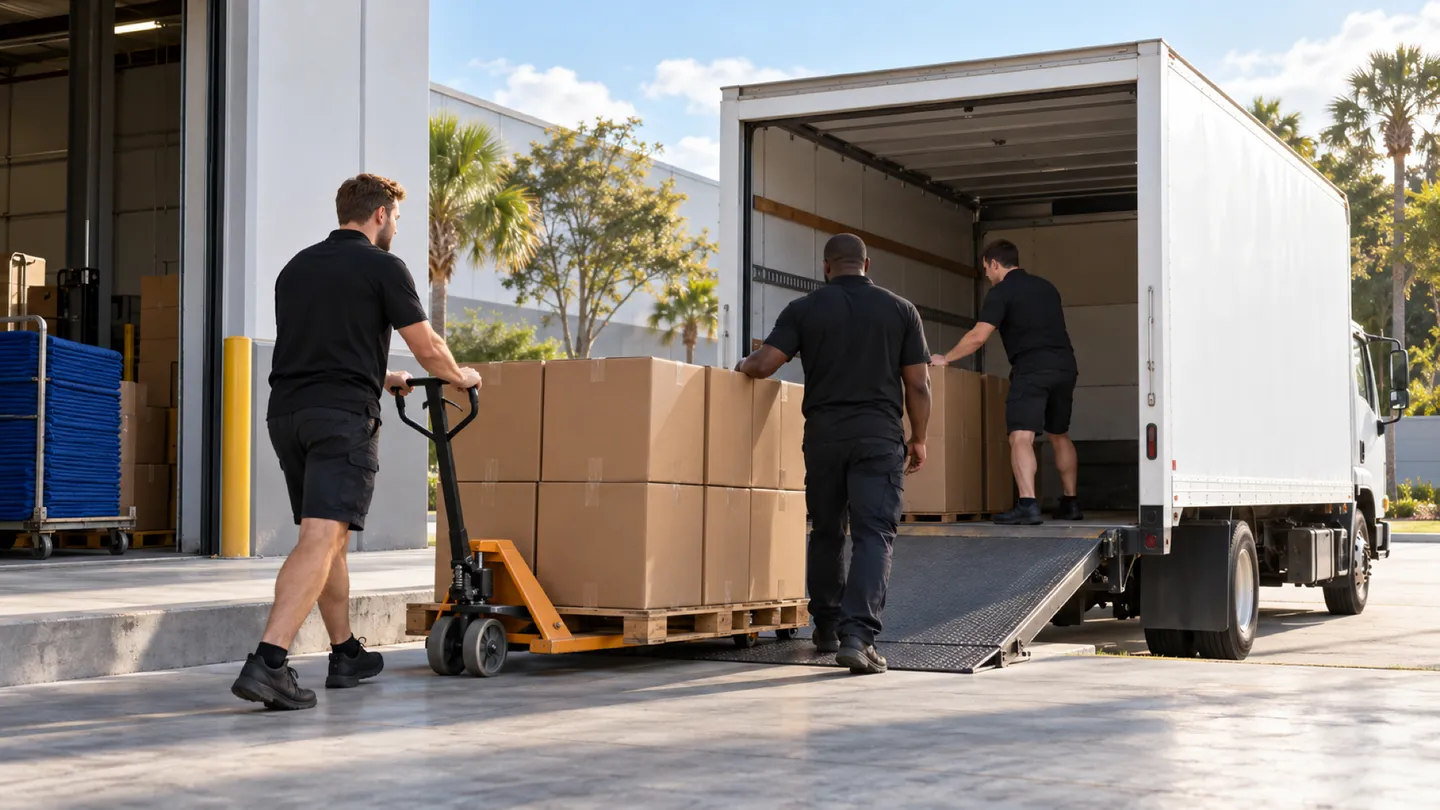
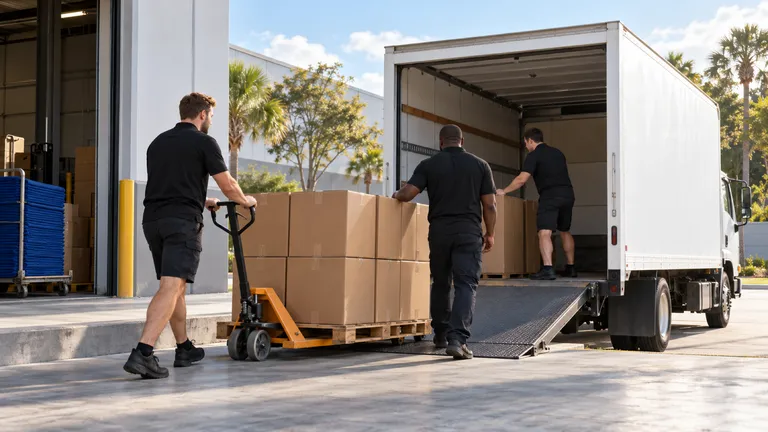
Released pallets and cartons loaded in zone order at your old dock and set down bay by bay at the new one, around your installer and lift operators.

(904) 209-9277
Warehouse moving in St. Johns County and Jacksonville: moving crew at work
  • Licensed & Insured Fully Covered
  • Owner-Operated By Devin Vangel
  • Northeast Florida St. Johns + Duval + Beyond

Start your free warehouse move quote

verified For estimate purposes only credit_card_off No credit card required

Planning a Warehouse Move

On the First Coast most warehouse moves run between two industrial buildings a short drive apart: a Westside unit off I-10 near Cecil trading up to a taller building, or a Northside operation near the airport moving closer to JAXPORT. The drive is the easy part; the first week depends on stock landing in the bays your pickers expect.

So the plan is built backward from the receiving map. Your operations lead numbers the zones at the new building and assigns every aisle at the old one a destination. Trucks are loaded zone by zone in that sequence, so the pallets and cartons that come off first are the ones going deepest into the new space. Racking is the installer’s job and the lift trucks belong to your operator; our crew works the floor around them, moving released pallets, carton stock, carts, and packing tables along the paths your lead has opened.

Who usually signs off
Warehouse manager or operations owner who approves the stock release, destination map, and receiving count
Timing that works
A daybreak start after your final outbound pick and release count, set around the racking installer’s dates, with a second date held in late-summer storm weeks

What typically moves

  • Shrink-wrapped pallets of released stock Each pallet carries a zone tag from your sheet; we check the tag as it leaves the old dock and again as it lands.
  • Carton reserve by aisle Loaded as one block per aisle code, and if an aisle has to split across two trucks, we tell your lead first.
  • Parts bins and nested totes Lids taped, stacks strapped, bin labels left facing out so your team can read them without unstacking.
  • Packing and inspection tables Set in the new work area ahead of the stock, giving the first pallets somewhere to be broken down.
  • Stretch-wrap stands, label carts, and supply cages Emptied or banded shut, then sent to the dock zone where your receiving team will need them first.
  • Break room and dock office furniture The shipping desk, chairs, lockers, and break tables go last, once the floor is placed.

Access and scheduling

A warehouse move is set by the dock doors, not the clock. We walk both buildings with your lead to see which doors are open to us, whether there are dock plates or levelers, where a box truck can back in without blocking trailer traffic, and where people cross the path. At a multi-tenant park the property manager may assign a door and ask that the landlord appear on an insurance certificate; give us the exact wording and we send it ahead.

Your team picks the last outbound order and the moment receiving can start at the new address. If the installer is still bolting down rack in part of the new building, we fill the zones that are finished and leave the rest clear. Loading can run on a Saturday by arrangement if the week’s shipping can’t pause. Metal buildings along I-10 heat up fast after midday in June, July, and August, so we start at first light and plan the heaviest carrying before noon.
Protection and handling

Your release sheet governs the old dock and your receiving map the new one. A pallet without a readable zone tag, or one that doesn’t match its line on the sheet, gets set aside for your lead instead of being placed by guesswork. Your team does the unit counts; we match tags and report anything that doesn’t line up.

Pallets are rewrapped where the film has torn, loose cartons are banded to their pallet, and top-heavy stacks ride against the bulkhead with load bars. Dock edges, door frames, and the new building’s finished office entry get padded. Afternoon storms roll through most summer days, so cartons wait inside the building or the truck rather than on an open apron. Aerosols, fuel cans, propane cylinders, pool chemicals, and other hazardous materials stay off our trucks; your team moves them under its own procedures.

Who does what

Some of this job belongs to other trades. The written plan names each one.

Uprights, beams, and wire decking
Your racking installer takes the uprights and beams down, sets and anchors them in the new building, then tells your manager when each zone is ready to fill.
Forklifts, reach trucks, and high-bay pallets
Your operator or its equipment vendor runs the lift trucks and moves anything stored above floor level; we take pallets from the handoff point they set.
Unit counts and inventory records
Your warehouse team counts, reconciles, and updates the system; our crew checks zone tags against the sheet and flags any mismatch.

Not part of our work

  • Tearing down, moving, or anchoring pallet racking.
  • Operating forklifts or reach trucks, or handling loads that need them.
  • Hazardous materials such as fuels, propane, aerosols, and pool chemicals.
  • Counting units or changing inventory records.

Around St. Johns County and Jacksonville

Distribution and light-industrial buildings are concentrated on the Westside along I-10 toward Cecil, on the Northside around the airport and the roads out to JAXPORT and Blount Island, and increasingly along I-95 south into St. Johns County. Each park sets its own truck entrance and dock rules. Moves booked between June and November carry a second loading date.

The crew that shows up

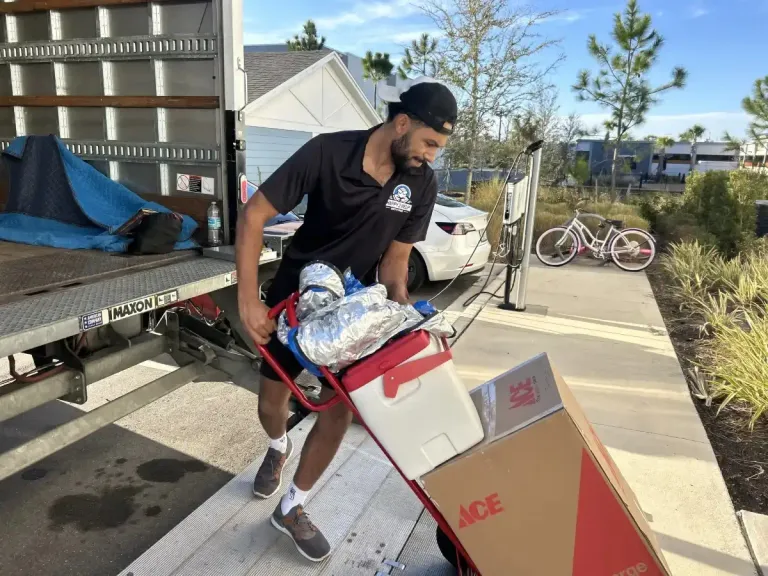
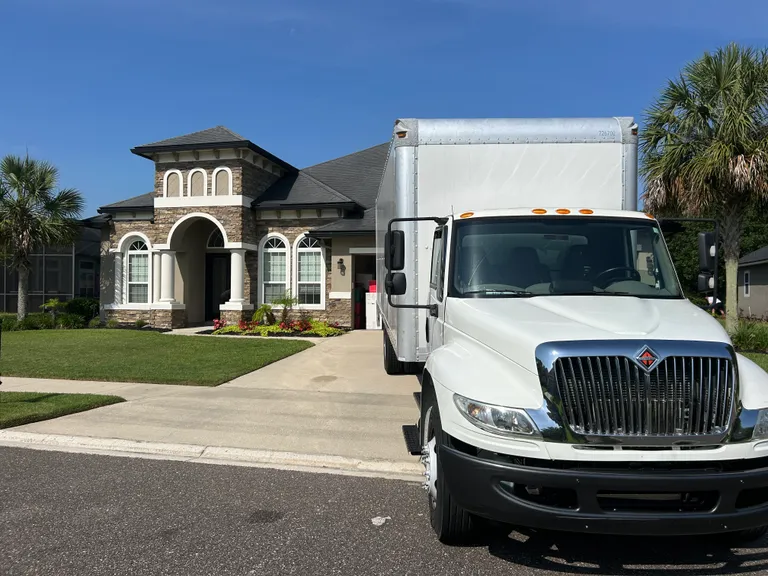
Mover in a black polo pulling a loaded hand truck off the liftgateWhite box truck at the curb outside a home with palm trees

Warehouse Moving FAQs

Another question? Call (904) 209-9277.

Can you work alongside our racking installer at the new building?

Yes, if the zones are separated. Your installer tells your manager which rows are finished and anchored, and we fill those first while their crew keeps working elsewhere. We don’t set stock in a row the installer hasn’t released, and our carts stay clear of the installer’s lift paths.

We still have orders shipping out of the old warehouse. How do we split the stock?

Keep the active pick stock in its own marked area and leave it off the release sheet. We move everything that has been released, zone by zone, while your team keeps shipping from what stayed behind. When your lead calls the final cutoff, that last block is counted, tagged, and loaded as its own group.

What happens to pallets stored up high?

Anything above floor level comes down on your operator’s lift truck, never by hand. Your operator sets a handoff spot near the dock, lowers the pallets there, and our crew takes them from that point to the truck. At the new building the process runs in reverse: we stage pallets at the rack face and your operator puts them up.

Our new unit is off I-95 in St. Johns County. Does the longer drive matter?

Mainly for timing. A run down I-95 takes longer than a move within one park, so we plan fewer, fuller loads and schedule them to miss rush hour around the I-295 interchanges. The zone order on the truck stays the same no matter how far it travels.

Plan your business move

Tell us both addresses, the building rules you know about, and the dates you cannot move. We will send back a written plan and estimate.

Call (904) 209-9277

Mon–Sun 8:00 AM – 7:00 PM

Call Now call 904-209-9277