Warehouse & Light Industrial

Distribution Center Office Moving in Jacksonville

Dispatch, supervisor, and training rooms moved between shift changes, while your operator keeps the floor, the freight, and the equipment running.

(904) 209-9277
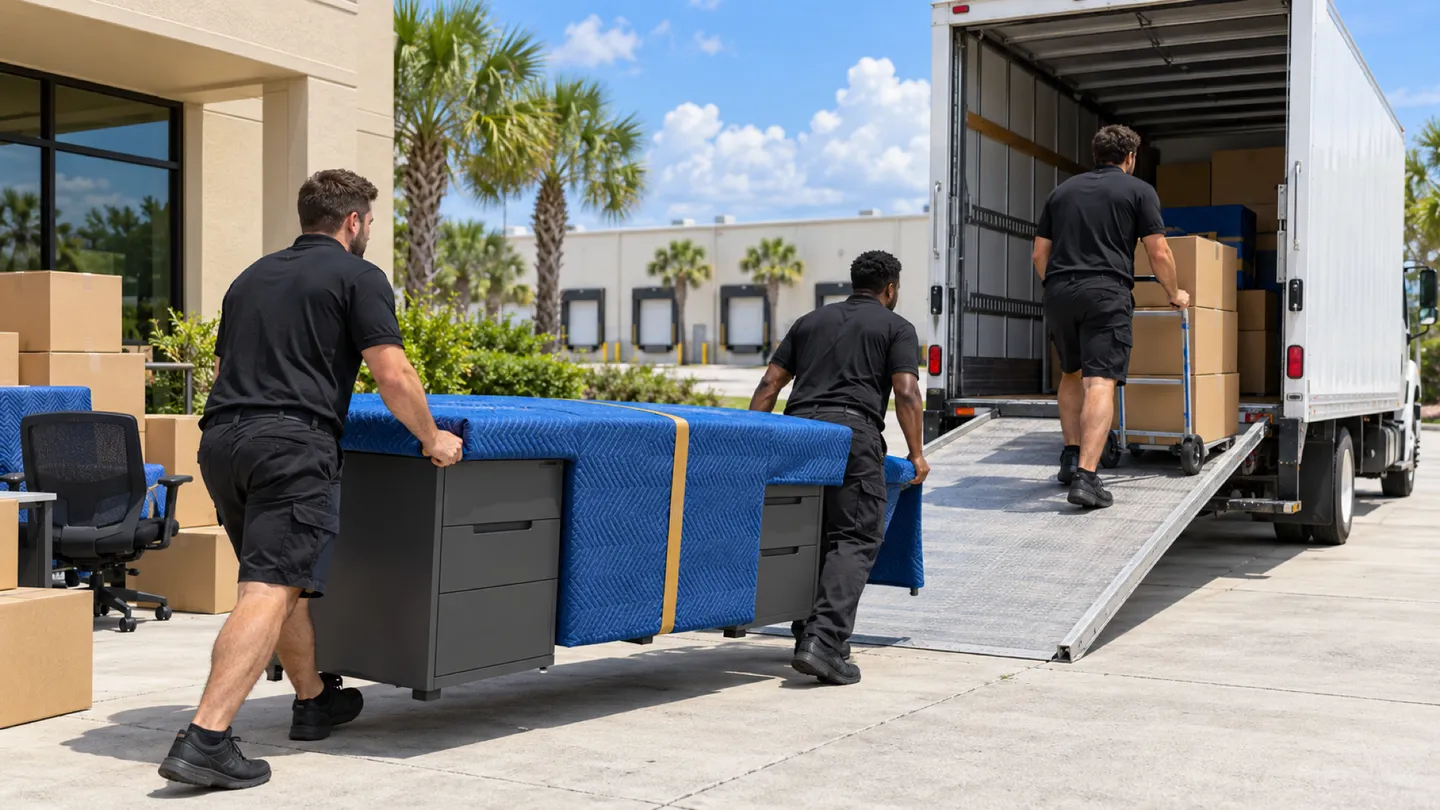
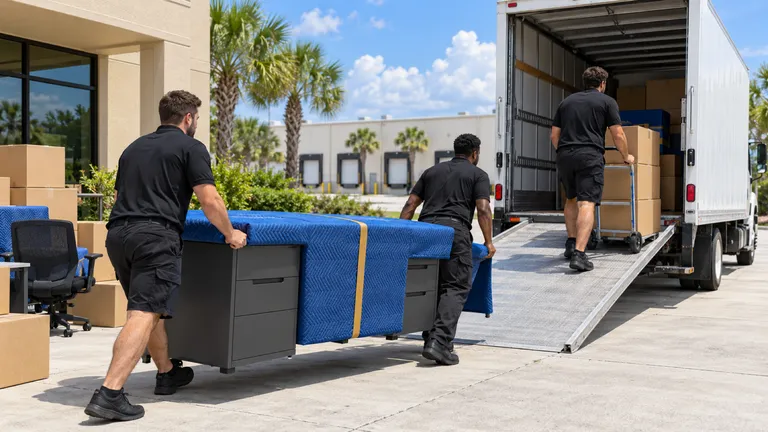
Distribution Center Office moving in St. Johns County and Jacksonville: moving crew at work
  • Licensed & Insured Fully Covered
  • Owner-Operated By Devin Vangel
  • Northeast Florida St. Johns + Duval + Beyond

Start your free distribution center office move quote

verified For estimate purposes only credit_card_off No credit card required

Planning a Distribution Center Office Move

A distribution center rarely stops for its own office move. Trailers keep backing in, the second shift still clocks in, and somebody has to answer the driver window. What moves is the building’s front half: the dispatch room, supervisor offices, the training room where new hires do orientation, HR, and the break room.

Around Jacksonville that front half usually sits beside a busy floor off I-10 on the Westside, near I-295, or along the Northside roads toward JAXPORT. The move follows your shift calendar rather than a single moving day. Your operations manager decides which rooms can close between one shift change and the next, and we clear those rooms, label each desk to its new seat, and have the incoming supervisors’ desks working before their people arrive. Anything past the office door stays with your operator: the conveyors, the lift trucks, the freight, and the floor itself. We come in through the entrance your site lead assigns and leave the warehouse side alone.

Who usually signs off
Distribution center operations or facilities manager who approves the shift handoff plan and office destination map
Timing that works
Room by room between shift changes, usually mid-shift when the parking lot and pedestrian lanes are quietest, with a spare date held during peak storm weeks

What typically moves

  • Dispatch consoles and routing desks The final room to leave and the first reconnected, so dispatchers lose as little time as possible between the old room and the new one.
  • Shift supervisor offices Desks, file cabinets, and wall-mounted whiteboards your facilities contact has released, tagged by shift so each supervisor finds their own.
  • Driver check-in window furnishings Stools, counter organizers, and the paperwork rack, grouped so the new window can open without anyone hunting for forms.
  • Training room tables and chairs Nesting tables and stacking chairs counted by room; the projector cart travels with them.
  • HR and payroll office contents Your HR lead packs and seals personnel files; we carry the closed cartons and the furniture.
  • Break room tables and loose lockers Employees clear their lockers first; freestanding units go to the staff area on your plan.

Access and scheduling

The parking lot is the hazard. At shift change it fills with cars, people on foot, and drivers walking to the check-in window, so we avoid loading then. Your site lead shows us the office door, where the box truck may stand without blocking a trailer turn, and the pedestrian lane our carts should use. Many sites ask visitors to wear high-visibility vests and stay inside marked walkways, and our crew follows the site’s rules.

A typical sequence runs over two or three days: training and HR go first, then supervisor offices, and dispatch last, in a window your manager chooses when the fewest trucks are expected. Saturday work is possible by arrangement when the weekend shift is light. When the new space is a leased building across town, we issue an insurance certificate in whatever wording its property manager asks for.
Protection and handling

Every desk, chair, and carton carries a destination by function and seat: dispatch 3, second-shift supervisor, training room. That way the incoming shift doesn’t need anyone from the move to tell it where things went. Our crew unplugs, pads, and reconnects each seat’s computer and screens at its new desk; your IT contact handles the network, radios, phones, and the systems dispatch runs on.

Office furniture in a distribution center takes a beating from floor dust and pallet traffic, so we note existing damage on the walk and pad edges and corners before anything moves. Floors and door frames along the cart route get runners. In July and August, loading in the early morning keeps paper files and cardboard out of the midday heat radiating off the lot, and cartons wait inside rather than on the dock apron where an afternoon shower can soak them.

Who does what

Some of this job belongs to other trades. The written plan names each one.

Conveyors, dock equipment, lift trucks, and freight
Your operator and its equipment vendors, who keep running the floor while the office moves around them.
Network, radios, phones, and dispatch software
Your IT contact prepares the new rooms and brings the systems up; our part stops at the computers and screens on each desk.
Personnel files and live shift paperwork
Your HR lead and supervisors pack, seal, or hand-carry them; we move only closed cartons.

Not part of our work

  • Anything on the distribution floor: freight, conveyors, dock equipment, or lift trucks.
  • Setting up the network, radios, or dispatch systems.
  • Opening or sorting personnel files or live shift paperwork.

Around St. Johns County and Jacksonville

Large distribution buildings line I-10 on the Westside out toward Cecil, the I-295 beltway, and the Northside corridor between the airport, JAXPORT, and Blount Island. Each site sets its own gate, parking, and visitor rules. Hurricane season runs June through November, so late-summer dates carry a backup.

The crew that shows up

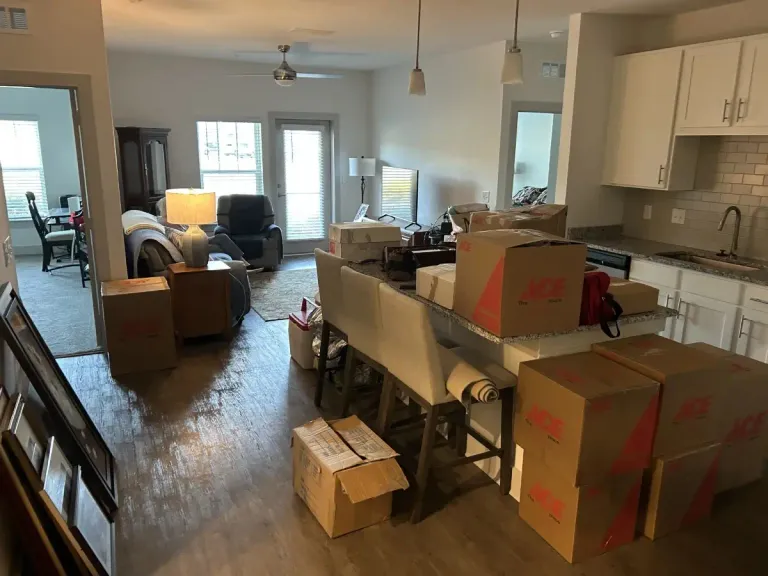
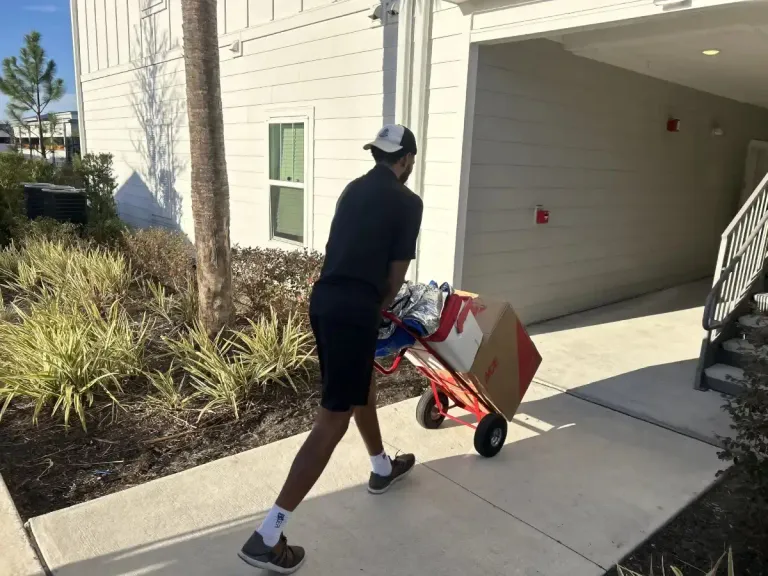
Packed boxes staged indoors partway through a moveMover wheeling a hand truck of boxes along a walkway

Distribution Center Office Moving FAQs

Another question? Call (904) 209-9277.

Can dispatch keep taking calls until its new room is ready?

Yes. Dispatch goes last. Training, HR, and the supervisor offices go first, and the new dispatch room is set up and reconnected before the consoles move. Your manager picks a quiet window for the final switch, and the dispatchers work from the old room until the moment their new desks are ready.

How do you stay clear of trailers and staff in the yard?

Your site lead shows us the office door, a truck spot outside the trailer turning area, and the pedestrian lane we may use. We schedule loading away from shift change, wear whatever visibility gear the site requires, and keep carts on the marked walkway. If the yard gets busy, we pause and wait for your lead’s word.

Our office is moving to a building across the lot. Do we still need a truck?

Often not for the whole job. If a paved route connects the two doors, we can cart much of it across on dollies and use the truck only for large pieces. Your site lead decides whether that route can close to vehicles while we cross. We walk it together first.

Who moves the shift board and the safety postings?

Your supervisors copy anything current first, since a board in transit is a board nobody can read. Your facilities contact releases wall-mounted boards and decides which postings must be up at the new location before staff arrive. We pad and carry the boards and set them where the plan shows; your team rehangs the postings.

Plan your business move

Tell us both addresses, the building rules you know about, and the dates you cannot move. We will send back a written plan and estimate.

Call (904) 209-9277

Mon–Sun 8:00 AM – 7:00 PM

Call Now call 904-209-9277