Warehouse & Light Industrial

Print and Sign Shop Moving in St. Johns County and Jacksonville

Media rolls, rigid boards, and finished signs moved by material and job, around the day your printer technician takes the machines down and brings them back up.

(904) 209-9277
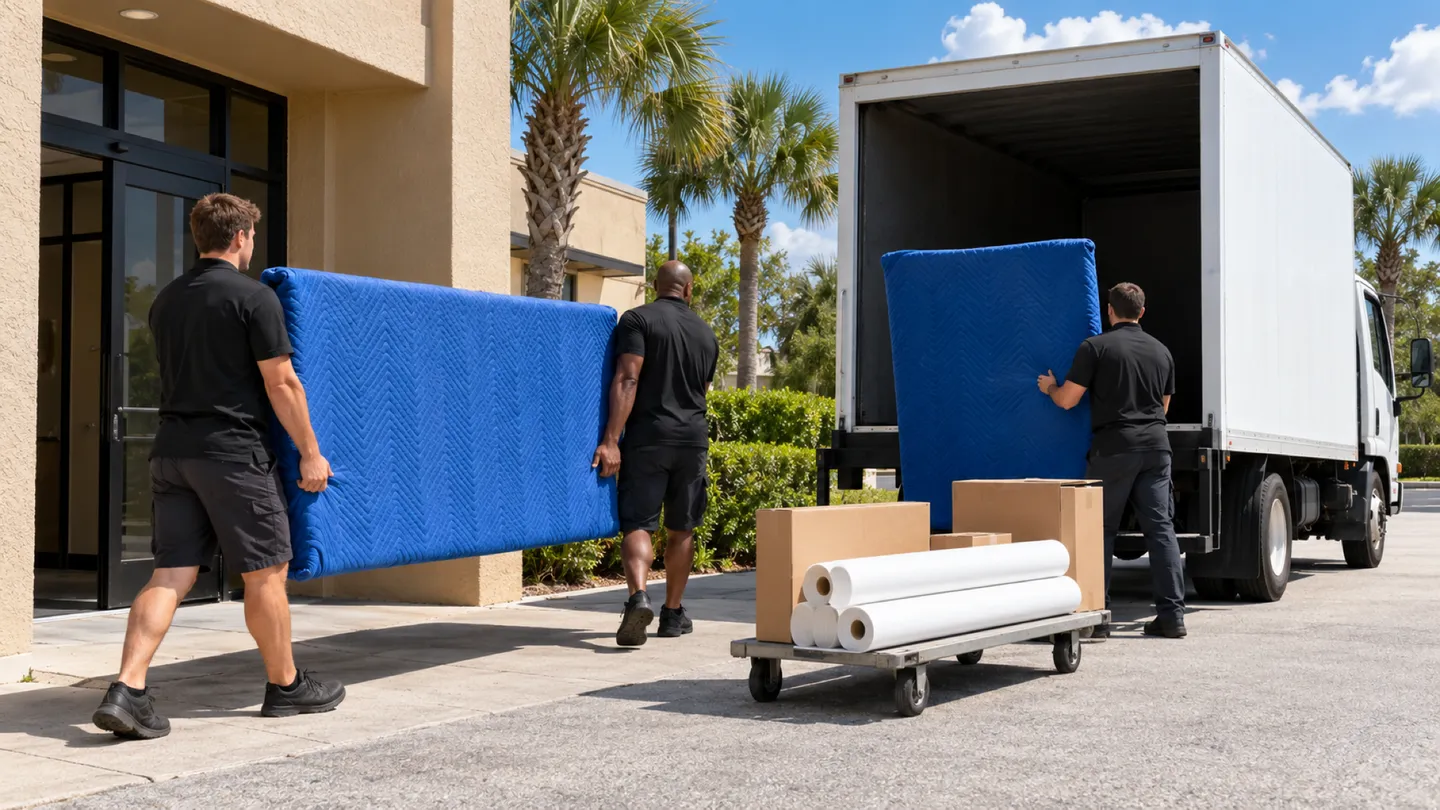
Print & Sign Shop moving in St. Johns County and Jacksonville: moving crew at work
  • Licensed & Insured Fully Covered
  • Owner-Operated By Devin Vangel
  • Northeast Florida St. Johns + Duval + Beyond

Start your free print & sign shop move quote

verified For estimate purposes only credit_card_off No credit card required

Planning a Print & Sign Shop Move

Two schedules meet in a sign shop move. The wide-format printers, flatbed, plotter, and laminator belong to your equipment technician, who drains or caps the ink, locks the print heads, and brings each machine back up at the new shop. Everything around them belongs to us: the vinyl and banner rolls, the stacks of foam board, coroplast, and aluminum composite, the finished signs waiting for install, the cutting tables and application benches.

The technician’s dates set the calendar. Your production manager finishes or reschedules open jobs, and the machines come down after the last run. We move media and benches around that visit and leave each machine footprint clear at the new shop. Media travels grouped by material and width, rigid stock by type and sheet size, and finished work by job so a completed order stays apart from blank stock. At the other end, the benches and media racks go in first, so your team can start cutting and weeding while the technician is still calibrating.

Who usually signs off
Shop owner or production manager who approves the material inventory, open-job priorities, and equipment technician’s schedule
Timing that works
Between the last print run and the technician’s reinstall date, often a Friday teardown with media and benches moving Saturday on request; a spare date in late summer

What typically moves

  • Vinyl, banner, and paper media rolls Kept in their boxes or on core supports so they don’t flat-spot, grouped by material and width.
  • Foam board, coroplast, and aluminum composite sheets Stacked flat by type and size with faces protected; nothing heavy on top of printed or brushed surfaces.
  • Finished signs and panels awaiting install Tagged by job and wrapped face-in, riding apart from blank stock.
  • Cutting and application tables Measured against both doors first; big tables come apart only where your team says they should.
  • Media carts and roll racks Unloaded before they move, then set by the machines they feed.
  • Flat files and hardware bins Drawers taped shut; standoffs, grommets, and stakes stay in labeled bins by job or shelf.
  • Front counter and proof room Counter, sample boards, and the customer proof table go last and set up first.

Access and scheduling

We start by measuring. The widest board, the longest table, and each machine’s crate or cart path are checked against both shop doors, the turn inside, and the truck. A roll-up door at the new unit may be wide enough while the hallway to the finishing room isn’t, and that changes the unload order.

Your technician needs a clear floor on both ends, so we stage media and boards away from the machine path at the old shop and hold the machine positions open at the new one. A Friday takedown with media and benches moving on Saturday, by arrangement, often lets the shop lose just one working day. Most flex-park landlords want an insurance certificate on file before any mover unloads, so we send the landlord one early.
Protection and handling

Media is the fussiest cargo in the building. Rolls travel boxed or supported by their cores, not stood on end without their packaging. Rigid sheets ride flat on padding with interleaving between printed faces, and aluminum composite edges get corner protection, since a dent in the edge shows up on a finished sign. Your team labels each group with material, width or size, and destination rack; we keep groups together.

Paper media, cardboard cores, and adhesive-backed vinyl don’t like humidity, so media leaves the old shop only when the truck is ready and goes straight inside at the new shop. Floors and door frames along the cart path get runners and pads. Your team decides whether partial rolls and offcuts are worth moving.

Who does what

Some of this job belongs to other trades. The written plan names each one.

Wide-format printers, flatbeds, plotters, and laminators
Your service technician readies each machine for transport, reinstalls and calibrates it, or tells us exactly which released pieces our crew may carry.
Open jobs, stock decisions, and offcuts
Your production manager decides what gets finished first, what moves, and what gets thrown out.
Wall-mounted displays, exhaust fans, and anything wired in
Your landlord or a licensed contractor removes and reinstalls them.

Not part of our work

  • Preparing, moving, or calibrating printers, plotters, cutters, or laminators unless the technician releases a piece to us.
  • Solvent inks, cleaning fluids, and adhesives, which your team moves.
  • Deciding which media or unfinished orders are worth keeping.

Around St. Johns County and Jacksonville

Print and sign shops cluster in flex units off Philips Hwy and Baymeadows Rd in Jacksonville, and along US-1 and SR 16 near St. Augustine. Door widths and ceiling heights vary a lot between buildings of the same age. Storm-season moves carry a backup date.

The crew that shows up

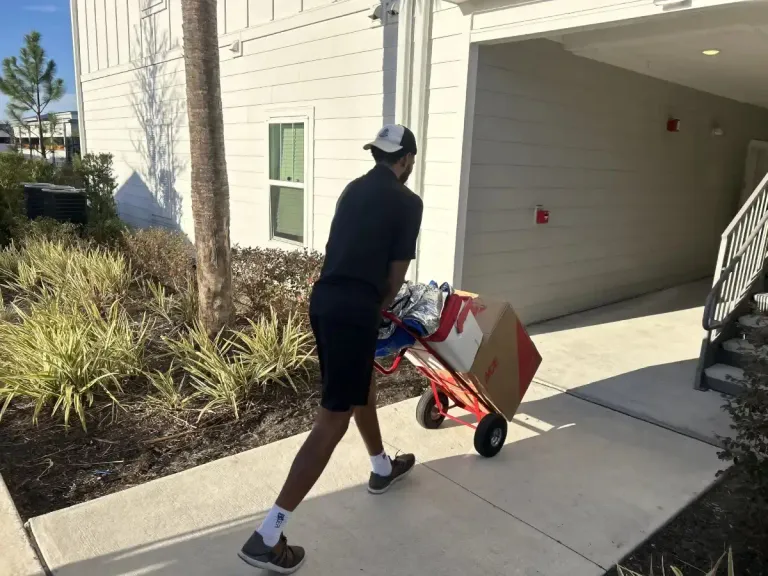
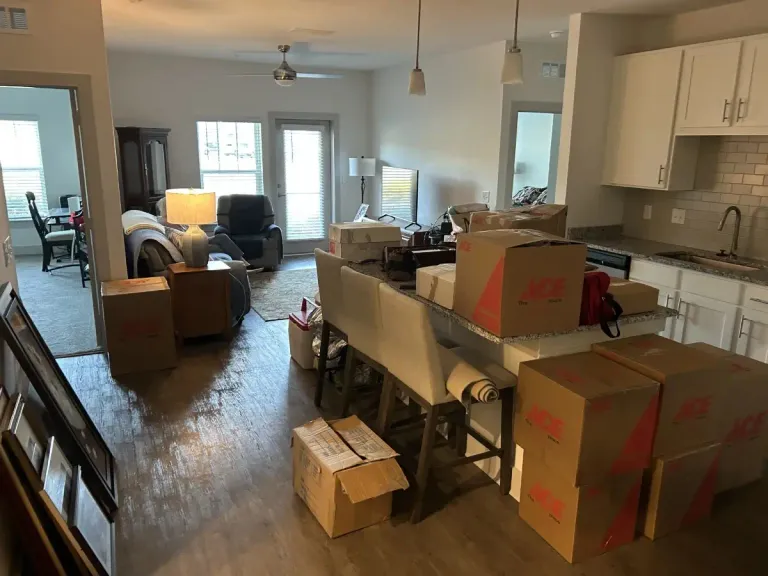
Mover wheeling a hand truck of boxes along a walkwayPacked boxes staged indoors partway through a move

Print & Sign Shop Moving FAQs

Another question? Call (904) 209-9277.

Does your crew move the wide-format printer?

Not unless the technician says so. Your equipment technician prepares the printer, secures the print heads and ink system, and decides how it travels. Many technicians move the machine themselves; some release it to a mover with specific handling instructions. Either way, we plan the rest of the shop around that visit and keep its new spot clear.

How should we pack media rolls?

In their original boxes if you still have them, or supported by their cores so the roll doesn’t rest on its face. Group rolls by material and width, and mark partial rolls so nobody takes them for new stock. We keep each group together on the truck and set it on the rack your production manager assigns.

Can finished signs ride with the blank boards?

They can share the truck, but not a stack. Finished work gets a job tag, wraps face-in, and loads separately from blank stock. At the new shop it goes to a finished-work area so an order waiting for install doesn’t get cut up as raw material.

Our aluminum composite sheets are big. Will they fit through the new door?

We measure before the date. Your full sheet sizes are checked against both doors, any inside turn, and the truck. If a full sheet won’t turn into the new room, your team can choose to stage it in the main bay instead, or cut it down first. We plan the route before anything is loaded.

Plan your business move

Tell us both addresses, the building rules you know about, and the dates you cannot move. We will send back a written plan and estimate.

Call (904) 209-9277

Mon–Sun 8:00 AM – 7:00 PM

Call Now call 904-209-9277