Commercial Service

Commercial Crating for Exhibits, Displays, Art, and Equipment

A crate built to the object’s measurements, padded at the points its owner approves, sized for both doorways, and labeled for whoever opens it.

(904) 209-9277
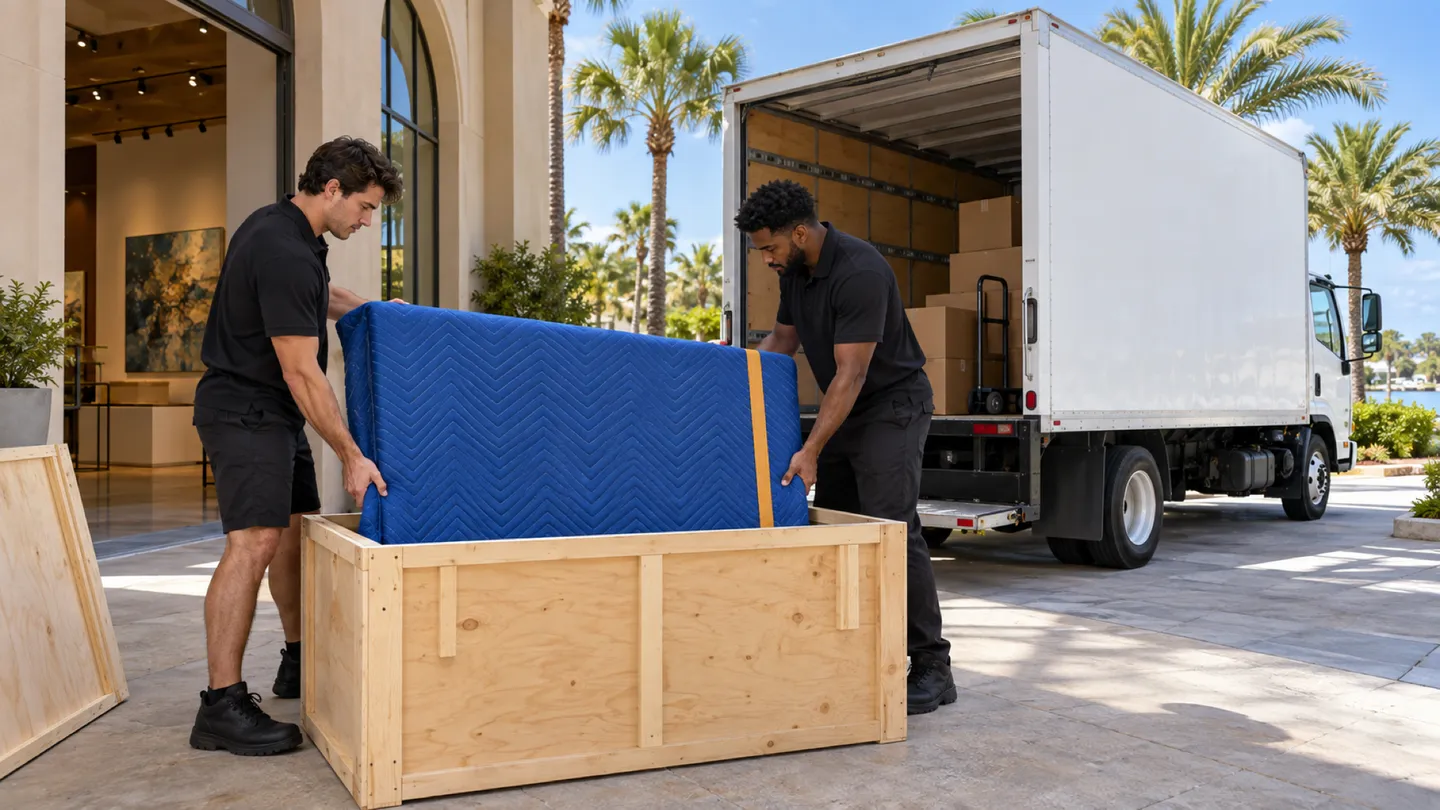
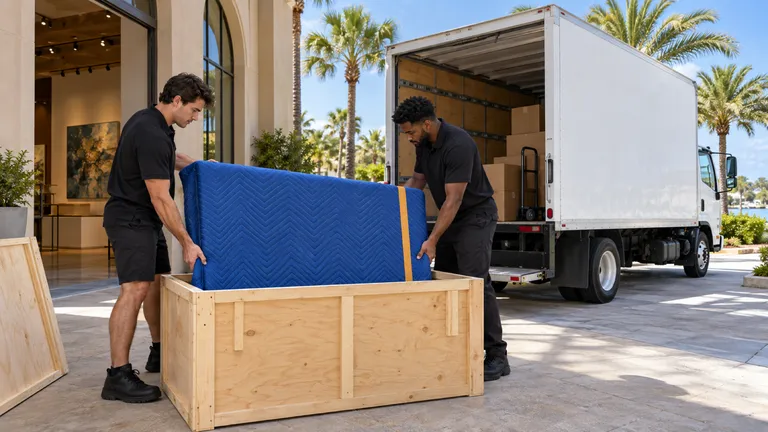
Commercial Crating moving in St. Johns County and Jacksonville: moving crew at work
  • Licensed & Insured Fully Covered
  • Owner-Operated By Devin Vangel
  • Northeast Florida St. Johns + Duval + Beyond

Start your free commercial move quote

verified For estimate purposes only credit_card_off No credit card required

How We Plan Commercial Crating

Some commercial pieces cannot ride in a carton and a moving blanket: a large framed work for a lobby, a museum or gallery display, a trade-show case, a piece of lab or office equipment its maker wants boxed. For those, our custom crating service builds a wooden crate around the object itself.

The job has five steps. We start with the object and its paperwork: dimensions, weight, and any handling sheet from the maker, the artist, or the curator. Next we measure the route at both ends, because a crate that protects a piece perfectly is no use if it won’t pass the gallery’s back door or turn in the service corridor. Then the crate is designed around approved contact points, with the piece floated in foam or blocked at its frame so nothing presses on glass, paint, or a projecting part. We build it, often on site so the piece moves as little as possible uncrated, and close it with screws, not nails, so it opens without prying. Finally the crate is marked with orientation arrows, contents, and which side opens first.

Who usually signs off
Facilities manager, exhibit coordinator, gallery director, or business owner approving the item list and handling instructions
Timing that works
Measured and built before the exhibit changeover or the equipment’s release date, with early loading in the humid months and a backup date between June and November

What typically moves

  • Large framed art and mirrors Crated on edge with corner blocks at the frame, never touching the glazing; the curator or owner confirms which surfaces may take pressure.
  • Sculpture and three-dimensional work Braced at the support points the owner identifies, with projecting parts padded clear of the crate walls.
  • Exhibit and display panels Slotted into a single crate in installation order, so the installer pulls them out in the sequence they go up.
  • Glass display cases Glass removed and crated separately from the cabinet once your fixture contact releases it.
  • Trade-show and event displays Components crated by assembly group and labeled so a set-up crew opens only the crate it needs next.
  • Released lab or office equipment Prepared for transport by its service vendor first, then crated with its accessories fixed inside the same crate.

Access and scheduling

Crating adds time before the move, not on the day. We measure and plan once the object list is settled, then build ahead of the exhibit changeover, the gallery install, or the equipment vendor’s release date. On-site building needs a clear floor area near the piece and a door the finished crate can pass, which we check at the measuring visit.

Museums, galleries, and venues usually set their own receiving hours and loading doors, and offices will book a freight elevator for the crated load. If a lobby or venue asks for our Certificate of Insurance before a crate comes through, we send it ahead. In summer we schedule crating and loading for the early part of the day, so wrapped pieces spend as little time as possible in a hot dock or truck. Between June and November, pick a fallback date with the receiving venue as well.

Protection and handling

Northeast Florida humidity is the main thing we build against. Crates are lined with a plastic barrier so damp air and a passing shower don’t reach the contents, and we choose foams and wraps that don’t hold moisture against a surface. The crate protects against knocks and weather on the move. It does not control temperature or humidity, so a piece that needs a controlled environment in transit needs a fine-art shipper, and we will say so.

Inside the crate, nothing loose. Each piece is blocked or floated so it cannot shift, and small parts are bagged and fixed to the crate wall with a label. Crates ride upright as marked, strapped in place in the truck. At the destination, we open the side marked first, in the room the owner chose, and leave the object for the installer or curator to handle.

Who does what

Some of this job belongs to other trades. The written plan names each one.

Handling limits for art and exhibits
The artist, owner, or curator names the contact points, surfaces to avoid, and the room where the crate is opened.
Equipment preparation and set-up
The maker or service vendor secures moving parts for transport, then installs and tests the unit once it is uncrated.
Installation at the destination
Your exhibit installer or art handler hangs, mounts, and assembles the pieces after we open the crates.

Not part of our work

  • Environmental control in transit; pieces needing it go with a fine-art shipper.
  • Deciding how an artwork is detached from its mount or cleaned.
  • Installing, hanging, or commissioning anything after delivery.

Around St. Johns County and Jacksonville

Crating requests here come from galleries in St. Augustine’s historic district and San Marco, from lobbies and offices downtown and on the Southside, and from venues and campuses such as Flagler College and the University of North Florida, as context. Old buildings in St. Augustine often have the narrowest doors, which sets the crate’s outer size.

The crew that shows up

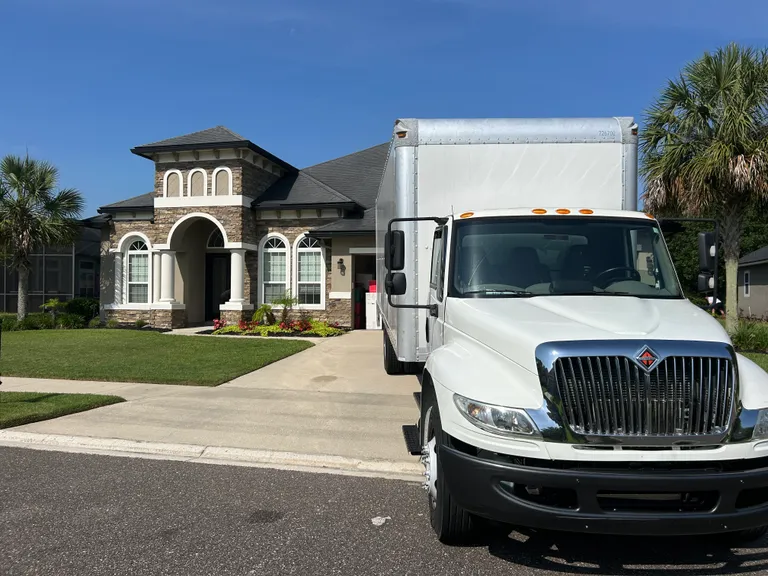
White box truck at the curb outside a home with palm treesMover in a black polo pulling a loaded hand truck off the liftgate

Commercial Crating FAQs

Another question? Call (904) 209-9277.

Should our curator be there when the crate is closed?

If the piece is valuable or fragile, yes. The curator can confirm the contact points and check the piece is blocked as they want before the lid goes on, and photograph it in the crate for your records. We then screw the crate shut and mark which side opens first.

Our gallery’s back door is narrow. Can the crate still fit?

We measure the door, the corridor, and any turn before designing the crate, and size its outside dimensions to fit the tightest point at either end. If the object itself is too large for that door intact, you and the owner decide whether it leaves by another route.

A loaned work must stay at a set temperature. Can your crate handle that?

No. Our crates block knocks, dust, and passing rain, and we line them against humidity, but they do not hold a set temperature or humidity. A work that needs that should travel with a fine-art shipper. We can still help with local carries around it.

Can a crate be reused for the next show?

Crates closed with screws open cleanly and can go back into service. We mark contents and orientation so the next packing matches the first. Where the empty crate sits between shows is your venue’s decision, since we don’t keep crates for clients.

Plan your business move

Tell us both addresses, the building rules you know about, and the dates you cannot move. We will send back a written plan and estimate.

Call (904) 209-9277

Mon–Sun 8:00 AM – 7:00 PM

Call Now call 904-209-9277