Commercial Service

Retail Fixture Teardown and Moving on the First Coast

Every run and case photographed and numbered before it comes apart, moved inside the landlord’s window, and rebuilt to your new sales-floor plan.

(904) 209-9277
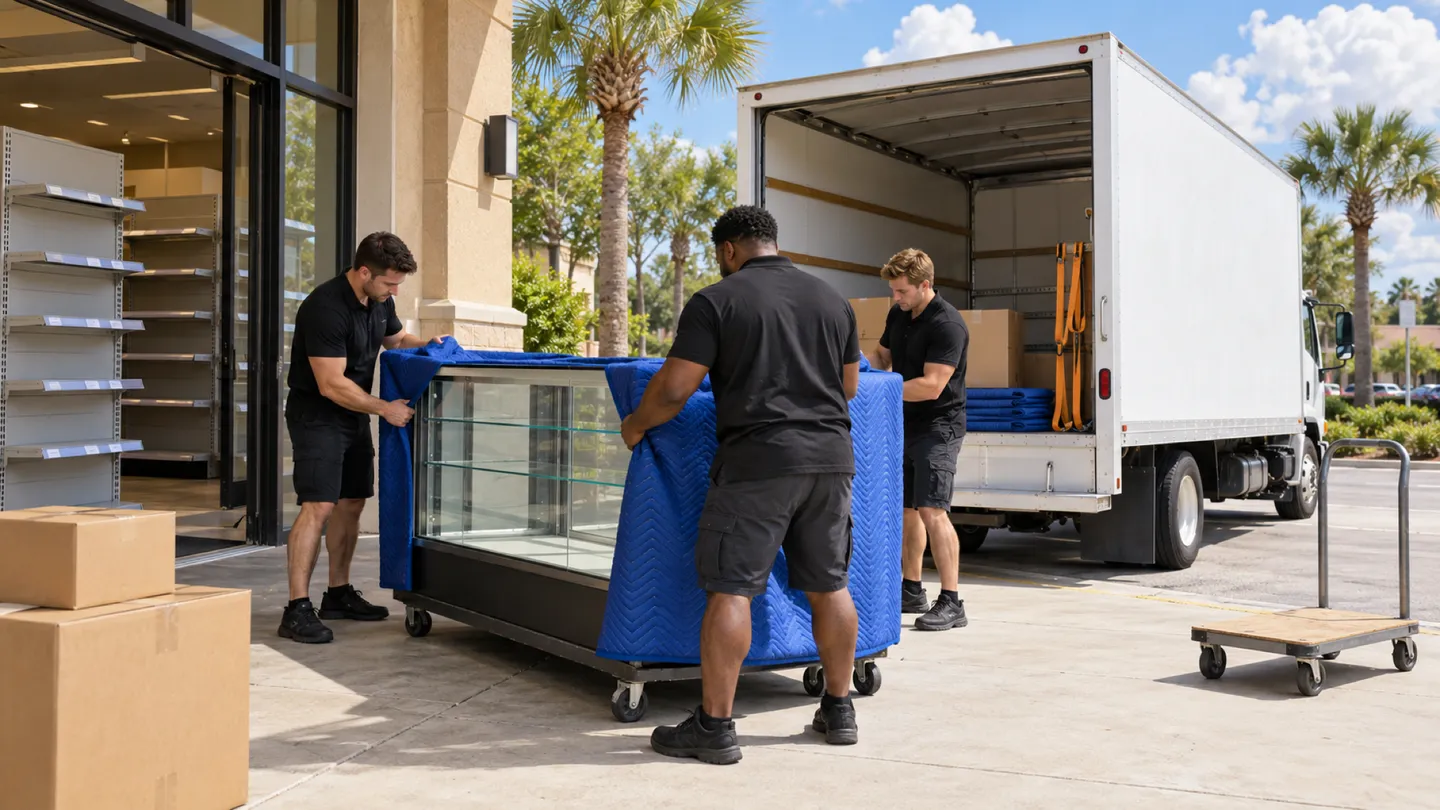
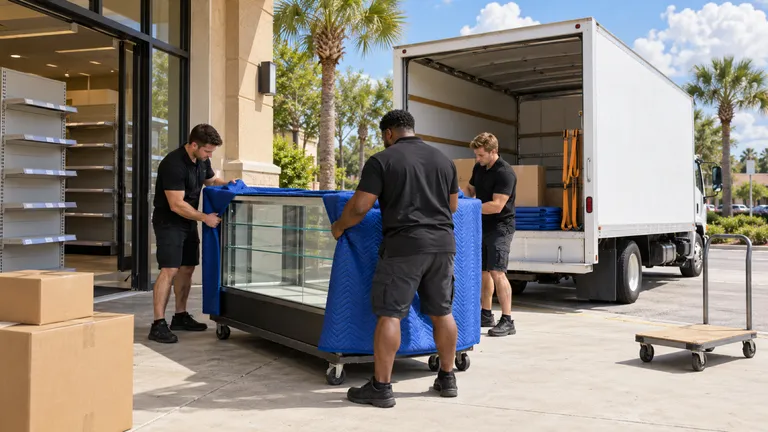
Retail Fixture Teardown & Moving moving in St. Johns County and Jacksonville: moving crew at work
  • Licensed & Insured Fully Covered
  • Owner-Operated By Devin Vangel
  • Northeast Florida St. Johns + Duval + Beyond

Start your free commercial move quote

verified For estimate purposes only credit_card_off No credit card required

How We Plan Retail Fixture Teardown & Moving

A store fixture package looks simple while it is standing: four gondola runs, a slatwall back wall, two glass showcases, a family of mannequins. Taken apart, it becomes uprights, base decks, shelves, clips, hooks, glass, and limbs, much of it identical and all of it needed. The value of this service is that everything goes back where it came from, or where your new plan says, without a morning of sorting on the new floor.

It works in four passes. After your team pulls merchandise, we photograph each display from the front and ends and give it a number that matches your new floor plan. Then we take it down in reverse order: product-facing accessories first, then shelves and brackets, then panels, then the frame. Small parts go into a bag or carton marked with that fixture’s number, and glass is wrapped and boxed apart from its case. At the new store the frames go in first, runs are levelled and joined, and shelves go back at the heights in the photos unless your planogram changes them. Your staff merchandise from there.

Who usually signs off
Store owner, retail operations lead, or buildout manager who approves the fixture plan and coordinates with the landlord
Timing that works
After merchandise is removed and fixture positions are signed off, within the landlord’s approved loading and move-in window; evening or weekend work on request

What typically moves

  • Gondola runs and end caps Numbered by run and bay; base shelves, uprights, and back panels bundled by bay, with end caps tagged to the run they close.
  • Freestanding slatwall and gridwall units Panels labeled by position, and every hook, faceout, and shelf packed in that position’s carton.
  • Glass showcases and counter cases Emptied by staff, glass shelves and doors removed and boxed with the case number, keys taped inside and logged.
  • Mannequins and forms Arms, hands, and heads detached where designed to, wrapped, and kept with the torso and its base in one labeled set.
  • Garment racks, rounders, and four-ways Arms removed and bundled with the rack, so each fixture rebuilds with its own parts.
  • Nesting tables and display plinths Kept in their nesting groups and marked for the display zone they anchor.
  • Cash-wrap counters Your provider shuts down the terminals first; freestanding counter sections are wrapped and moved to the new front.

Access and scheduling

In a mall or a managed retail center, the landlord sets the job’s outer limits. Fixture moves are typically allowed only outside trading hours, through an assigned service door or back corridor, with a dock slot booked in advance, and the center will expect an insurance certificate naming it before our truck is admitted. We work to those rules at both addresses, which can differ even within St. Johns Town Center or between a mall and a strip center on A1A.

We usually tear down after close on one night and rebuild the next, or over a weekend, on request, so the new store has time to merchandise. When a new space is still in buildout, we time the rebuild to follow the flooring and paint crews rather than working around them. In late summer we agree a fallback date with you in case a storm shuts the center.
Protection and handling

The photo record is what protects your fixtures. Two gondola bays that look alike can differ by a single shelf depth, and a showcase key is easy to lose, so nothing is removed until it is photographed and numbered. If a part is bent, missing, or cracked when we take it down, we note it against the fixture number so your fixture supplier can replace it before the rebuild.

Showcase glass rides upright, boxed and padded, with nothing loaded on top. Mannequin finishes chip easily, so figures are wrapped individually and ride standing or cradled, not piled. Slatwall sheets go finished side to finished side, pads in between. We run floor protection on new tile or polished concrete along the cart route and pad the edges of the landlord’s service corridor. Cartons of small parts stay inside the store until the truck is ready, since humid Florida air softens cardboard fast.

Who does what

Some of this job belongs to other trades. The written plan names each one.

Wall-anchored slatwall, fixed casework, and lit displays
Your fixture installer, or the landlord’s approved contractor, unbolts and reinstalls anything fixed to walls or floors; a licensed electrician handles display lighting.
Planogram and merchandising
Your store team pulls product before teardown, sets the new floor plan, and merchandises after the rebuild.
Missing clips, shelves, and glass
Your fixture supplier sends missing clips, shelves, or glass, working from the list we note by fixture number.

Not part of our work

  • Removing fixtures anchored to walls or floors, or wiring lit displays.
  • Packing or counting sellable merchandise.
  • Fabricating or repairing fixture parts.

Around St. Johns County and Jacksonville

Fixture moves here run through mall service corridors and managed centers around St. Johns Town Center, strip centers along A1A, US-1, and Philips Hwy, and newer retail at Nocatee Town Center, where a single rear door often serves several tenants.

The crew that shows up

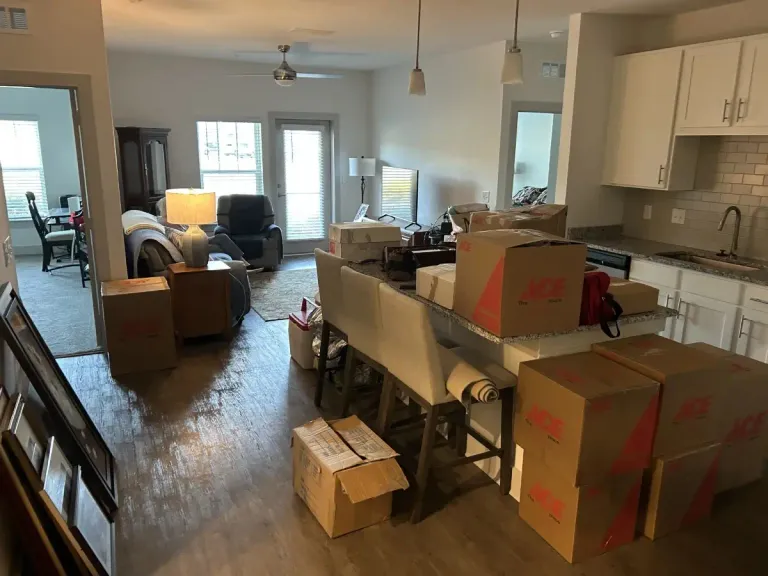
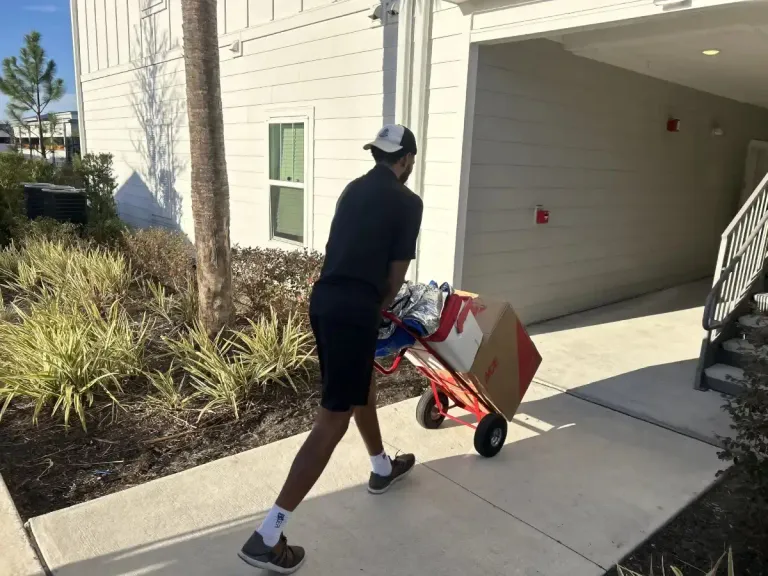
Packed boxes staged indoors partway through a moveMover wheeling a hand truck of boxes along a walkway

Retail Fixture Teardown & Moving FAQs

Another question? Call (904) 209-9277.

We are reusing half our gondolas and adding new ones. How do the numbers work?

We number the fixtures you are keeping to their positions on the new floor plan before teardown. New gondolas from your supplier get their own numbers when they arrive. At the rebuild, frames go in by number, so reused and new runs line up to the plan and nobody guesses which bay is which.

Can our glass showcases travel with the shelves still in them?

We take the glass out. Loose glass inside a moving case can shift, crack, or break the case itself. Each shelf and door is wrapped, boxed, and labeled with the case number, and the case travels empty and padded. At the new store the glass goes back into the case it came out of.

Will the mall let you tear down during trading hours?

Usually not on the sales floor. Most centers restrict fixture work to before opening or after closing, through the service corridor. We get the center’s move rules and plan the teardown and rebuild inside them, typically over one night each or a weekend.

What happens if a gondola bay is missing parts when it comes down?

We note it against that fixture’s number with a photo and give you the list after teardown. That gives your supplier time to send clips, shelves, or brackets before the rebuild instead of discovering the gap on the new floor.

Plan your business move

Tell us both addresses, the building rules you know about, and the dates you cannot move. We will send back a written plan and estimate.

Call (904) 209-9277

Mon–Sun 8:00 AM – 7:00 PM

Call Now call 904-209-9277