Retail, Restaurant & Hospitality

Retail Store Moving in St. Johns County and Jacksonville

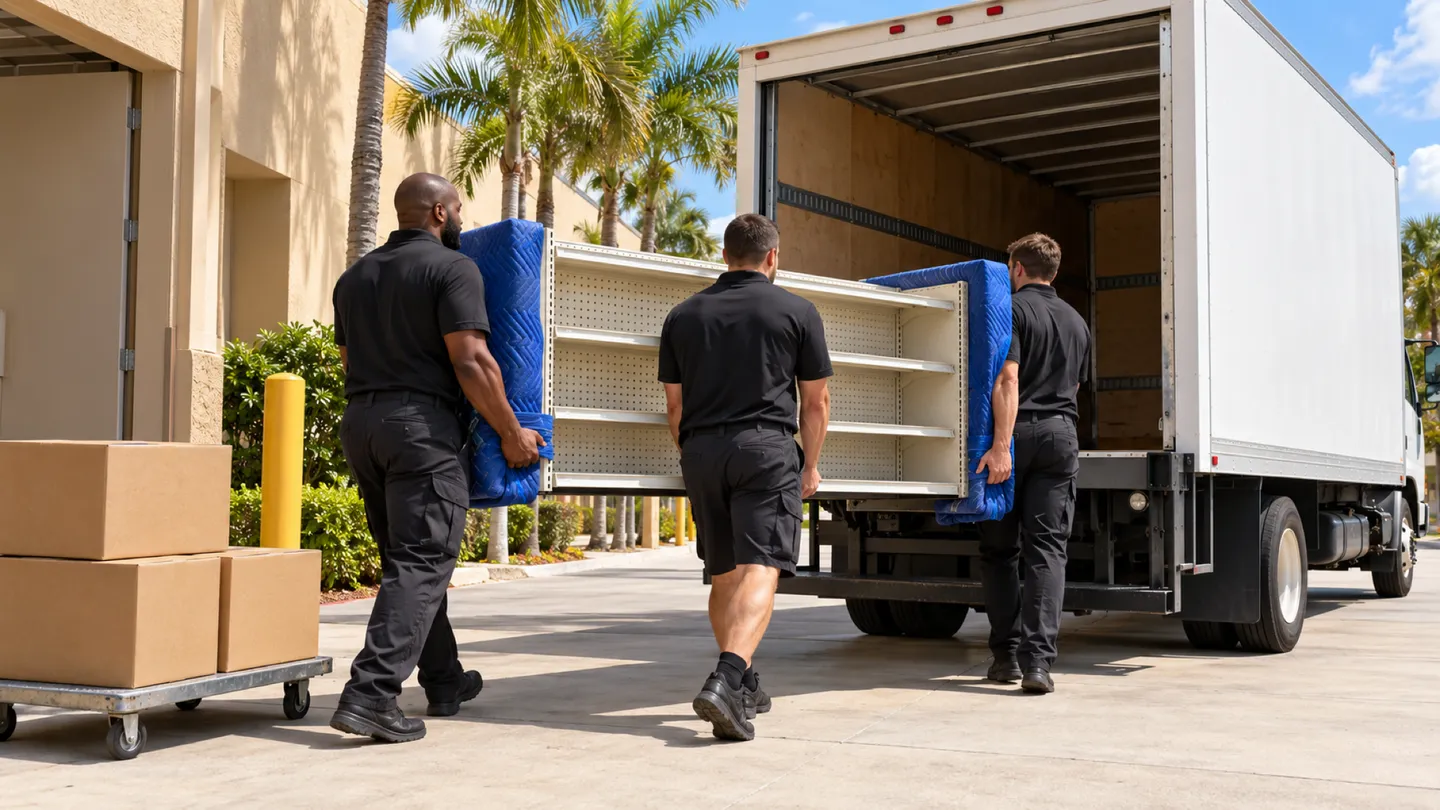
Gondola bays and sales-floor fixtures move against your new layout, while stock cartons keep their SKU and destination shelf references.

(904) 209-9277
Retail Store moving in St. Johns County and Jacksonville: moving crew at work
  • Licensed & Insured Fully Covered
  • Owner-Operated By Devin Vangel
  • Northeast Florida St. Johns + Duval + Beyond

Start your free retail store move quote

verified For estimate purposes only credit_card_off No credit card required

Planning a Retail Store Move

Most store moves on the First Coast run on somebody else’s clock. A shop leaving an A1A strip center for a larger bay near St. Johns Town Center gets a move-in window from the new landlord and a surrender date from the old one, and every fixture has to fit between the two. The hard part is getting the stock from shelf four of bay twelve into the right aisle when the doors reopen.

Your team closes out the last selling day, counts, and freezes the SKU list. We number each gondola run and bay before it comes apart, pack released stock into cartons marked with SKU range, old bay, and new bay, and set the empty fixtures on the new floor before a single carton comes off the truck. Anchored wall fixtures and the register system belong to your installer and your point-of-sale provider.

Who usually signs off
Store owner or district manager who approves the inventory freeze, fixture layout, and closing window
Timing that works
After the last selling day and your stock count, inside the hours both landlords allow, with a second date held between June and November

What typically moves

  • Gondola runs, uprights, and base decks Emptied by your staff, numbered by run and bay, and taken down with shelves, brackets, and kick plates bagged to that bay.
  • End caps and promotional tables Cleared first; headers and shelf-edge strips ride with their gondola run so the promotion wall lands where the new plan puts it.
  • Stock cartons packed by SKU range Labeled from your list with SKU range, old bay, and receiving bay; your staff seal any carton holding high-value goods.
  • Cash-wrap counter and impulse fixtures Blanket-wrapped and set first at the new checkout position, so your provider can bring registers up while stocking continues.
  • Back-room steel shelving Knocked down by row and rebuilt first at the new store, giving receiving a place for overflow on day one.
  • Slatwall hooks, faceouts, and brackets Pulled from the wall and boxed by wall section; the slatwall panels themselves wait for your installer.

Access and scheduling

Shopping-center landlords set the calendar. A lease at a Town Center or Nocatee Town Center property usually spells out a service entrance, the hours carts may cross common areas, floor protection for shared corridors, and an insurance certificate naming the landlord and its manager before the crew is let in. Forward the landlord’s wording and we issue the certificate to match it.

The order at the new store matters more than the hour. Stockroom shelving goes up first, then gondola runs in aisle order, then the cash wrap, then stock by bay. If your installer is anchoring wall fixtures or a new run of gondola, those aisles stay empty until the installer signs them off. Between June and November we hold a second date with both landlords, because a named storm can shut a center for several days.
Protection and handling

The bay record does most of the protecting. Every upright, shelf, base deck, and bag of clips carries the same run-and-bay number, so a four-foot section doesn’t get rebuilt into a three-foot gap and nobody hunts for brackets on opening morning. Shelves ride flat in padded stacks, with painted uprights wrapped apart.

Merchandise is your count, not ours. Your staff confirm what goes in each carton; we pack and label to your list and leave quantities in the inventory system alone. Glassware and boxed electronics get double-wall cartons and ride on top. Service corridors behind Florida strip centers are rarely air-conditioned, and a July afternoon softens cardboard and lifts labels, so packed stock waits on the sales floor until its turn on the truck.

Who does what

Some of this job belongs to other trades. The written plan names each one.

Anchored wall fixtures, slatwall panels, and bolted gondola runs
Your fixture installer, or a contractor the landlord approves, frees the anchors at the old store and fastens the fixtures at the new one; we carry the released sections between them.
Registers, payment terminals, and scanners
Your point-of-sale provider moves the service and tests transactions. Our crew unplugs, pads, and hooks back up the back-office computer, screen, and receipt printer.
Stock count and the old-to-new shelf map
Your store lead reconciles quantities, pulls open customer orders, and hands us the map; we pack and place to it.

Not part of our work

  • Changing inventory records, resolving count discrepancies, or repricing stock.
  • Drilling, anchoring, or removing anything fastened to the building’s walls or floor.
  • Activating payment equipment or network service at either store.

Around St. Johns County and Jacksonville

Retail tenants cluster around the St. Johns Town Center area off J. Turner Butler Blvd, the Nocatee Town Center blocks along Nocatee Pkwy, and the A1A strip centers from Jacksonville Beach down to St. Augustine Beach. Each center writes its own service-door and after-close rules, and moving between two centers means two sets of paperwork. Shops on St. George Street in St. Augustine usually carry from a loading point off the pedestrian blocks.

The crew that shows up

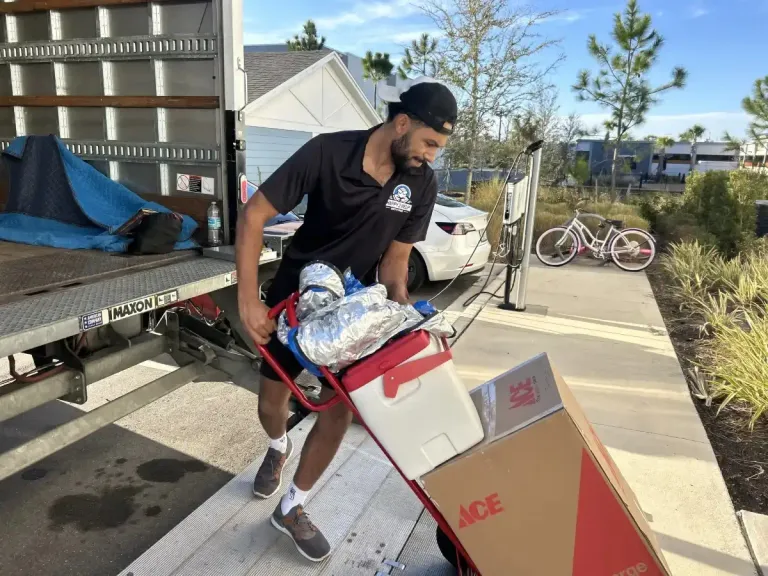
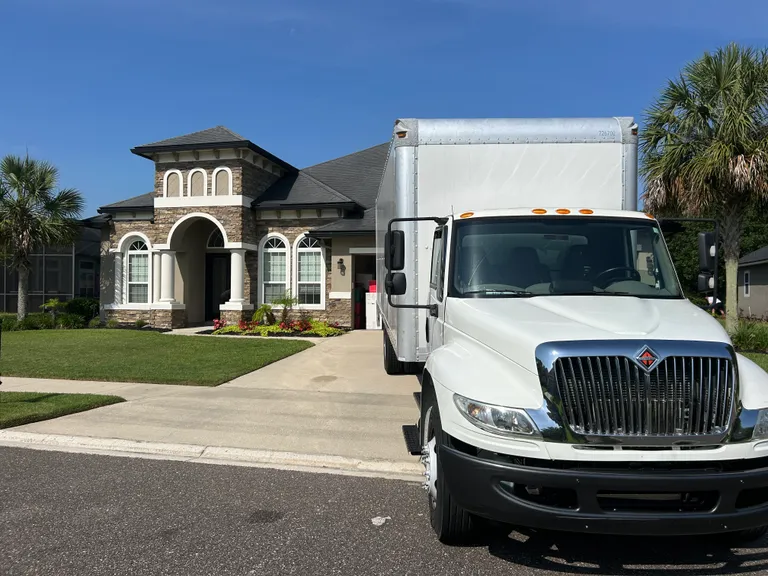
Mover in a black polo pulling a loaded hand truck off the liftgateWhite box truck at the curb outside a home with palm trees

Retail Store Moving FAQs

Another question? Call (904) 209-9277.

Will our gondola runs go back together the same length at the new store?

They go back to the new aisle drawing. Each bay is numbered before teardown, and its shelves, base decks, and hardware stay together the whole way. If the new plan lengthens a run or changes shelf depth, your fixture supplier sends the added parts, and we leave that gap for them rather than improvising with pieces from another bay.

Do we have to finish the inventory count before you start packing stock?

It helps a great deal. A frozen count lets your staff check cartons against the list at the new store and catch anything missing the same day. Stock you are still selling can be packed last from a few bays you keep open. Anything without a new shelf yet goes into cartons marked for one holding aisle, clear of the receiving route.

The center says fixture work can only start after the stores close. Can your crew work then?

Yes. Centers commonly keep carts out of the common areas while shoppers are there, and we can book an evening crew around that. Send us the landlord’s move rules and we plan to them: the service entrance, the freight elevator if there is one, the floor protection required, and where the truck may park.

Which fixtures get set first when we reach the new store?

Back-room shelving, so receiving has somewhere to put overflow. Then empty gondola runs in aisle order, then the cash wrap so your point-of-sale provider can start, and finally stock cartons delivered to the bay printed on each label. Your staff face the shelves, and we clear empty cartons out of the aisles as we go.

Plan your business move

Tell us both addresses, the building rules you know about, and the dates you cannot move. We will send back a written plan and estimate.

Call (904) 209-9277

Mon–Sun 8:00 AM – 7:00 PM

Call Now call 904-209-9277