Retail, Restaurant & Hospitality

Boutique and Showroom Moving in St. Johns County and Jacksonville

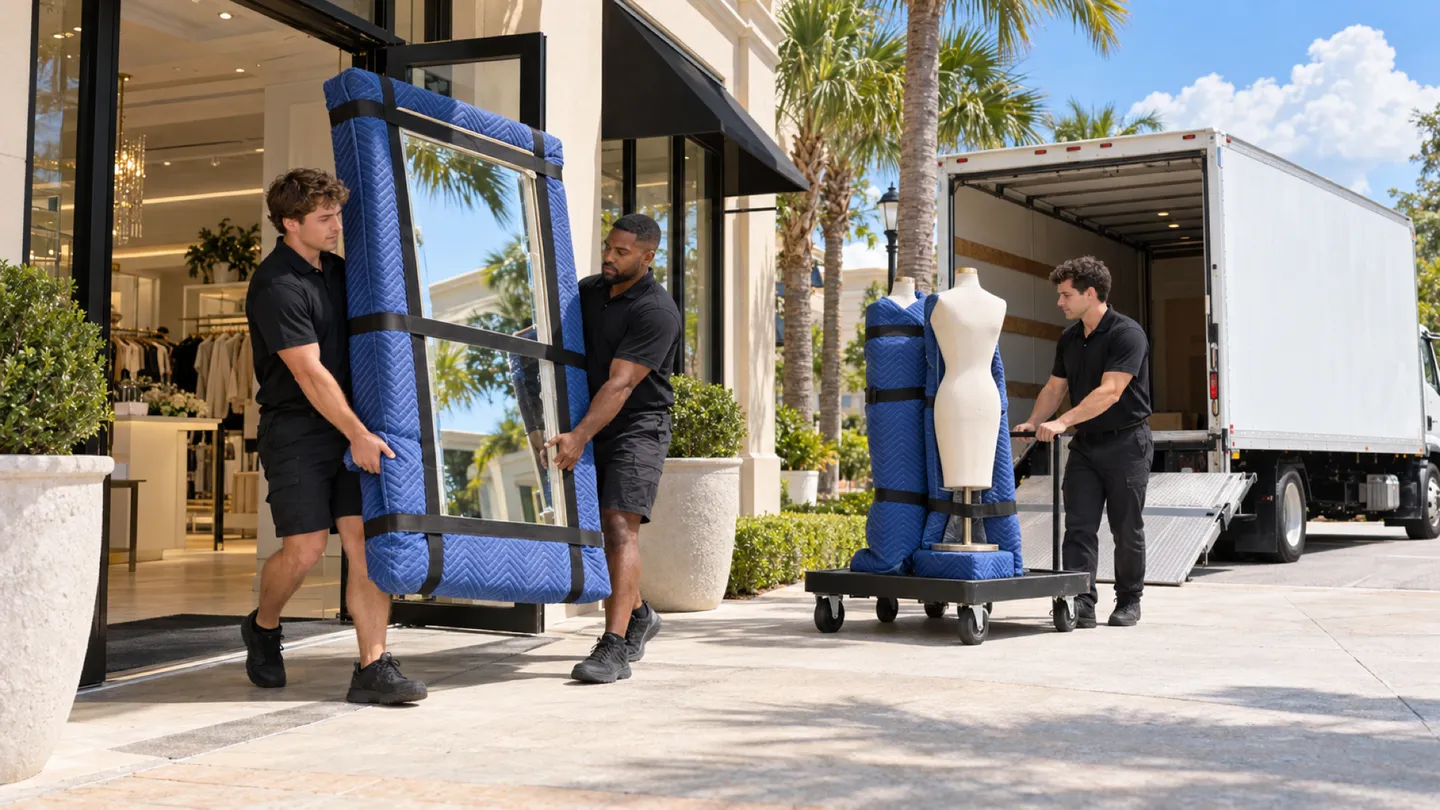
Keep each display together as fixtures, mannequins, mirrors, and portable lighting travel to their assigned places in the new space.

(904) 209-9277
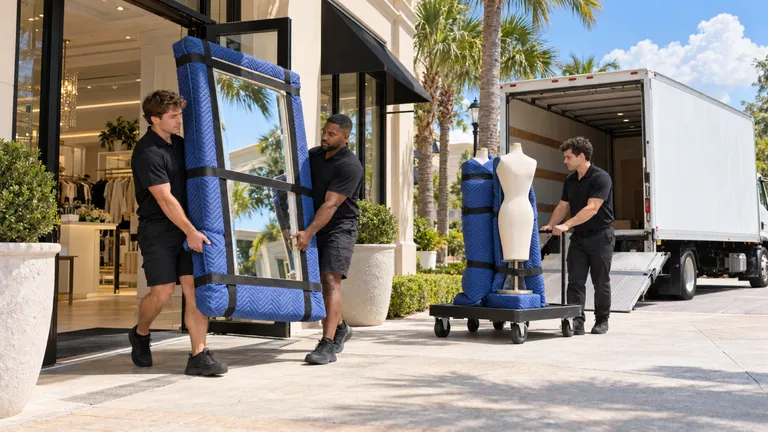
Boutique & Showroom moving in St. Johns County and Jacksonville: moving crew at work
  • Licensed & Insured Fully Covered
  • Owner-Operated By Devin Vangel
  • Northeast Florida St. Johns + Duval + Beyond

Start your free boutique & showroom move quote

verified For estimate purposes only credit_card_off No credit card required

Planning a Boutique & Showroom Move

A boutique sells a look before it sells a single item, so the move is judged by how fast the window and the feature wall come back. A shop trading a small A1A storefront in Ponte Vedra Beach for a corner space in San Marco, or moving a few doors along in St. Augustine, needs the display pieces to arrive as sets: the mannequin with its own base and arms, the riser with its feet, the floor lamp with its shade.

Your visual merchandiser draws the new floor by zone (window, entry table, feature wall, fitting rooms) and your staff strip and count the merchandise. We tag every freestanding fixture and its loose parts to one of those zones, wrap mannequins and mirrors on their own, and unload in the order your merchandiser wants to dress. Anything screwed to a wall or wired into the ceiling is released by your fixture installer or an electrician first.

Who usually signs off
Boutique owner, showroom manager, or visual merchandiser who approves the display plan and opening sequence
Timing that works
The quiet day of your week, often a Sunday or Monday, after the last appointment and floor reset, with a second date held in late-summer storm weeks

What typically moves

  • Mannequins and dress forms Heads, arms, hands, and bases wrapped separately and tagged as one set, so the window figure is rebuilt from its own parts.
  • Window platforms and nesting risers Loose sections tagged to the window zone, with removable feet and levelers bagged to the platform they carry.
  • Freestanding mirrors and cheval glasses Face-boarded and edge-padded, carried upright, and checked against the narrowest door on both ends before loading.
  • Garment rails, waterfall arms, and feature racks Emptied by staff; arms and faceouts come off and ride boxed with their rail.
  • Floor lamps and plug-in display lights Unplugged, shades boxed, cords coiled and tied to the stand, all tagged to the zone they lit.
  • Jewelry busts, trays, and nesting tables Your staff remove every piece of stock; the empty forms travel in padded cartons marked by case.
  • Fitting-room benches and curtain stands Set last, once the sales floor is placed, so shoppers’ first view of the new space is finished.

Access and scheduling

Many boutiques close one day a week, and that day usually becomes the move. Pack the stockroom and back fixtures during the last selling days, keep the window and entry display dressed until the final customer leaves, then take those down as the last group. A weekend move can be booked when the quiet day won’t stretch far enough.

Small retail landlords along A1A and in San Marco often share one rear door among several tenants, and the truck has to clear out before the shop next door opens. St. Augustine’s historic blocks are tighter still: the loading point may sit a block from the door. We walk both routes, measure the widest mirror and platform against every turn, and confirm which morning your fixture installer and electrician return to the new space, because the wall pieces go up before the floor pieces come in.
Protection and handling

Mannequins are the pieces most likely to come back wrong. Fingers snap, neck joints get swapped between figures, and two nearly identical bases end up under the wrong bodies. Each figure gets a zone number on its torso, base, and every wrapped part, and your merchandiser can photograph the assembled poses before we start. Mirrors ride face-boarded and upright rather than flat under other pieces.

Paper tags and cardboard go limp in a humid Florida alley, so wrapped display pieces wait inside until the truck is at the door, and doors stay shut between trips in summer. Plug-in lighting is unplugged and packed; our crew changes no wiring. At the new shop we place fixtures to the zone plan, leave walkways clear for the installer, and hand the floor to your merchandiser to dress.

Who does what

Some of this job belongs to other trades. The written plan names each one.

Wall-hung mirrors, slatwall, and anchored display cases
Your fixture installer takes down the mounting at the old shop and rehangs each piece in the new shop. Once they’re loose, our crew carries them with face and edge protection.
Track heads, pendants, and other hardwired lighting
A licensed electrician disconnects and reinstalls them and tests the circuits. We move only loose housings they release and plug-in lamps.
Merchandise counts and the finished displays
Your owner or merchandiser decides what goes in each zone, checks the stock, and dresses every display after we place the fixtures.

Not part of our work

  • Removing or hanging anything fastened to walls or ceilings.
  • Any work on hardwired lighting or electrical connections.
  • Counting, pricing, or styling merchandise.

Around St. Johns County and Jacksonville

Boutiques on the First Coast sit in very different buildings: A1A storefronts in Ponte Vedra Beach and the Beaches, San Marco’s older low-rise blocks, the courtyards and upper floors around St. George Street in St. Augustine, and newer bays at Nocatee Town Center and the St. Johns Town Center area.

The crew that shows up

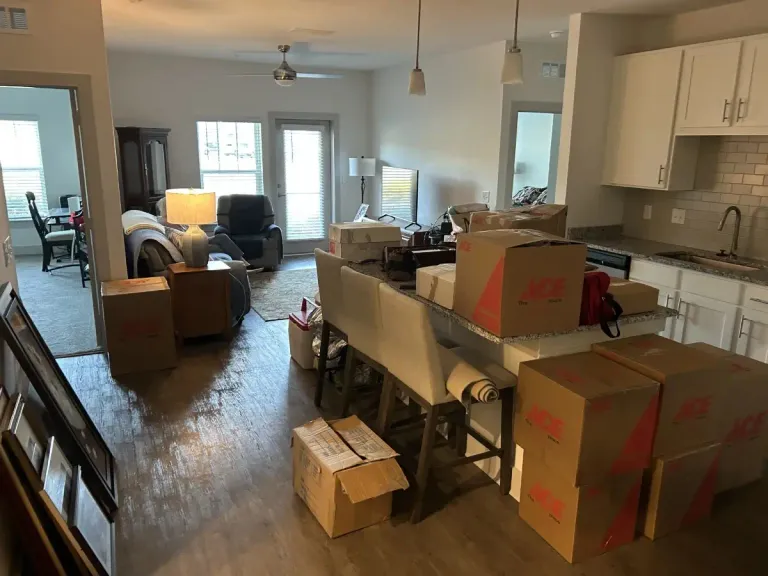
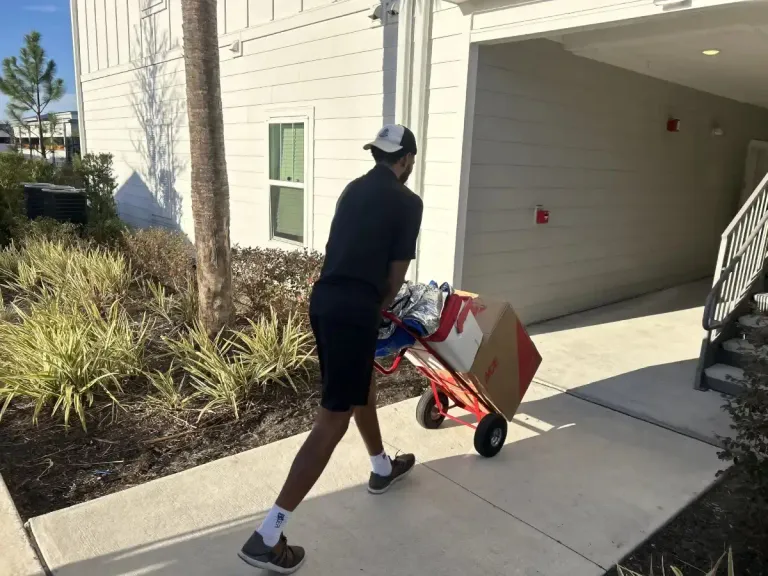
Packed boxes staged indoors partway through a moveMover wheeling a hand truck of boxes along a walkway

Boutique & Showroom Moving FAQs

Another question? Call (904) 209-9277.

Can our window stay dressed until our final customer on the last day?

Yes. The window and entry display usually come down last, as their own group, once the final customer leaves. We pack the stockroom and back fixtures earlier in the week, so the only work left on the last evening is the window, the mannequins, and the lighting that goes with them.

How do you keep mannequin parts from getting mixed between figures?

Each figure gets a zone number before it comes apart, written on the torso, the base, and every wrapped arm, hand, and head. Those pieces stay together through loading and unloading. If you have several matching forms, a quick photo of each pose helps your merchandiser rebuild the window the way it looked.

Our feature-wall mirror is bolted up. Who takes it down and rehangs it?

Your fixture installer removes it with its mounting hardware and rehangs it at the new shop. Once it is free, we carry it face-boarded and upright. Give the installer the new wall position ahead of time and book them for the morning before our floor delivery, so the wall is done before racks arrive.

We’re moving between two historic buildings in St. Augustine. What changes?

Mostly the carry. Vehicles often can’t stop at the door, so we stage at the nearest loading point and hand-carry from there. We measure stairs and doorways in both buildings early, because an old doorway sometimes decides whether a large mirror or platform can go in at all.

Plan your business move

Tell us both addresses, the building rules you know about, and the dates you cannot move. We will send back a written plan and estimate.

Call (904) 209-9277

Mon–Sun 8:00 AM – 7:00 PM

Call Now call 904-209-9277