Education, Civic & Community

Trade School Moving in St. Johns County and Jacksonville

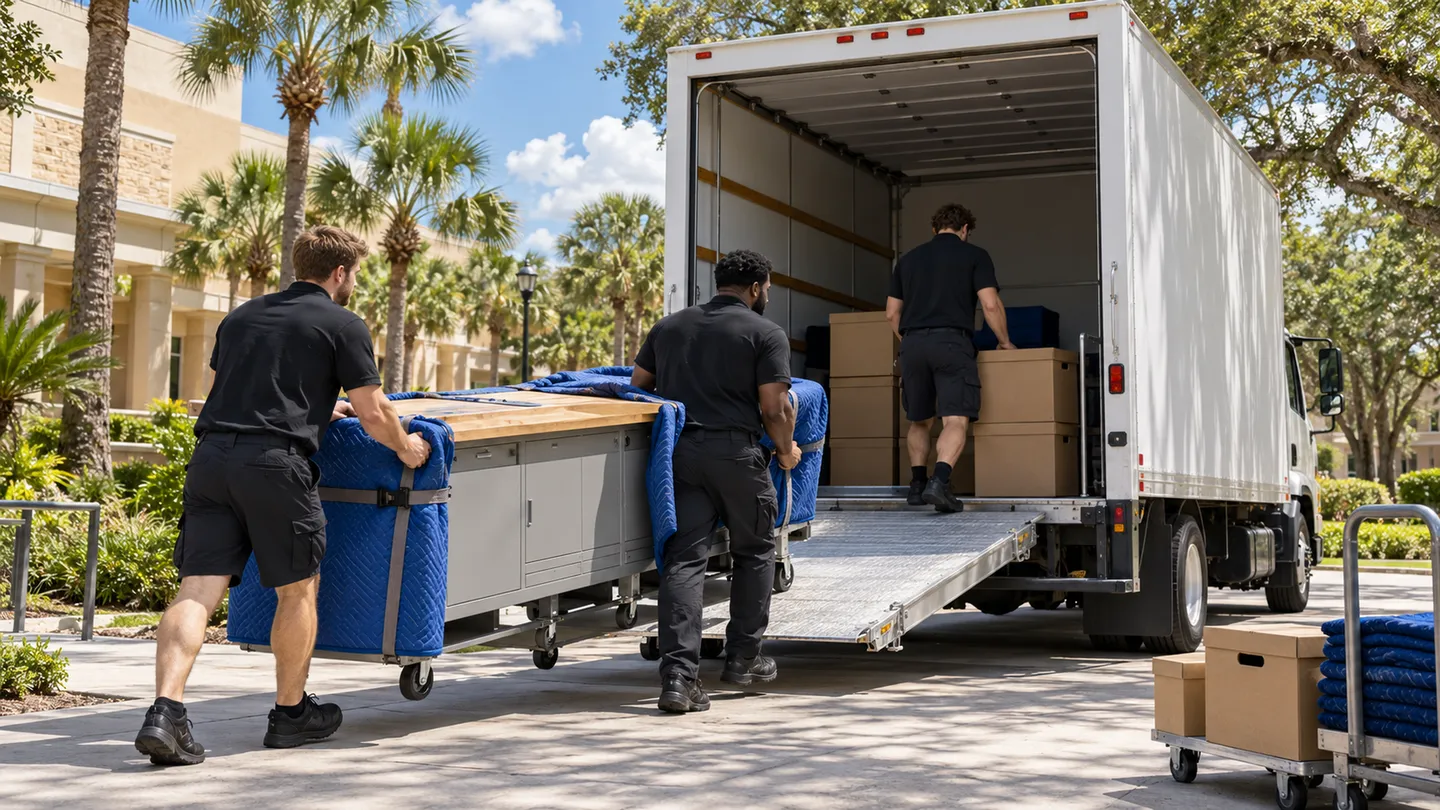
Classrooms, benches, tool cribs, and training stations moved between cohorts; welders, lifts, and heavy machines go with your equipment mover and trades.

(904) 209-9277
Trade School moving in St. Johns County and Jacksonville: moving crew at work
  • Licensed & Insured Fully Covered
  • Owner-Operated By Devin Vangel
  • Northeast Florida St. Johns + Duval + Beyond

Start your free trade school move quote

verified For estimate purposes only credit_card_off No credit card required

Planning a Trade School Move

Trade schools don’t get a summer off. Many programs run on rolling cohorts, so HVAC, welding, electrical, and automotive students may each start on a different date, and a shop can only be out of service in the gap between one class finishing and the next beginning. The move plan is a program-by-program calendar before it is a floor plan.

The shop is also split between two kinds of movers. Heavy machinery, vehicle lifts, welding machines on fixed circuits, and anything too heavy to hand-truck go with your equipment mover and the trades who disconnect and reconnect them. Our crew moves what is left: workbenches, training panels, tool cribs, student lockers, classrooms, the testing room, and the offices.

There is paperwork too. If your school is licensed by Florida’s Commission for Independent Education, a new location has its own approval step, and accreditors often want notice as well. Your director handles that, and the first class date at the new site should wait for it.

Who usually signs off
School director or facilities lead who approves the course-room plan and coordinates instructors with the equipment mover
Timing that works
The break between one cohort’s completion and the next start date, which in rolling-start programs may be only a week or two, planned so each program’s shop is ready for its first class

What typically moves

  • Workbenches and vise stations Vises and bench grinders unbolted by instructors if they choose; benches moved and set to the shop layout.
  • Electrical and HVAC training panels Freestanding trainer boards and mock-up walls moved upright after instructors disconnect any power.
  • Tool cribs and rolling tool chests Chests moved locked and drawer-taped; tool crib shelving emptied and inventoried by instructors first.
  • Student lockers Emptied by students, moved in banks, and set where the new locker room plan shows.
  • Classrooms and the testing room Student tables, chairs, and testing carrels moved by room number, with testing rooms set first.
  • Admissions and financial aid offices Desks, file cabinets, and interview-room furniture moved; staff pack student files themselves.

Access and scheduling

Put every program’s cohort dates on one calendar, then move shop by shop in the gaps. A welding shop may move one week and the HVAC lab two weeks later, while classrooms and offices fill in around them.

The equipment mover and our crew should not share a doorway at the same hour. Shops often have one roll-up door, so we agree the order in advance: trades disconnect machines, the equipment mover takes heavy pieces out, and we load benches and panels after. At the new building the order reverses, with heavy machines placed and anchored first so benches can go around them. The landlord may also want a certificate listing them as insured before either crew arrives, which we send ahead.
Protection and handling

Instructors own their tools. Hand tools, meters, and small power tools are counted and packed by instructors, because the crib count is the school’s record of which tools each class signs out. We move the sealed boxes and the locked chests as a set.

Shop floors are usually bare concrete, so the concern is less the floor and more the load: benches with vises fitted, heavy trainer panels, and steel lockers are strapped upright and padded against each other in the truck. Consumables such as welding rod, refrigerant training cylinders, and shop chemicals are handled by instructors and suppliers under their own rules, and compressed gas stays with the gas supplier. At the new shop, benches and trainer panels are placed to the instructor’s layout, with the clearances around machines that the equipment mover and the program lead mark on the floor plan.

Who does what

Some of this job belongs to other trades. The written plan names each one.

Lathes, mills, vehicle lifts, and machines that need a forklift or rigging
Your equipment mover or rigger takes them out, transports them, and sets and levels them at the new shop.
Hardwired welders, compressors, dust collection, and ventilation hoods
Licensed electricians and mechanical contractors disconnect, relocate, and reconnect them.
Gas cylinders, refrigerant, and shop chemicals
Your gas supplier and instructors remove, transport, and restock these under their own procedures.
State licensing and accreditor notices
Your school director handles any approval or notice a new location needs.

Not part of our work

  • Moving machine tools or vehicle lifts, or any lift that calls for a forklift, crane, or rigging crew.
  • Disconnecting welders, compressors, ventilation, or any hardwired or plumbed equipment.
  • Handling compressed gas cylinders, refrigerant, or shop chemicals.

Around St. Johns County and Jacksonville

Shop programs need roll-up doors and high ceilings, the kind of flex space found in Jacksonville’s Northside near the airport and in the industrial parks around Cecil. In St. Johns County, the US-1 and SR 16 corridors have similar buildings.

The crew that shows up

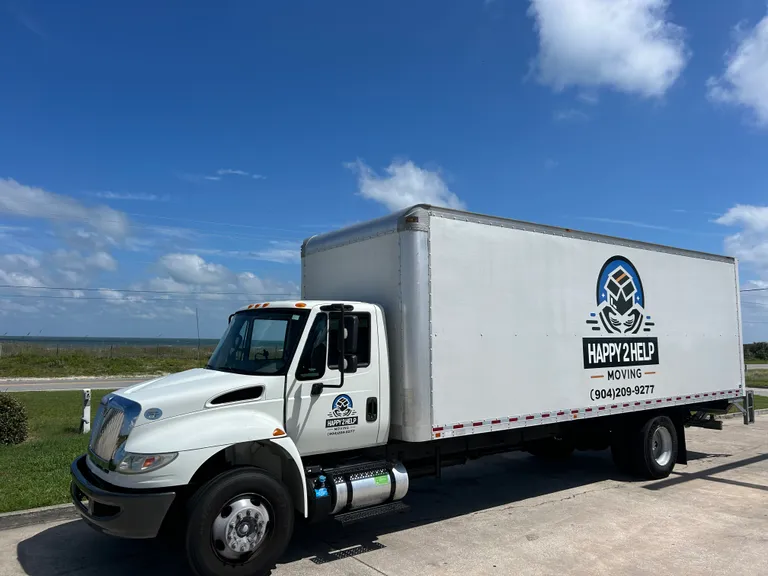
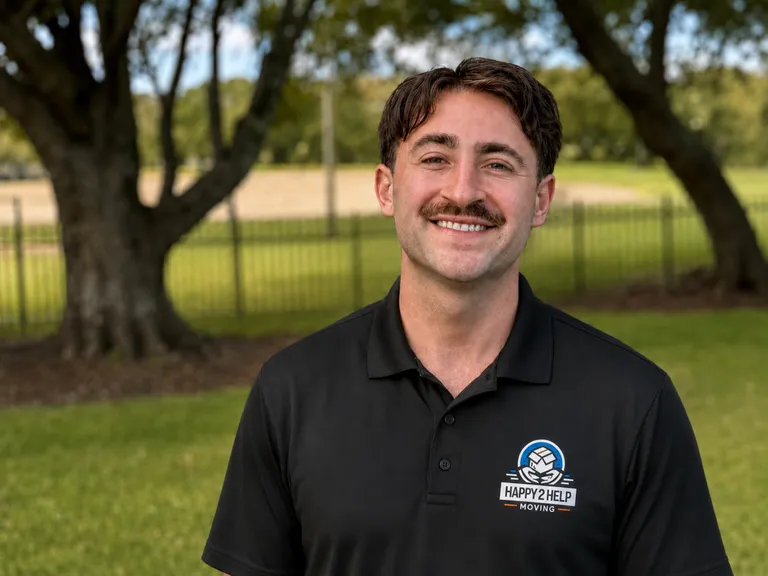
Happy 2 Help Moving box truck with the company logoHappy 2 Help Moving crew lead in a black company polo

Trade School Moving FAQs

Another question? Call (904) 209-9277.

Our programs have rolling start dates. How do we move without canceling a cohort?

By moving one program at a time in the gap between its cohorts. Send us every program’s start and completion dates, and we build a shop-by-shop schedule around them. Classrooms and offices can move in any gap, so they usually fill in between the shops.

Who moves the welders, lifts, and CNC machines?

Your equipment mover, after licensed trades disconnect them. Those machines need lifting equipment and anchoring that sit outside our crew’s work. We coordinate the day with them so the heavy pieces go first at the new shop, and our crew brings benches, panels, and tool chests in around them.

Do instructors need to pack their own tool cribs?

We recommend it. The crib list is the school’s record of tools signed out to students, so instructors count and pack hand tools and meters, and we move the sealed boxes and locked chests together. At the new shop, the instructor opens and checks them against the inventory.

Does a new location need approval before students can start classes there?

Often, yes, but that’s between your school and its licensing body and accreditors. If your school is licensed by Florida’s Commission for Independent Education, ask it what a change of location requires. We give you firm move dates early so that paperwork can run alongside the move.

Plan your business move

Tell us both addresses, the building rules you know about, and the dates you cannot move. We will send back a written plan and estimate.

Call (904) 209-9277

Mon–Sun 8:00 AM – 7:00 PM

Call Now call 904-209-9277