Property, Institutional & Government

Courthouse Administrative Office Moving

Clerk counters, workrooms, and desks moved around public hours, while courthouse security sets who enters and court staff keep every case file.

(904) 209-9277
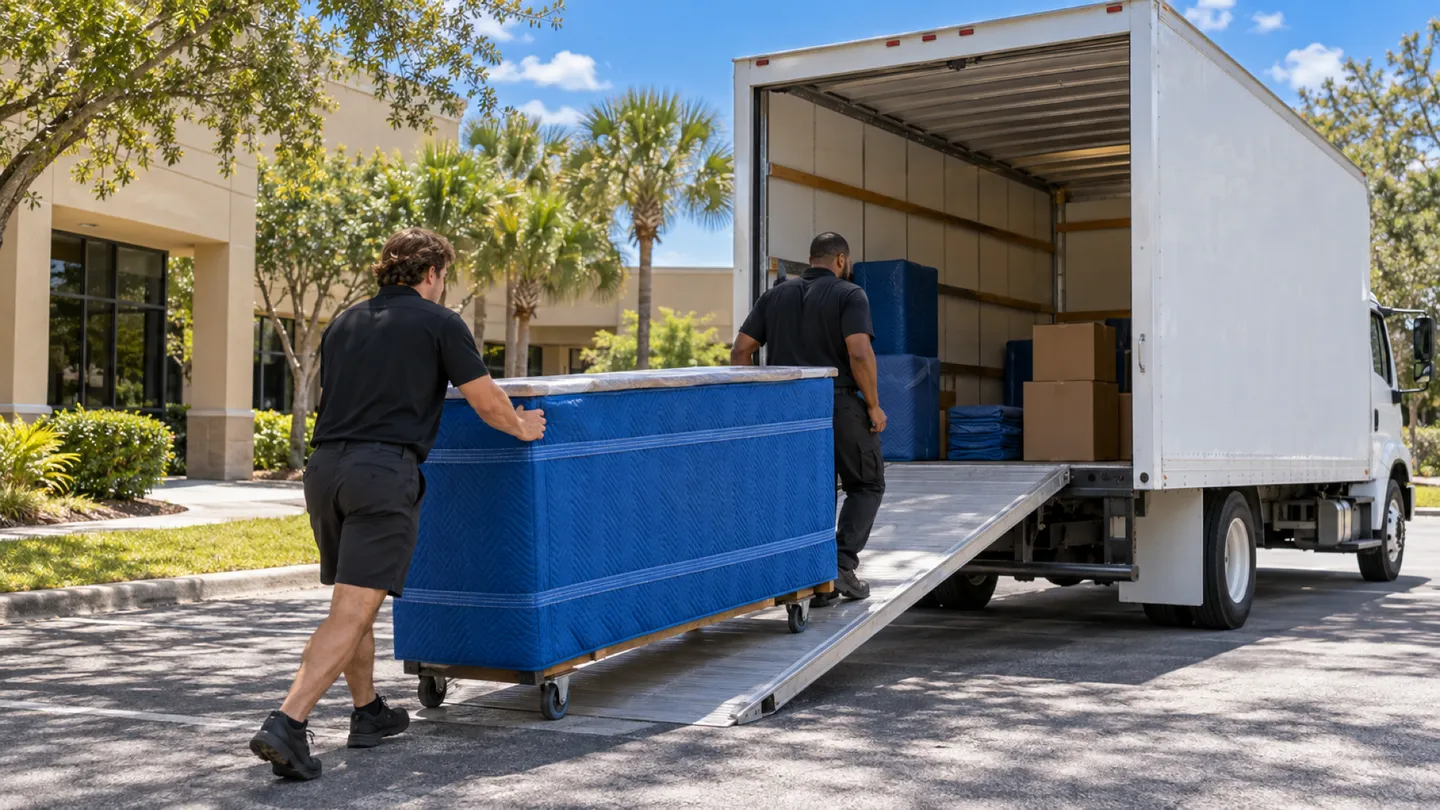
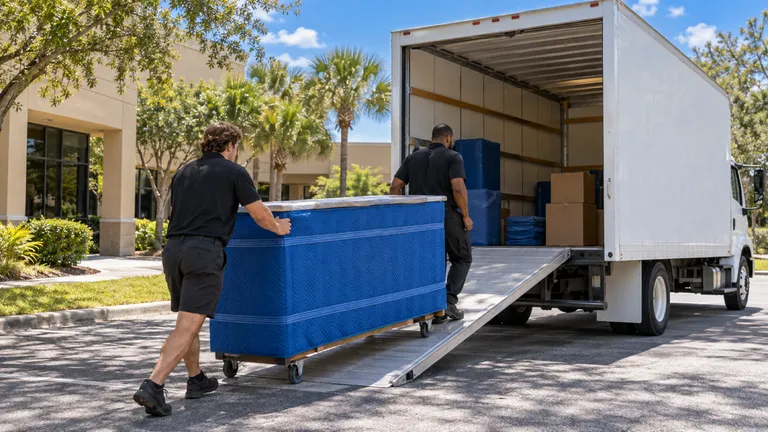
Courthouse Administrative Office moving in St. Johns County and Jacksonville: moving crew at work
  • Licensed & Insured Fully Covered
  • Owner-Operated By Devin Vangel
  • Northeast Florida St. Johns + Duval + Beyond

Start your free courthouse administrative office move quote

verified For estimate purposes only credit_card_off No credit card required

Planning a Courthouse Administrative Office Move

In Florida the clerk of court is its own elected office, separate from the judges and from the county commission, and a clerk’s administrative move often has all three in the room. The clerk decides which counters and workrooms move, county facilities controls the building, and courthouse security decides who walks in. Our crew’s part is the furniture, cabinets, and sealed cartons in between.

That usually means the public side first: the official records counter, the marriage license desk, jury services check-in, and the form racks beside them. Behind the counter come the deputy clerks’ workstations, the docketing and case-intake desks, the supervisors’ offices, and the break room. Some moves stay within the courthouse, a department going down a floor while a courtroom is renovated; others leave for an annex across the street. Case files, exhibits, and evidence are not part of it. The clerk’s staff pack and control anything with a case number, and evidence stays wherever the court already keeps it.

Who usually signs off
Clerk’s administrative lead or county facilities contact authorized to approve the office move and coordinate courthouse access
Timing that works
After the public counters close or on a weekend the clerk and courthouse security approve, clear of jury weeks and busy hearing days; a second date in storm season

What typically moves

  • Official records and marriage license counters Freestanding counter sections split at their joints and tagged by window number, so each service reopens at the right window.
  • Deputy clerk workstations Desks and chairs tagged to seat numbers; the crew unplugs, pads, and reconnects each station’s computer and screens at its new seat.
  • Jury services check-in furniture The check-in desk, waiting-room chairs, and orientation-room tables, moved outside jury weeks.
  • Records workroom shelving Freestanding shelving emptied by staff first, taken down if it’s bolted together, and rebuilt in the same bay order.
  • Supervisors’ offices and the break room Office desks and shelving plus the lunchroom table, microwave, and an emptied fridge, each labeled by room.
  • Public form racks and lobby benches Racks travel empty; staff move the forms themselves so current versions go back in the right slots.

Access and scheduling

Courthouse security writes the access plan, and we follow it. Expect a list of crew names ahead of time, a service entrance rather than the public doors, and screening at that entrance. Screening affects what we carry in: tool belts, box cutters, and hand trucks are inspected, and some items may have to stay on the truck. We ask security in advance so nothing is turned away at the door.

Timing follows the court calendar. Public counters can close only when the clerk announces it, and jury weeks fill the lobby and elevators. The usual pattern is to pack during the week, move the counters after closing on a Friday or across a weekend the clerk approves, and have the records and license windows working when the doors open. In downtown Jacksonville and around the St. Johns County courthouse off US-1, we confirm with security where a box truck can park beside the service entrance.
Protection and handling

Everything that carries a case number stays in the clerk’s hands. Staff pack, seal, and number any cartons of working paper, and our crew moves only closed containers. If a cabinet has to travel full, a deputy clerk locks it and keeps the key, and we move it strapped and upright.

Courthouses are heavy-use public buildings with hard floors and long corridors. We run floor runners along the route, pad the elevator and the door frames at each service window, and keep the public corridor clear between trips so nobody arriving for a hearing has to step around a cart. At the new location, counters are set first and checked against the window numbers with a supervisor before the workroom furniture comes in.

Who does what

Some of this job belongs to other trades. The written plan names each one.

Entry, screening, and the building route
Courthouse security and county facilities decide who enters, where, and when; we send crew names when asked and follow the assigned route.
Case files, exhibits, and evidence
The clerk’s staff and the court keep them under their own procedures; none of it is on our inventory.
Case-management terminals, cash drawers, and receipt printers
The clerk’s IT staff and payment vendor disconnect, move, and test anything that takes payments or connects to the court system.

Not part of our work

  • Moving evidence, exhibits, courtroom furniture, or anything outside the clerk’s approved list.
  • Opening, sorting, or carrying unsealed case files, or holding cabinet keys.
  • Handling cash, payment devices, or court network equipment.

Around St. Johns County and Jacksonville

Downtown Jacksonville’s civic core, home to the Duval County Courthouse and City Hall offices, picks up extra traffic on stadium and arena event days. In St. Augustine the county courthouse sits off US-1, a short drive from the historic district. Clay, Nassau, and Flagler clerks follow their own courthouse security rules.

The crew that shows up

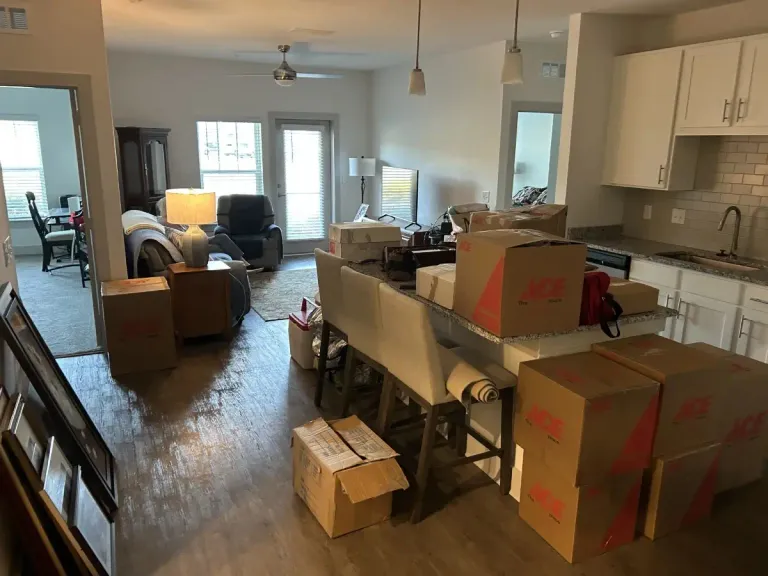
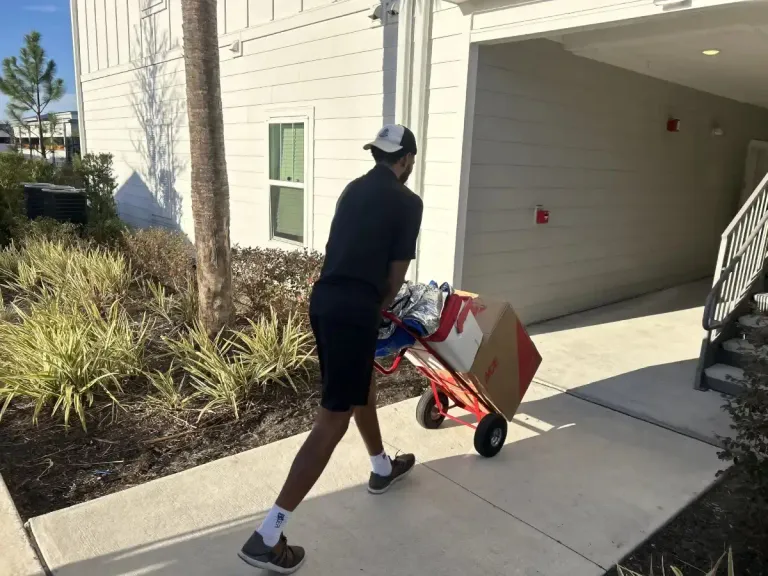
Packed boxes staged indoors partway through a moveMover wheeling a hand truck of boxes along a walkway

Courthouse Administrative Office Moving FAQs

Another question? Call (904) 209-9277.

Who decides whether your movers may enter our clerk workrooms?

Courthouse security, with county facilities. The clerk’s office sends us their instructions, and we send back whatever crew details they ask for, such as names and the truck’s description. On the day, we arrive at the entrance they assign and work only in the rooms on the clerk’s move list.

Can the records counter reopen the next business day after a Friday move?

That’s usually the goal. Counters go out right after the public doors close, are set at the new windows first, and are checked with a supervisor before we move the workrooms. The clerk’s IT staff then bring the terminals and receipt printers back online in time for opening.

Our screening station won’t let tools through. How do you take shelving apart?

We ask security ahead of time which tools can come in through the service entrance and whether an officer will inspect them there. Some courthouses allow tools on a vendor list. If a tool is refused, we plan that part of the job around what is allowed or bring the shelving out in larger sections.

Do deputy clerks need to pack their own desks?

Yes. Anything on or in a desk that relates to a case is packed by the person who works it, sealed, and labeled with their seat number. Personal items can go in the same cartons. We move the sealed cartons, the desk, and the chair together to the new seat.

Plan your business move

Tell us both addresses, the building rules you know about, and the dates you cannot move. We will send back a written plan and estimate.

Call (904) 209-9277

Mon–Sun 8:00 AM – 7:00 PM

Call Now call 904-209-9277