Commercial Service

Files and Records Moving in St. Johns County and Jacksonville

File rooms measured in linear feet, each cabinet judged full or boxed, and every run labeled in sequence so the drawers come back in order.

(904) 209-9277
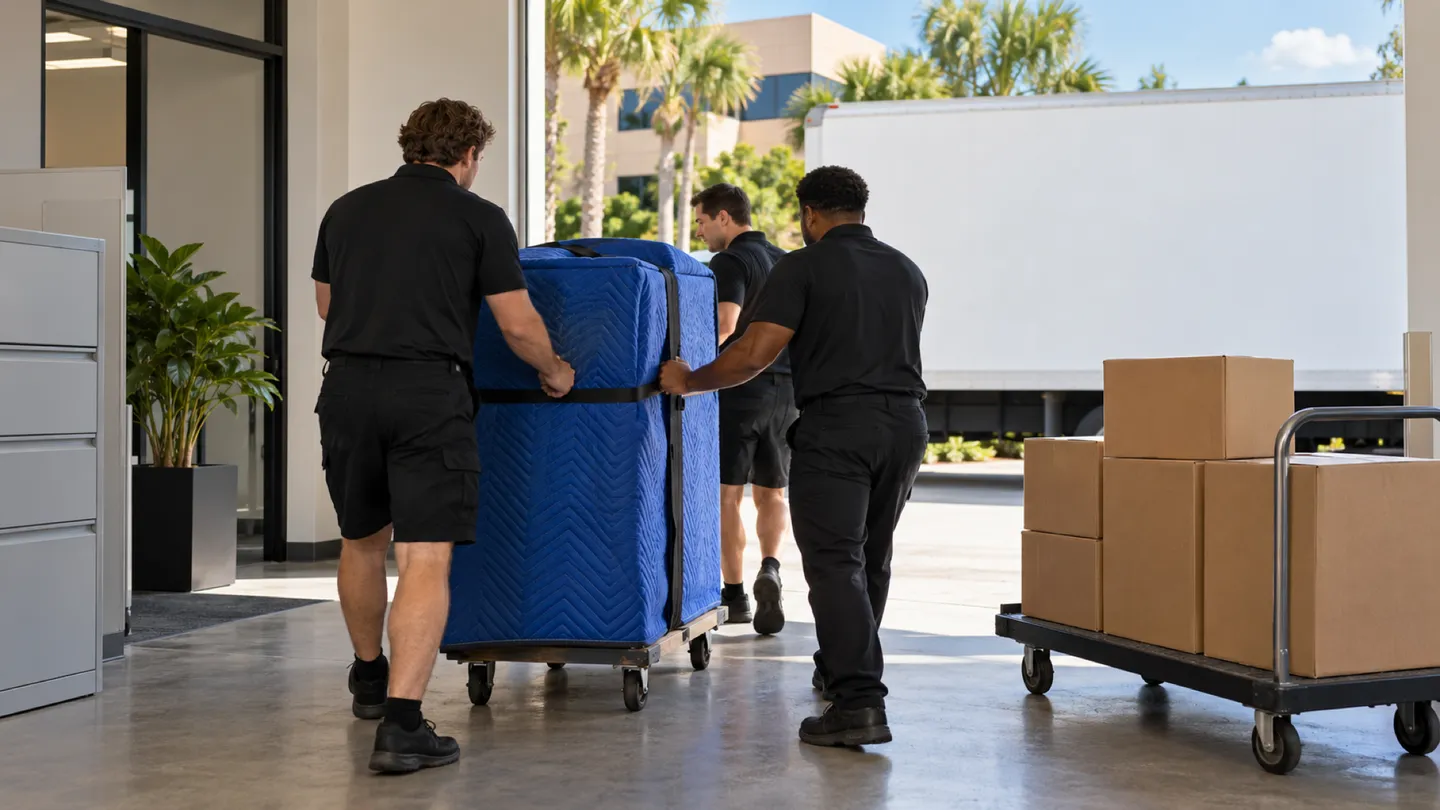
Files & Records Moving moving in St. Johns County and Jacksonville: moving crew at work
  • Licensed & Insured Fully Covered
  • Owner-Operated By Devin Vangel
  • Northeast Florida St. Johns + Duval + Beyond

Start your free commercial move quote

verified For estimate purposes only credit_card_off No credit card required

How We Plan Files & Records Moving

Files are the one part of an office move where order matters more than speed. A misplaced carton of furniture costs a few minutes; a run of client files shelved out of sequence can cost your staff a week of hunting.

We work through it in four steps. First, we measure what you have in linear feet, one drawer and one shelf at a time, and compare it with the cabinets and shelving waiting at the new office, so you know before move day whether everything fits. Second, we go cabinet by cabinet and decide with your records lead which ones can travel with their drawers full and which must be emptied. Third, anything that comes out of a drawer goes into cartons numbered in sequence, with the first and last file noted on each label, so the run rebuilds in the order it left. Fourth, at the new office we place cabinets first, then shelve the cartons in number order. What you keep, archive, or shred is your organization’s decision, and your shred vendor handles the destruction.

Who usually signs off
Office or records manager who approves cabinet handling, shelf destinations, and which records staff release for the move
Timing that works
Closed files first, active drawers last, often after close on the final day; paper spends as little time as possible in summer heat, with a second date held from June through November

What typically moves

  • Lateral file cabinets Often able to travel full once drawers are locked or strapped, if the route and the cabinet’s build allow it.
  • Vertical four-drawer cabinets Usually emptied first, since a loaded tall cabinet is top-heavy on a dolly and strains its drawer slides.
  • Open-shelf file runs Boxed left to right in sequence, with each carton showing its shelf, position number, and first and last file.
  • Hanging folders and file frames Moved in file boxes sized for hanging folders, so tabs stay upright and legible.
  • Archive banker boxes Kept in their existing numbering; we add the destination shelf, never a description of what is inside.
  • Flat files and map drawers Drawers taped shut or removed and carried separately, depending on the cabinet’s weight.
  • Index binders and shelf maps Your records lead keeps the master copy; the crew works from a printed placement map.

Access and scheduling

We schedule file rooms in two waves. Closed and archived files go early in the week, since nobody needs them day to day. Active drawers move last, usually after your office closes on the final day, so staff can work until the doors lock. If your team needs the move to run into the evening, we can plan that.

Paper is heavy, and the route sets the method. Before anyone agrees to move a cabinet full, we check the doors, turns, thresholds, and elevator at both buildings, and the landlord’s rules on floor loads and dollies. We send each building the insurance certificate it asks for. Between June and November, both buildings get asked for a second date too, which matters most when a file room has to leave by a lease date.

Protection and handling

The sequence label is the safeguard. Each carton gets a number, its destination cabinet or shelf, and the first and last file in it, on two sides. Before anything leaves, we photograph each shelf run and the drawer faces, so your staff can check the rebuild against a picture instead of memory.

A cabinet cleared to ride loaded gets its drawers locked or strapped, their corners padded, and they ride upright on a dolly suited to the weight. We keep each carton light enough for a single carry. Humidity is hard on paper in a Northeast Florida summer: cartons left on an open dock soften and their labels start to curl, so we keep file cartons indoors or on the truck with the doors closed, never waiting outside. Nobody on our crew reads, sorts, or opens your files.

Who does what

Some of this job belongs to other trades. The written plan names each one.

Retention schedule and what gets discarded
Your records lead or office manager decides what moves, what is archived, and what is destroyed, and marks it before we label anything.
Shredding of files you retire
Your shred vendor collects and destroys them under your arrangement with that vendor, separately from the move.
Keys and locks on cabinets
Your office manager keeps every key and decides whether locked cabinets travel locked.

Not part of our work

  • Reading, sorting, or indexing files, or deciding which ones to keep.
  • Shredding or destroying records, which stays with your shred vendor.
  • Opening a carton or drawer your staff have sealed.

Around St. Johns County and Jacksonville

File rooms in the Southside and Baymeadows office buildings usually book one freight elevator across several tenants, so heavy file loads get their own elevator slot. Firms relocating to newer Nocatee and CR 210 suites often find less wall space for filing, which is why the linear-foot count comes first.

The crew that shows up

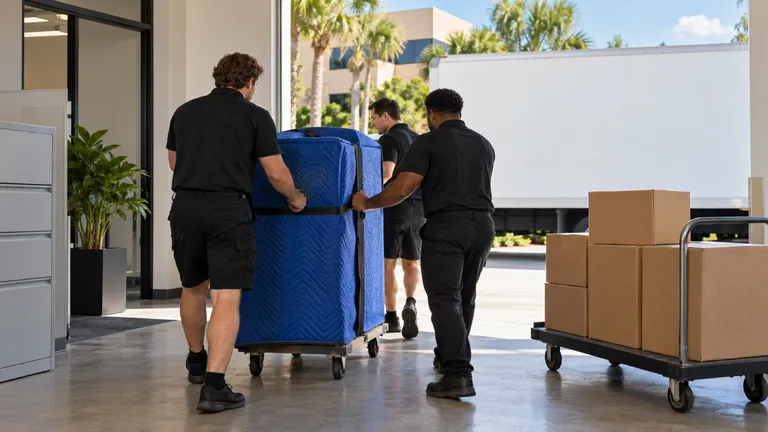
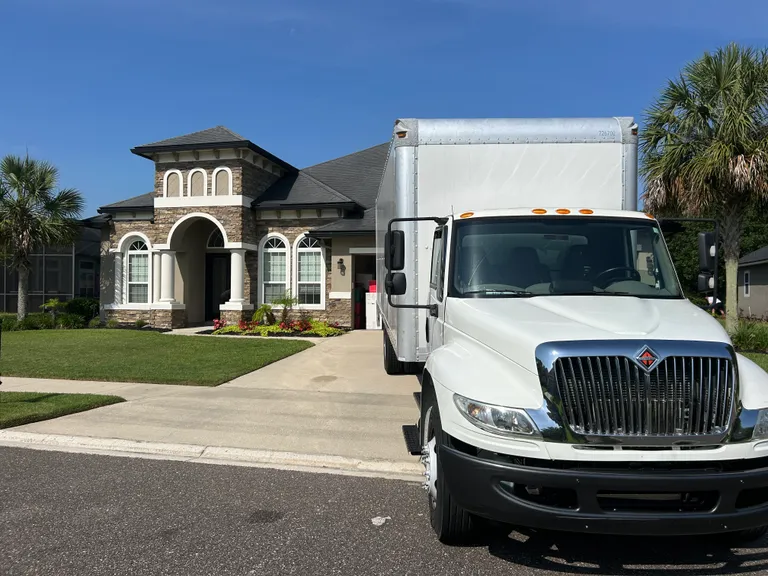
Mover in a black polo pulling a loaded hand truck off the liftgateWhite box truck at the curb outside a home with palm trees

Files & Records Moving FAQs

Another question? Call (904) 209-9277.

How do we know whether our files will fit in the new file room?

We measure your current files in linear feet and the new cabinets and shelves the same way, then compare them before move day. If the new room comes up short, your records lead decides what gets archived, retired to your shred vendor, or placed elsewhere, while there is still time to plan it.

Why do some cabinets move full and others get emptied?

It depends on the cabinet and the route. A sturdy lateral cabinet with locked drawers can often ride full on the right dolly. A tall vertical cabinet usually cannot, because a loaded one tips easily and its slides can bend. Stairs, thresholds, or a small elevator can change the answer for either kind.

One drawer holds the end of one client range and the start of the next. How is that labeled?

We split it at the break into two cartons, each numbered in its own run with its first and last file noted. The shelf map shows both destinations, so your staff find the end of one range and the start of the next exactly where they expect them.

Can our shred vendor pick up on the same day as the move?

Yes, if your staff separate the retired files first and mark them clearly. We keep them apart from the moving cartons and out of our labeling, and your shred vendor picks them up when it has arranged to. The shredding arrangement and any paperwork it produces are between your office and that vendor.

Plan your business move

Tell us both addresses, the building rules you know about, and the dates you cannot move. We will send back a written plan and estimate.

Call (904) 209-9277

Mon–Sun 8:00 AM – 7:00 PM

Call Now call 904-209-9277