Warehouse & Light Industrial

Records Storage Moving in St. Johns County and Jacksonville

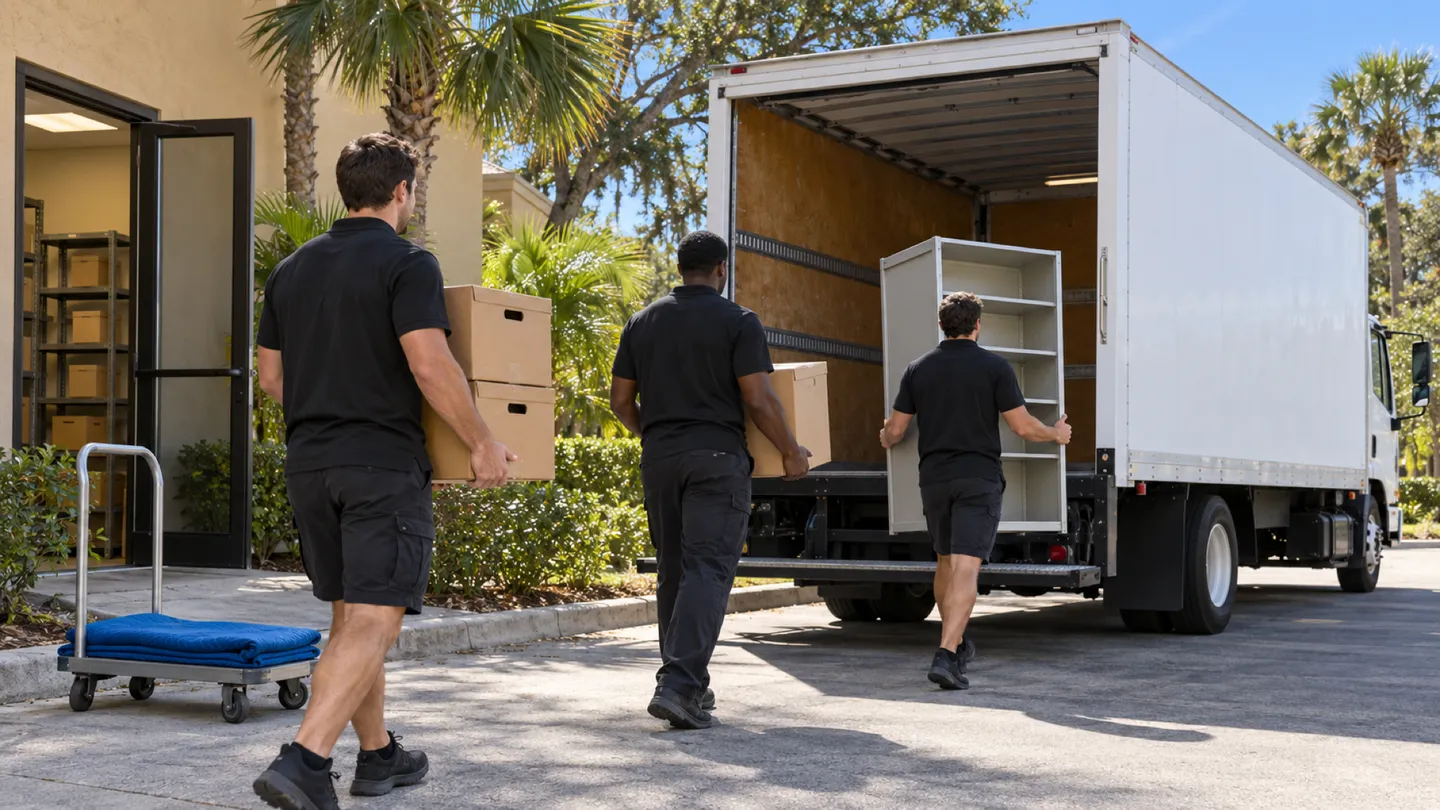
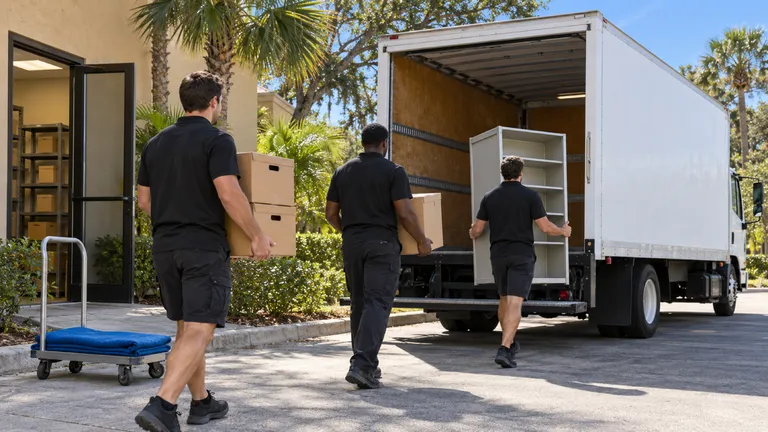
Carton groups counted against your box list, loaded in shelf sequence, and placed on empty shelving already standing in the new room.

(904) 209-9277
Records Storage moving in St. Johns County and Jacksonville: moving crew at work
  • Licensed & Insured Fully Covered
  • Owner-Operated By Devin Vangel
  • Northeast Florida St. Johns + Duval + Beyond

Start your free records storage move quote

verified For estimate purposes only credit_card_off No credit card required

Planning a Records Storage Move

A records room is a map more than a pile of boxes. Each carton has a location in your index, often a barcode, and the whole operation works only if the carton at aisle 12, bay 3, shelf 4 is the one the index says is there. A move that scrambles that order turns every retrieval into a search.

So the job runs on your box list. Your records manager counts the cartons in each shelf group, assigns every group a destination, and prints sequence labels showing where it lands. We set the empty freestanding shelving in the new room first, then load cartons group by group in the order they will be shelved, so the first group off the truck is the first group on the shelves. At each end we check the count your team gave us for that group and stop if it doesn’t match. We don’t open cartons, read labels beyond the location, or decide what a series contains. Retention, destruction, and the index stay entirely with your team.

Who usually signs off
Records operations manager who approves the carton count, withdrawal cutoff, and destination shelf map
Timing that works
After your team pauses retrievals and the new shelving is up and inspected, often over a weekend on request so requests resume Monday; a spare date in late summer

What typically moves

  • Closed record cartons Moved in shelf groups with your sequence labels; the outside shows a location, not what the records are.
  • Freestanding steel shelving Emptied, taken apart by section with its clips and shelves bundled, and set to the new aisle plan before any carton arrives.
  • Oversize and flat-file drawers Maps, plans, and oversize folders stay in their drawers, taped shut, when the cabinet can travel loaded.
  • Retrieval carts and step ladders Assigned to the new aisles so staff can start pulling on the first day.
  • Intake and indexing tables Set by the receiving door, away from the aisles, so new cartons have somewhere to be processed.
  • Empty cartons and lids Nested, bundled, and kept apart from any carton holding records.

Access and scheduling

Your team sets a retrieval cutoff. Once requests pause, each shelf group is counted and released. If a client or department needs a carton during the move, your staff pull it first and hold it outside the move path. We schedule the heavy loading for a weekend by arrangement so requests resume on a normal Monday.

Full record cartons are dense and heavy, so we walk both buildings for the things that slow a carton move: elevators with weight limits, long corridors, thresholds, and aisles too narrow for a loaded cart. The new shelving needs to be standing and inspected before the first truck arrives. A shared office building usually wants an insurance certificate before its freight elevator is reserved, and we issue one naming the landlord.

Protection and handling

Counts are checked twice: once as a group leaves its old shelf and again as it goes onto the new one. A missing carton, an extra one, or an unreadable label goes back to your records manager before placement rather than onto the nearest open shelf.

Cartons ride upright on the truck and are stacked no higher than their board can bear, with the heaviest groups on the floor. A carton with a split corner or a torn handle comes out of the load for your staff to repack or re-box. Paper and cardboard take on moisture fast in Northeast Florida, and damp records can mildew, so cartons go straight from the building into a closed truck and straight inside at the other end, with no staging on a dock or sidewalk during an afternoon storm.

Who does what

Some of this job belongs to other trades. The written plan names each one.

Box list, index, and barcodes
Your records team counts each shelf group, maintains the index, and prints the sequence labels; we place cartons by those labels.
High-density mobile shelving and anchored systems
The shelving installer takes them down, sets them, and anchors them, and releases each row before cartons go on.
Retention and destruction
Your organization follows its own retention schedule and brings in its shred vendor for anything it chooses to destroy.

Not part of our work

  • Opening cartons, sorting records, or updating your index.
  • Taking down, setting, or anchoring mobile or high-density shelving.
  • Deciding retention or arranging destruction of records.

Around St. Johns County and Jacksonville

Records rooms sit in office buildings along the Southside and Baymeadows corridors, in downtown Jacksonville, and in St. Johns County offices near the courthouse area off US-1 in St. Augustine. From June through November, peak humidity and storm season make a dry, closed loading route and a backup date part of the plan.

The crew that shows up

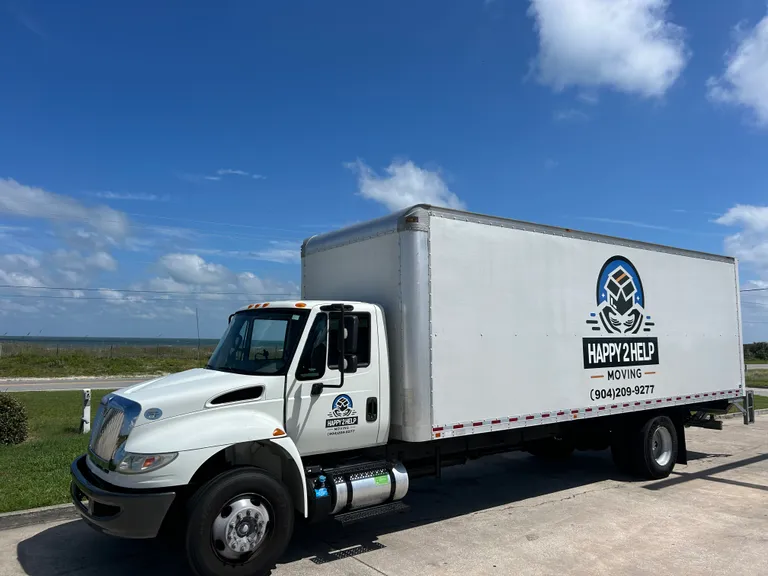
Happy 2 Help Moving crew lead in a black company poloHappy 2 Help Moving box truck with the company logo

Records Storage Moving FAQs

Another question? Call (904) 209-9277.

How do we split a shelf that holds several record series?

Your records team divides it into labeled groups before move day, each with its own count and destination. We keep the groups separate on the truck and place them in sequence. If a series is mixed or a box number is missing, your team sorts it out before loading, since we don’t decide what belongs together.

What if the new room has fewer usable bays than the old one?

Your records manager revises the map before labels are printed, splitting or combining groups and recording the new locations. We follow the destination labels exactly. If the layout changes after loading, your manager assigns the affected cartons new positions before we unload them.

Can a carton requested mid-move still be retrieved?

Yes, if your staff pull it before its shelf group is released. They hold it in a marked area outside the move path and log it in the index. We move only what has been released, and the carton rejoins its group at the new location when your team is ready.

Do you keep our records anywhere between the two buildings?

No. It is a direct move between your two rooms. Each load goes in sequence onto shelving that is already standing at the new location. If the new room isn’t ready, we move the date rather than park cartons somewhere in between.

Plan your business move

Tell us both addresses, the building rules you know about, and the dates you cannot move. We will send back a written plan and estimate.

Call (904) 209-9277

Mon–Sun 8:00 AM – 7:00 PM

Call Now call 904-209-9277