Warehouse & Light Industrial

Film Production Studio Moving in St. Johns County and Jacksonville

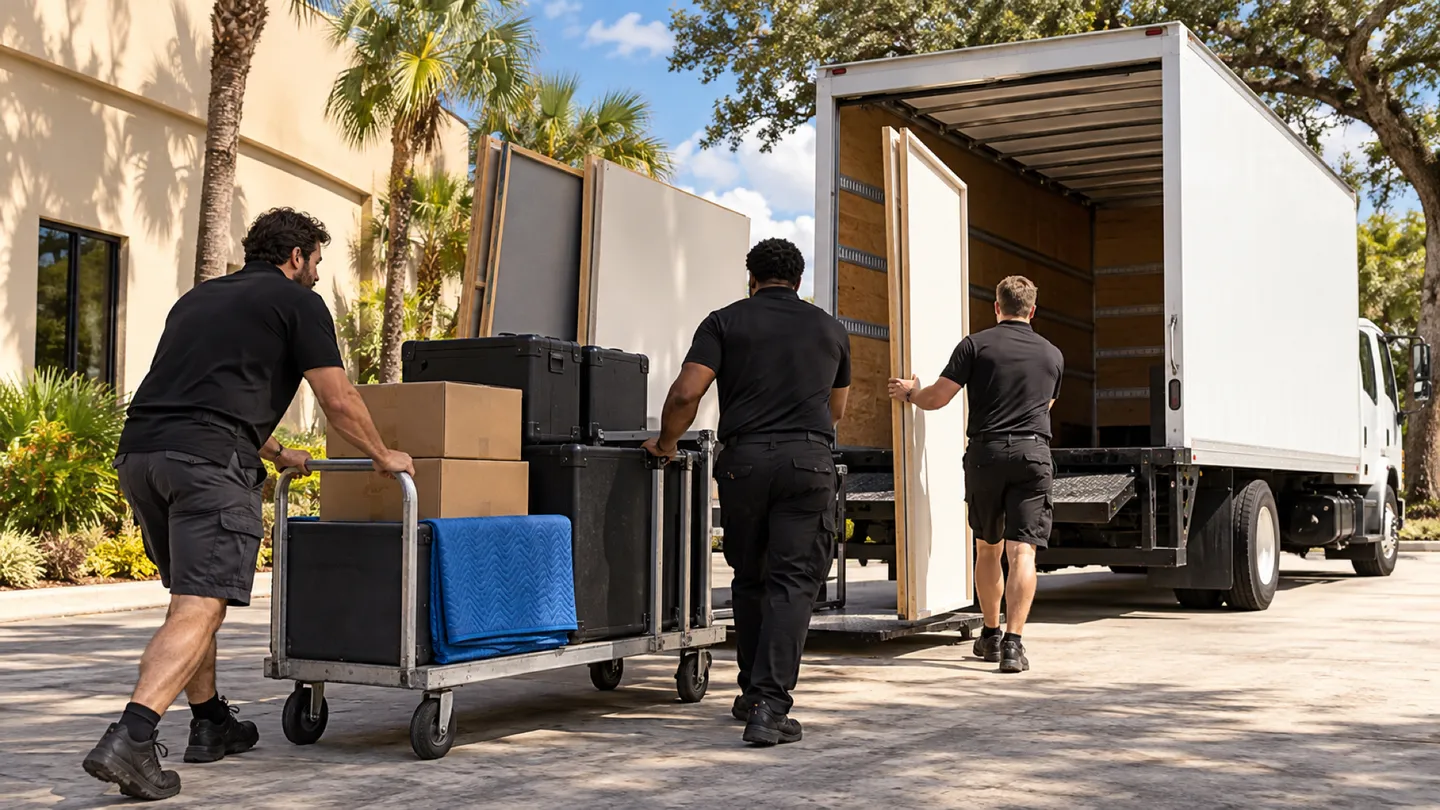
Set flats in build order, lighting and grip cases by department, and props by scene, moved between your last wrap and the next build.

(904) 209-9277
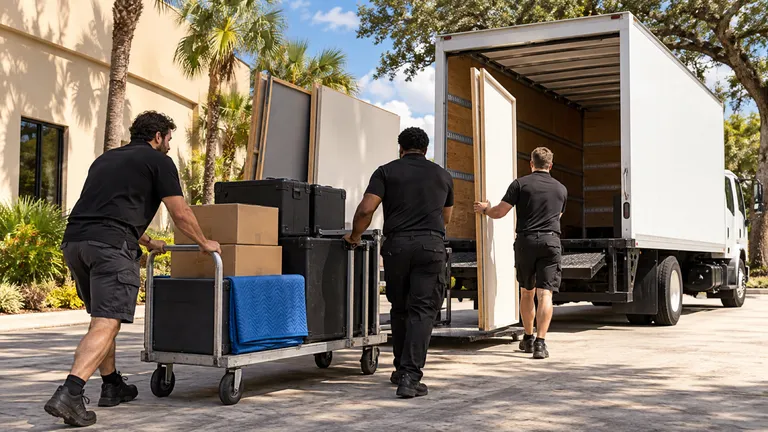
Film Production Studio moving in St. Johns County and Jacksonville: moving crew at work
  • Licensed & Insured Fully Covered
  • Owner-Operated By Devin Vangel
  • Northeast Florida St. Johns + Duval + Beyond

Start your free film production studio move quote

verified For estimate purposes only credit_card_off No credit card required

Planning a Film Production Studio Move

A production studio packs like a show on the road, except nothing is going on the road. Your grip and electric team already lives out of road cases and carts, your prop master already tracks props by scene, and your scenic lead knows which flats make which set. The move works when those three systems stay intact from one space to the other.

Most First Coast studios doing commercial, corporate, and indie work operate out of converted flex and warehouse units, and a new space often means taller ceilings or a bigger door. We plan with your department heads. Scenic marks the flats and platforms by set and wall, grip and electric close and label their cases, and props packs by scene. Every department travels as a separate group and lands in the zone your production lead draws on the new floor plan, with the first set on the build schedule going onto the truck last. Your crews unpack, rig, rebuild, and check their own gear.

Who usually signs off
Producer or studio operations lead who approves the production calendar, set list, and destination floor plan
Timing that works
Between the last wrap and the first build day at the new space, often a weekend on request, with a spare date between June and November

What typically moves

  • Scenic flats and wall units Labeled by set, wall, and position, faces padded, and loaded on edge in build order.
  • Platforms, risers, and step units Legs and pins bagged with their deck, marked by the scenic lead.
  • Lighting and grip road cases Latched and labeled by your department; we carry them to the zone they list.
  • C-stands, carts, and apple boxes Stands collapsed and bundled, carts strapped shut, apple boxes nested by size.
  • Sandbags and shot bags Heavy and awkward, so they ride low in the truck on their own.
  • Prop bins and hand-prop cases Packed and closed by your prop master, kept together by scene.
  • Wardrobe racks and production office furniture Rolling racks covered and strapped; desks, monitors, and the edit bay furniture go by room.

Access and scheduling

Start from the call sheet. The last day of shooting at the old space still needs its set standing, so your production lead marks what stays until wrap and what can go early. Office, wardrobe, and storage shelving usually move first, then grip and electric the day after wrap, then scenery. A weekend window is possible by arrangement if the new stage needs to be working on Monday.

Flats and backdrop frames are the pieces that don’t fit. We measure your widest and tallest units against both loading doors, the truck, and any turn inside, and plan the route before anything is struck. At a leased flex building the property manager may ask for an insurance certificate before the loading door opens, and we can issue one naming the owner.
Protection and handling

Painted and finished faces get blankets, and flats ride upright against the side wall with straps, not stacked flat under anything heavy. Trim and hardware stay bagged with the wall they came off. Grip and electric cases look identical, so their labels are your department’s, and we don’t open them or swap them between zones.

Continuity notes, prop inventories, and paper labels don’t survive a Florida downpour well, so cartons stay indoors until loading and go straight into the new building on arrival. Hard drives, camera bodies, lenses, and lithium battery packs travel with your camera and data team, not on our truck. On arrival, each department’s gear goes to its marked zone and leave the stage floor clear for the scenic build.

Who does what

Some of this job belongs to other trades. The written plan names each one.

Set construction, rebuild, and attached scenery
Your scenic builder detaches fixed pieces, rebuilds each set, and signs off that it is ready to shoot.
Lighting rigs, grid work, and building power
Your gaffer and grip team rig and test their gear; a licensed electrician handles any tie-in or distribution at the new stage.
Cameras, drives, and batteries
Your camera and data team pack and carry them personally.

Not part of our work

  • Rigging lights, working on a grid, or connecting to building power.
  • Moving cameras, lenses, drives, or lithium battery packs.
  • Building sets or opening department cases.

Around St. Johns County and Jacksonville

Studios on the First Coast often work out of converted flex and warehouse units on the Westside and Northside. Door heights, ceiling clearance, and truck access vary widely between those buildings, even within one park. Storm-season moves carry a backup weekend.

The crew that shows up

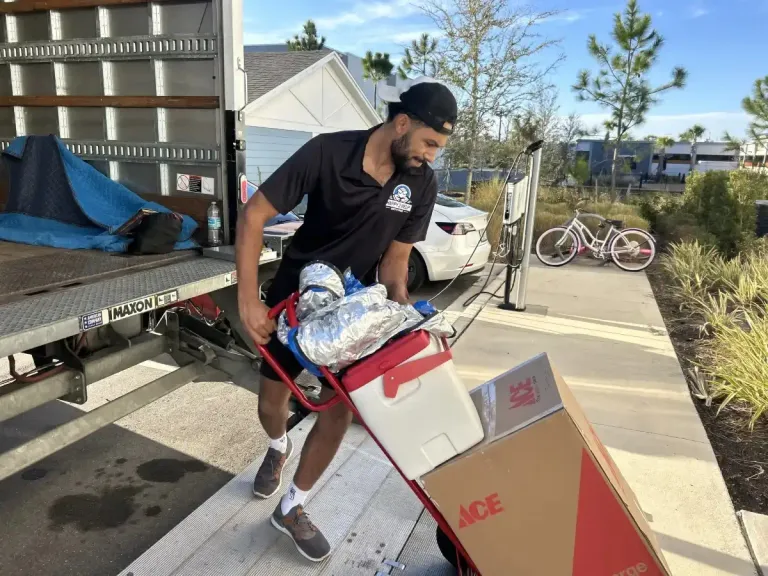
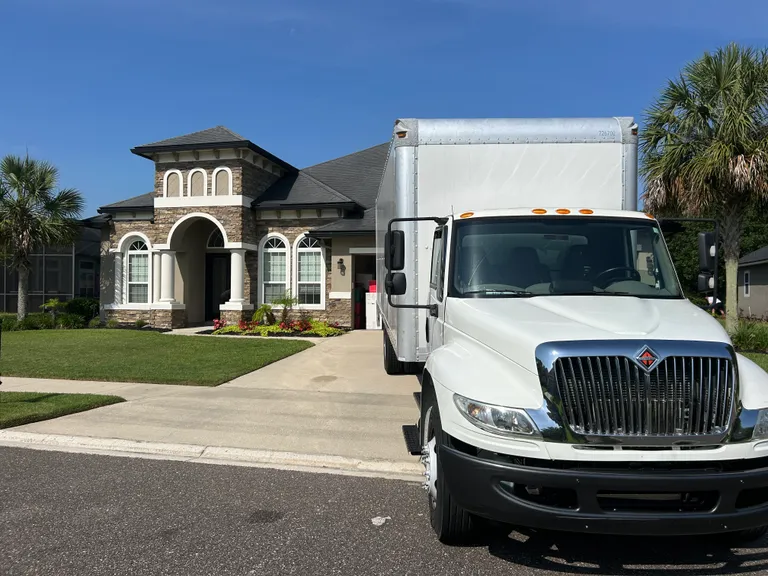
Mover in a black polo pulling a loaded hand truck off the liftgateWhite box truck at the curb outside a home with palm trees

Film Production Studio Moving FAQs

Another question? Call (904) 209-9277.

Can the first set we need come off the truck first?

Yes. Your scenic lead tells us which set is built first, and we load its flats, platforms, and trim last so they come off first. We place them in the build zone with space around them, then bring in the other sets. Your scenic team handles the rebuild.

Should our G&E department pack as if for a location day?

The way they would for a location day: cases closed and latched, loose accessories bagged, carts strapped, and each labeled with the zone it goes to. If gear is still needed for the last shoot, keep it in a hold area and we collect it after wrap.

Who handles our cyc wall and green-screen setup?

A built-in cyc stays with the building or goes to the contractor who built it. Portable green-screen frames and fabric we can pack and carry once your grip team strikes them. Your team decides whether the fabric travels rolled or folded, and we keep it clean and dry on the way over.

A wall flat may not turn into the new stage. What happens then?

We catch it on the walk. Your widest and tallest pieces are measured against both doors and any inside turn before move day. If a unit won’t make the turn, your scenic builder decides whether to take it apart, cut it down, or build it again at the new space.

Plan your business move

Tell us both addresses, the building rules you know about, and the dates you cannot move. We will send back a written plan and estimate.

Call (904) 209-9277

Mon–Sun 8:00 AM – 7:00 PM

Call Now call 904-209-9277