Retail, Restaurant & Hospitality

Franchise Rollout Moving in St. Johns County and Jacksonville

One manifest format, one labeling system, and one delivery order for every location you open, adjusted only for each site’s lease, doors, and landlord hours.

(904) 209-9277
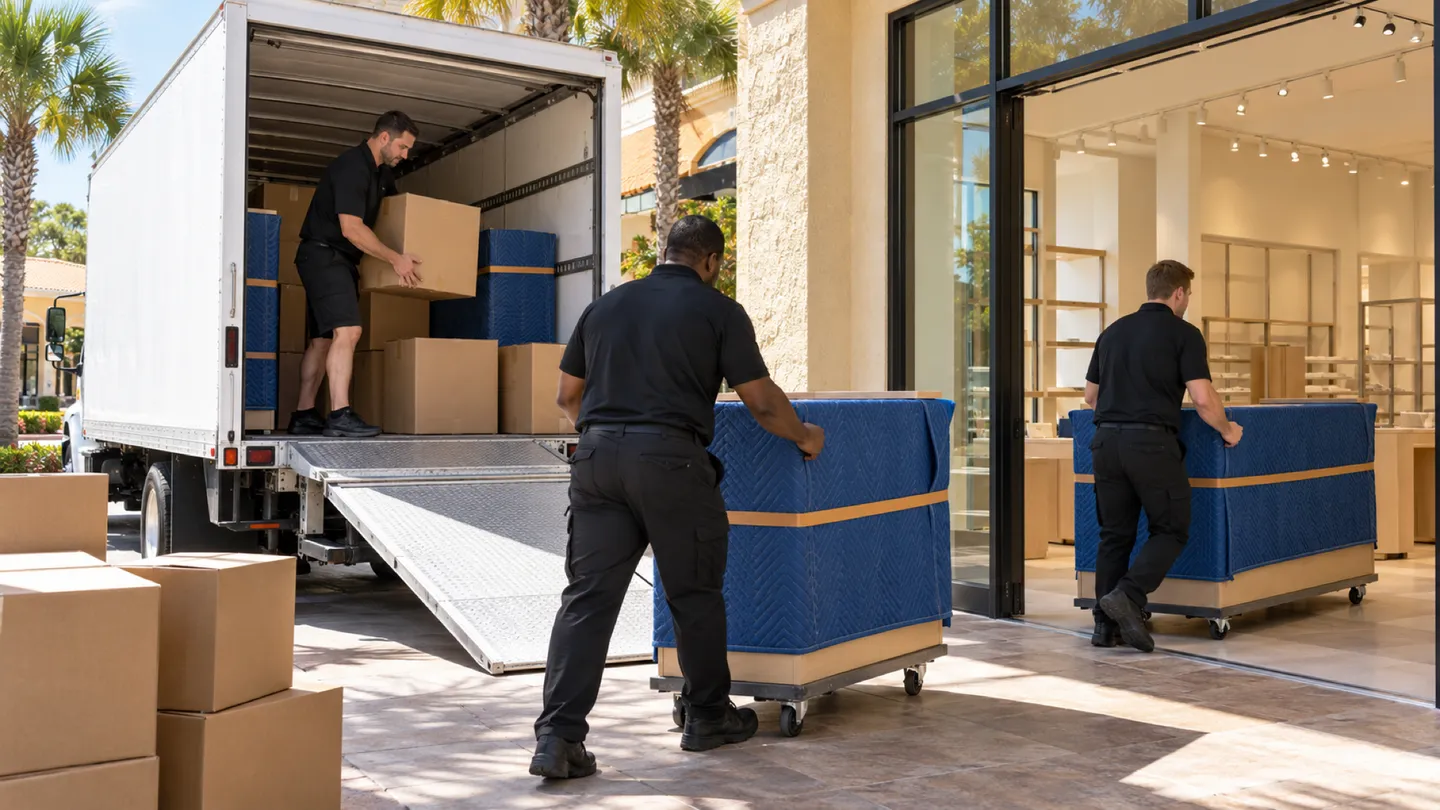
Franchise Rollout moving in St. Johns County and Jacksonville: moving crew at work
  • Licensed & Insured Fully Covered
  • Owner-Operated By Devin Vangel
  • Northeast Florida St. Johns + Duval + Beyond

Start your free franchise rollout move quote

verified For estimate purposes only credit_card_off No credit card required

Planning a Franchise Rollout Move

A franchisee opening three or four locations across Northeast Florida faces one real risk from the moving side: parts meant for one store ending up in another. A counter section built for the Nocatee unit fits the Orange Park unit almost, but not quite, and nobody notices until the installer is standing in the wrong store.

The fix is doing the same thing every time. Each location gets its own manifest in the same format, built from your brand’s opening kit list: counters, display bays, back-room shelving, training-room tables, and signage frames. Every piece and every bag of hardware carries a site code and a zone. We load one site at a time, check each item against its manifest going on and coming off, and unload in the order your opening team works: fixtures first, then back room, then training room. The only differences between stores are the ones the lease and the building impose, like an elevator where the last site had a ground-floor entry.

Every site stays inside our area: St. Johns and Duval first, then Clay, Nassau, and Flagler.

Who usually signs off
Franchise operations lead or opening coordinator who approves each location’s kit list, placement plan, and opening date
Timing that works
Set per site by the possession date, the fixture installer’s visit, staff training, and the first customer day; late-summer openings carry a second date

What typically moves

  • Modular service counters and cash wraps Sections and trim labeled with site code and position; the fixture installer anchors them once they’re in place.
  • Freestanding display bays and shelving Shipped by site and zone, with each bay’s shelves and brackets bagged to its own frame.
  • Back-room shelving and sorting bins Grouped to that site’s stockroom map, so opening supplies go straight onto the right shelves.
  • Training-room tables and stools Marked for the room where staff orientation happens before opening, and often the first room finished.
  • Menu boards and freestanding signage frames Frames and bases travel together; your team supplies the current graphics and hangs anything wall-mounted.
  • Manager’s office desk and back-office computer Placed to the office plan; we connect the computer, screen, and printer, and your vendor handles the network.

Access and scheduling

Each site gets a one-page sheet before its date: receiving contact, door, truck position, cart route, room map, and the landlord’s move hours. The sheet looks the same every time, so our crew knows where to look at every stop. A shopping-center unit near St. Johns Town Center may share a service corridor with its neighbors, while a Palm Coast or Yulee pad site may have its own rear door and nobody else to work around. If a landlord wants an insurance certificate naming them, the sheet notes the wording and we send it ahead.

Timing follows the trades. The fixture installer needs an open floor to anchor counters, and the point-of-sale vendor needs the counters set before installing terminals, so our delivery lands between the two. Openings between June and November carry a second date with the site team, and a pending inspection or unfinished trade work moves the date rather than squeezing it.
Protection and handling

The site code does the protecting. Two labels go on each piece: one naming the location, one naming its zone inside the store. At loading, a crew member reads every label against the manifest, and at delivery your local contact does the same, so a missing counter end or a stray bag of brackets turns up that day, not at the grand opening.

Finished counter faces and laminate edges travel blanket-wrapped and stretch-wrapped, and we lay floor runners over new tile before the first cart rolls in. Summer loading in an un-air-conditioned bay softens cardboard and lifts labels, so we start early and keep packed pieces inside until the truck is backed up. After the last site, the manifests come back to your operations lead with notes on anything short, damaged, or swapped.

Who does what

Some of this job belongs to other trades. The written plan names each one.

Opening kit list and each site’s manifest
Your franchise operations lead approves what goes to each address and names a local contact to check the delivery against it.
Anchored counters, wall graphics, and fixed displays
Your fixture installer fastens them to the building; a licensed trade handles any wiring or plumbing the location needs. We carry and place the movable pieces.
Point-of-sale terminals and network service
Your technology vendor installs and tests the sales system after our crew has set the counters.

Not part of our work

  • Choosing the kit, allocating merchandise, or resolving supplier shortages.
  • Anchoring fixtures or doing any wiring or plumbing.
  • Sites outside St. Johns, Duval, Clay, Nassau, and Flagler counties.

Around St. Johns County and Jacksonville

A rollout here might pair a unit near Nocatee Town Center with one off J. Turner Butler Blvd, then add Orange Park, Yulee, or Palm Coast. Each sits inside the service area, but the drive between them runs on I-95 and I-295, and a late-afternoon storm or rush-hour traffic can stretch a two-site day, so we plan around one site a day unless two sit close together.

The crew that shows up

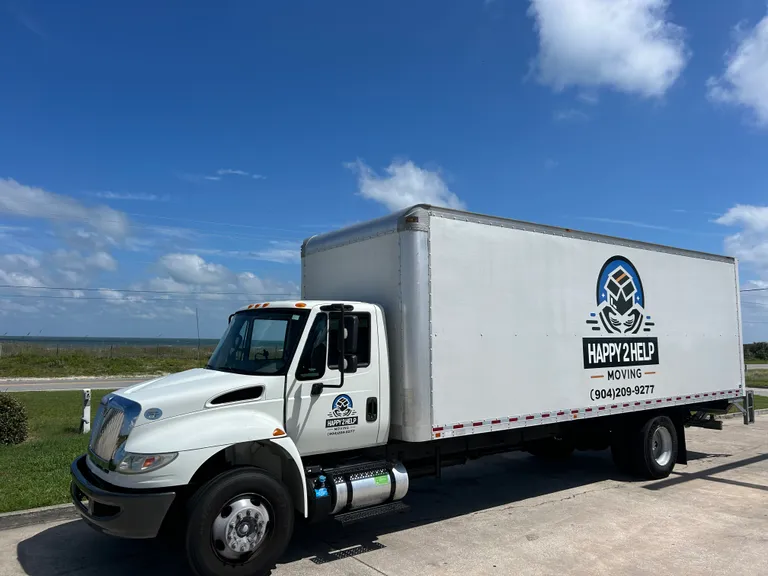
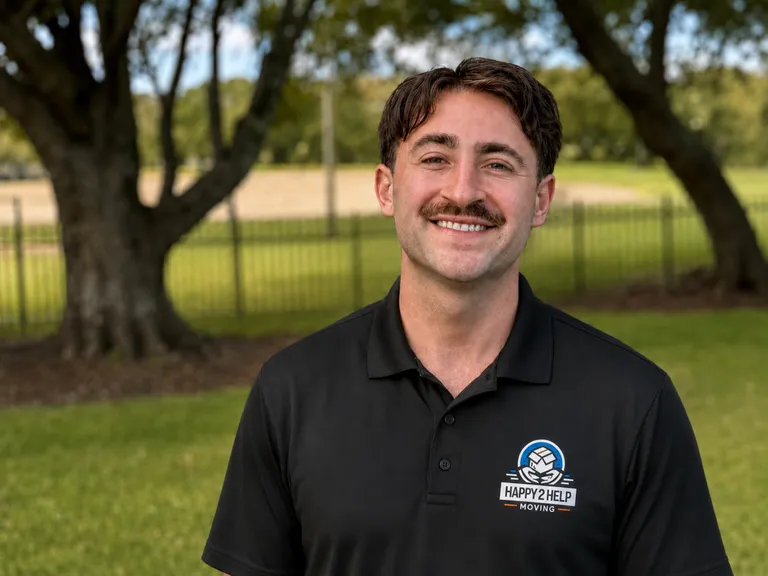
Happy 2 Help Moving box truck with the company logoHappy 2 Help Moving crew lead in a black company polo

Franchise Rollout Moving FAQs

Another question? Call (904) 209-9277.

Can one kit list work for stores with different floor plans?

Yes. The categories, labels, and sign-off steps stay identical, and each address gets its own zone map attached. The map tells our crew which counters and bays go where in that store. Your operations lead approves any added or missing pieces before loading, so the shared list doesn’t force one store’s layout onto another.

How do we stop one opening’s kit from mixing with the next?

Each location gets its own manifest and site code, and one site loads at a time. Every piece and hardware bag is tagged to that code and checked at loading and again when your local contact receives it. Differences between the supplier’s packing list and the approved kit go back to your operations team to resolve.

Could our rollout include a location in Orlando?

No. We plan rollouts inside St. Johns, Duval, Clay, Nassau, and Flagler counties only. A plan that includes locations farther away needs a different mover for those sites. For the stores inside our area, we can use your brand’s manifest format so the paperwork matches across the whole rollout.

What happens if the new site fails an inspection the week of delivery?

We move the date. Fixtures placed into a space still waiting on sign-off tend to be moved twice, once for the inspector and once for the trades. Tell us as soon as the site team knows, and we offer the next opening on our calendar that works with the installer’s visit.

Plan your business move

Tell us both addresses, the building rules you know about, and the dates you cannot move. We will send back a written plan and estimate.

Call (904) 209-9277

Mon–Sun 8:00 AM – 7:00 PM

Call Now call 904-209-9277