Education, Civic & Community

University Department Moving in Northeast Florida

Book-heavy faculty offices, graduate bullpens, and the main office moved room by room; the lab stays with research staff, and the campus dock sets the slot.

(904) 209-9277
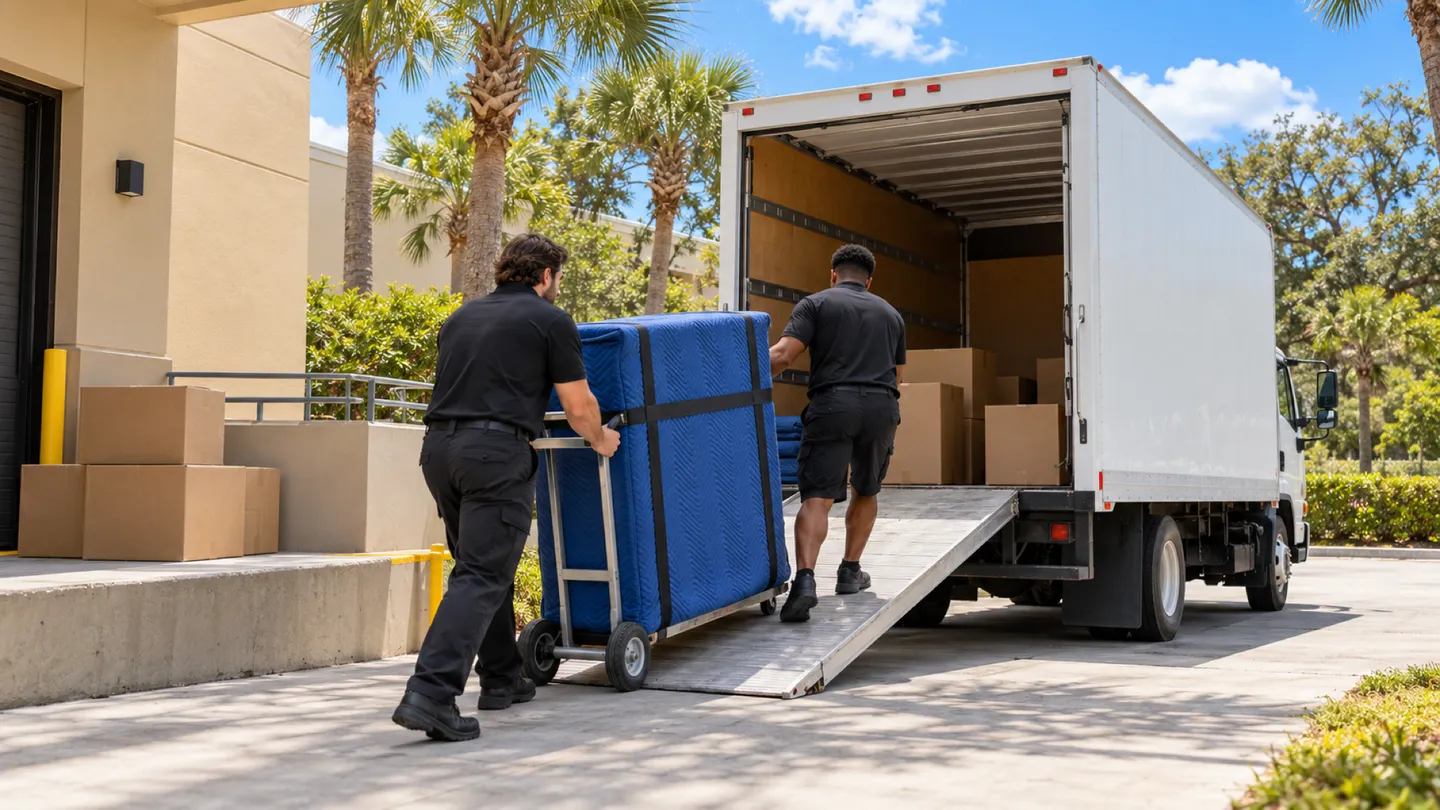
University Department moving in St. Johns County and Jacksonville: moving crew at work
  • Licensed & Insured Fully Covered
  • Owner-Operated By Devin Vangel
  • Northeast Florida St. Johns + Duval + Beyond

Start your free university department move quote

verified For estimate purposes only credit_card_off No credit card required

Planning a University Department Move

Faculty offices are small rooms holding a lot of weight. A professor who has held one office for decades can have more books than a small branch library, plus journals, student theses, and filing cabinets full of course material. The first step is measuring shelves by the linear foot, office by office, because that number decides carton counts and the size of the crew far better than a room count.

Departments also draw a line we respect: offices and research rooms are different jobs. We move faculty offices, graduate student bullpens, the department’s main office, the seminar room, and the lab-adjacent offices that hold desks and paper. Benches, instruments, chemicals, samples, and freezers belong to the research staff and their equipment vendors, and the chair or lab manager marks that boundary on the room list before we start.

Timing follows the academic year. Winter break and the gap after spring commencement are the usual windows, since faculty scatter for conferences and fieldwork and offices can be packed without interrupting a class.

Who usually signs off
Department chair or administrator who approves office contents and room assignments, with campus facilities controlling access
Timing that works
Winter break or the weeks between spring commencement and the first summer session, set around the campus dock calendar and each faculty member’s travel and research schedule

What typically moves

  • Faculty book collections Packed by the faculty member or by us in shelf order, each carton numbered so the run goes back on the new shelves in sequence.
  • Journals, theses, and bound volumes Boxed in small cartons because bound paper gets heavy fast; labeled by office and shelf.
  • Graduate student bullpen desks Numbered by seat, with each student’s boxes grouped at the desk they will use.
  • Department main office and mailroom Front desk, mail slots, and supply shelving set early so the department can receive mail and visitors.
  • Seminar table and chairs Table split at its joints and chairs counted, so the room is usable for the first seminar.
  • Lab-adjacent office furniture Desks and filing cabinets from offices beside a lab, moved only after the lab manager clears the room.

Access and scheduling

Campus facilities owns the loading dock and the freight elevator. Most campuses book the dock in time slots, and a science building’s dock may also be serving gas-cylinder and chemical deliveries, so we take the slot we are given and plan the day around it. Ask facilities about vehicle permits, the service route, and whether the elevator needs pads or a reservation.

We schedule faculty offices one by one with the department administrator. Faculty away at conferences can pack before they go, or leave their shelves for us to box in order. Anyone still using an office late in the window moves last. If the department’s furniture is going to campus surplus instead of the new building, the property office usually wants it tagged and set aside, and we can move it there on the same day.
Protection and handling

Book order is the thing faculty care about most. When we pack a shelf, each carton gets the office number and a sequence number, and cartons are reshelved in that order at the new office. Faculty who pack their own shelves use the same labels.

Small cartons keep books at a weight that won’t split bottoms or strain the crew on stairs. Student papers, graded work, and research data stay with the faculty member, who packs and seals them. In older buildings we pad stair turns and freight-elevator walls, and we lay runners across finished corridors. The administrator walks every office with us and ticks it off the room list before the crew carries anything into the next one. Seminar-room furniture and the main office usually go first, so the department has a front door and a meeting table while faculty unpack.

Who does what

Some of this job belongs to other trades. The written plan names each one.

Lab benches, instruments, chemicals, samples, and freezers
Research staff and their equipment vendors shut down, pack, move, and recommission lab equipment under the university’s safety rules. We start once the lab manager releases the adjacent offices.
Surplus furniture and property tags
The campus property office decides what goes to surplus and updates its tag records; we can carry tagged pieces to the location it names.
Campus network, phones, and fixed presentation equipment
Campus IT handles service and any mounted projector or display. Our crew unhooks each faculty desk computer and its screens, carries them padded, and reconnects that setup in the faculty member’s new office.

Not part of our work

  • Lab equipment, chemicals, biological samples, gas cylinders, and specimen freezers.
  • Opening or sorting graded work, student papers, or research data.
  • Removing wall-mounted displays or fixed seminar-room equipment.

Around St. Johns County and Jacksonville

In Jacksonville, UNF on the Southside and JU on the Arlington riverfront are the main four-year campuses, and Flagler College sits in St. Augustine’s historic district. Campus names are context only. Each has its own service drives and loading rules, and a move between buildings on one campus can take as much planning as one across town.

The crew that shows up

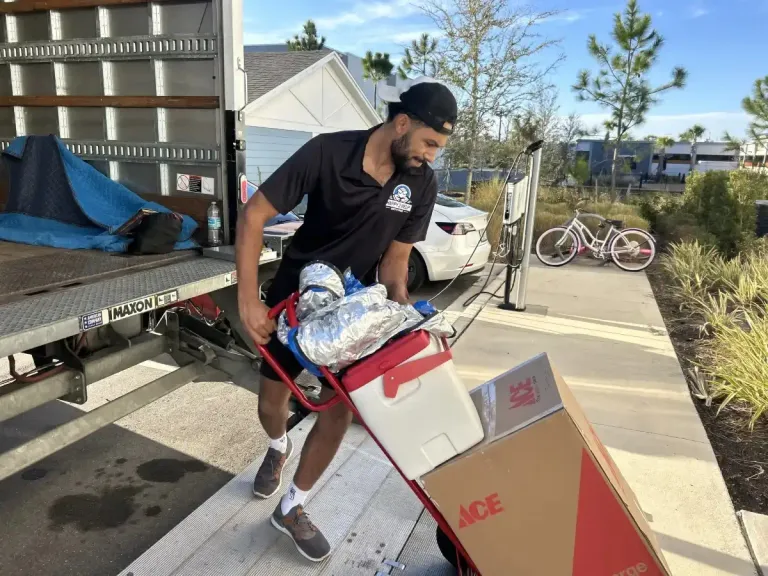
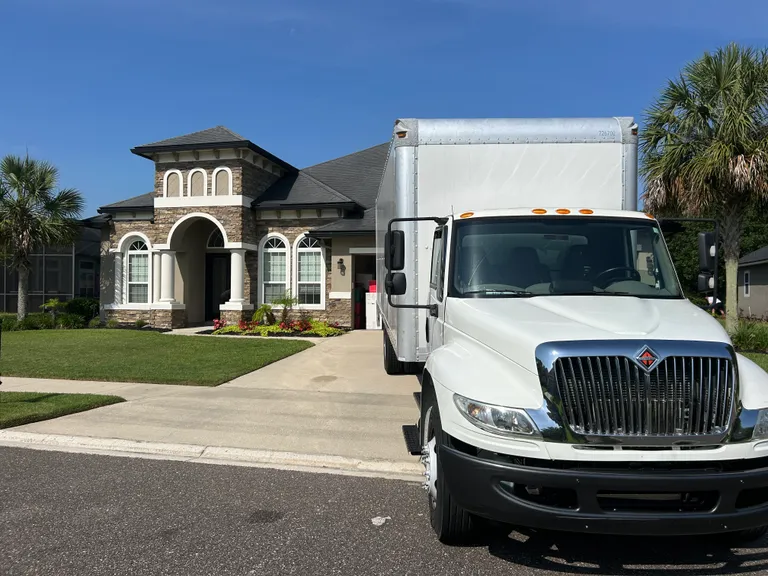
Mover in a black polo pulling a loaded hand truck off the liftgateWhite box truck at the curb outside a home with palm trees

University Department Moving FAQs

Another question? Call (904) 209-9277.

How do you estimate a department move when every faculty office has a different amount of books?

By measuring shelves in linear feet, office by office, before we quote the crew. A room count tells us little, because one office can hold far more books than the one next door. Your administrator can send the measurements, or we walk the floor with a tape measure and a room list.

Some faculty will be away at conferences. Can their offices still move?

Yes. They can pack before leaving, using our office and sequence labels, or they can leave the shelves for us to pack in order. Either way, cartons are reshelved at the new office in sequence. Anything they don’t want us to handle, such as student work or data, they seal and mark first.

Where do we draw the line between the lab and the offices around it?

The lab manager or chair marks it on the room list. Anything on a bench, in a hood, or plugged into lab services stays with research staff and their vendors. Desks, bookcases, and file cabinets in offices beside the lab are ours to move once the lab manager clears that room.

Our old office furniture is going to campus surplus. Can you take it there on move day?

Usually, if the property office has approved the surplus list and named a drop point. Pieces keep their property tags, and we deliver them to that location while moving the rest to the new building. The property office updates its own records; we just give them a list of what went where.

Plan your business move

Tell us both addresses, the building rules you know about, and the dates you cannot move. We will send back a written plan and estimate.

Call (904) 209-9277

Mon–Sun 8:00 AM – 7:00 PM

Call Now call 904-209-9277