

Healthcare & Medical

Hospital Administrative Office Moving in Jacksonville

Billing, revenue-cycle, HR, and department offices moved under the facility’s own rules. Clinical areas and clinical equipment stay out of our scope.

(904) 209-9277
Hospital Administrative Office moving in St. Johns County and Jacksonville: moving crew at work
  • Licensed & Insured Fully Covered
  • Owner-Operated By Devin Vangel
  • Northeast Florida St. Johns + Duval + Beyond

Start your free hospital administrative office move quote

verified For estimate purposes only credit_card_off No credit card required

Planning a Hospital Administrative Office Move

Health systems on the First Coast run a lot of office work that never touches a patient: billing and revenue-cycle teams, coding, HR, finance, IT help desks, and department administration. Much of it sits in leased office buildings on the Southside or downtown, and some sits in administrative wings on or near a campus. When those teams consolidate or change floors, it’s an office move, and that’s the only kind we do for a health system.

Our scope is office furniture, files, and desk equipment in administrative space. Clinical rooms, patient floors, and medical equipment are out of scope, whatever the building. The facility sets the rules we work under: who issues badges, whether an escort is required, which dock and elevator we may use, and whether carts must be covered or wiped down along a route near patient areas. We take those rules from the facilities lead in writing and plan department by department, with each manager’s seat list telling us where every desk, chair, and file box lands.

Who usually signs off
Health-system facilities or real estate lead, working with each department’s manager on seat lists and timing
Timing that works
Evening or weekend work in phases by department, clear of month-end close for billing and revenue-cycle teams

What typically moves

  • Revenue-cycle and billing workstations Desks, chairs, and pedestals tagged to seat numbers; each seat’s dual monitors and headset base labeled for the same desk.
  • Department managers’ offices Desks, credenzas, bookcases, and personal boxes labeled by name and room.
  • Conference and training rooms Tables, chairs, and freestanding screens; mounted displays stay with facilities or AV staff.
  • Emptied file cabinets and sealed record boxes Boxes packed and sealed by department staff; we move them closed to the room each manager names.
  • Shared print and supply alcoves Printers, supply shelving, and mail slots moved as a unit for each floor.
  • Break rooms and copy rooms Tables, chairs, and freestanding appliances emptied by staff; built-ins stay with the building.

Access and scheduling

Hospital-system buildings have their own security and loading routines. The facilities lead tells us the dock and elevator windows, where the truck may wait, how badges or escorts work, and whether any route passes clinical areas that should be avoided. We confirm the insurance certificate the facility requires before the first move date.

Billing and revenue-cycle teams usually avoid month-end close, and some departments can’t be offline for more than a night. We plan in phases, often one department or floor per evening or weekend, while every other department carries on as usual. Each phase has a written list of seats, rooms, and times, shared with the department manager and facilities. When the new office is a leased building off campus, the landlord’s move rules apply too, and we fold them into the same plan.

Protection and handling

Administrative space in a health-system building still shares hallways and elevators with other departments, so we protect the path through the building along with the desks and cabinets. We pad elevators, protect door frames and corners, and use runners on finished floors. Carts are wrapped or cleaned as the facility asks.

Anything with patient or employee information is packed and sealed by department staff, who decide whether to keep it with them or hand it to us sealed. We don’t open cabinets, boxes, or drawers, and we don’t move any clinical equipment, medications, or supplies, even when they sit in an administrative area. If we find something that looks clinical or confidential, we stop and ask the department manager. At the destination, boxes go into the room or seat on their label, never stacked in a corridor that other staff use.

Who does what

Some of this job belongs to other trades. The written plan names each one.

Network, phones, and systems access
The health system’s IT team moves accounts and connections; we carry and reconnect each seat’s computer and screens.
Badges, escorts, dock, and elevator schedules
The facility’s security and facilities teams set and enforce them; we follow them.
Mounted AV, built-ins, and building systems
Facilities staff or contractors handle removal and installation.

Not part of our work

  • Moving anything in clinical areas, including patient rooms, labs, pharmacies, and procedure spaces.
  • Handling medical equipment, medications, clinical supplies, or records with patient information.
  • Setting or changing any facility security, access, or infection-control rule.

Around St. Johns County and Jacksonville

Health-system administrative offices on the First Coast sit in Southside office parks near Baymeadows Rd, Deerwood Park, and J. Turner Butler Blvd, in downtown and Southbank buildings near Baptist and UF Health facilities, and along San Pablo Rd near the Mayo Clinic campus. We name these areas only to describe the kind of buildings involved.

The crew that shows up

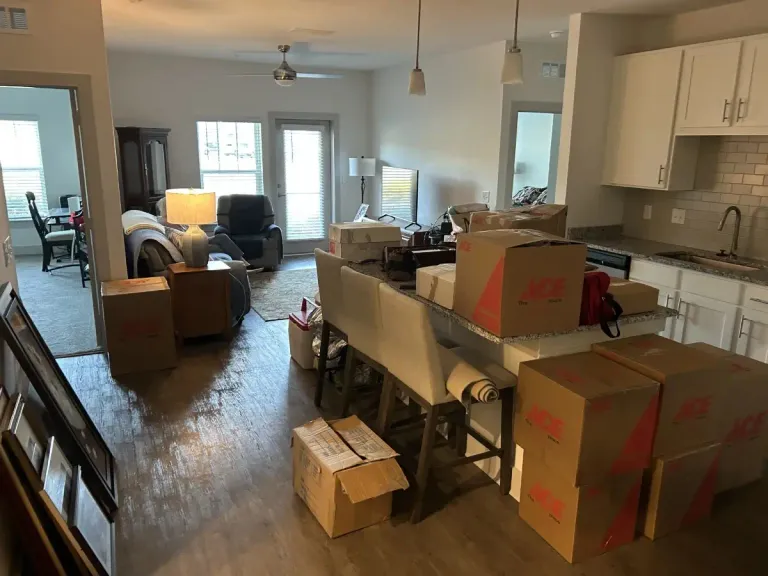
Packed boxes staged indoors partway through a moveMover wheeling a hand truck of boxes along a walkway

Hospital Administrative Office Moving FAQs

Another question? Call (904) 209-9277.

Can your crew work inside a hospital building?

In administrative and office areas, yes, under the facility’s badge, escort, dock, and elevator rules. We don’t move anything in clinical areas or handle clinical equipment. If an office move requires crossing a clinical hallway, the facilities lead chooses the route and any cart covering the facility requires.

How do you handle a billing team’s move without interrupting month-end close?

We plan around your close calendar. Most billing and revenue-cycle teams move in the first half of the month, over an evening or weekend. Seats are tagged ahead of time so each person’s desk, chair, monitors, and headset base land at the new seat together, and the IT team restores access.

We’re moving several departments across buildings. Can it be done in phases?

Yes. We plan each department or floor as its own phase with its own seat list, times, and contacts. That lets managers confirm their area before the next phase starts, and it keeps each building’s dock and elevator schedule manageable.

Who decides where each department’s files and boxes go?

Each department manager. Staff pack and seal boxes, label them by room or seat, and the manager signs off on the destination list. We move sealed boxes to those rooms and stop to ask if a box has no label or turns up somewhere unexpected.

Plan your business move

Tell us both addresses, the building rules you know about, and the dates you cannot move. We will send back a written plan and estimate.

Call (904) 209-9277

Mon–Sun 8:00 AM – 7:00 PM

Call Now call 904-209-9277